Kaleidoscopes
Only one sector is drawn, the rest is symmetry.
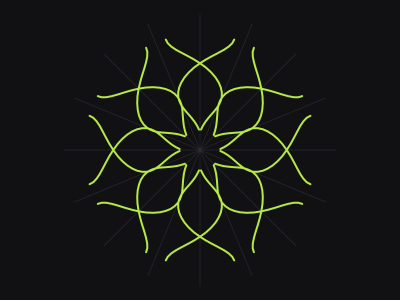
The rule
A kaleidoscope draws only a small part of the image. You pick a number of sectors, n, and cut the disc like a pie: each sector spans 360° / n. You draw in just one, then copy the motif by rotation into all n sectors:
copies = n
With a mirror, each sector is itself cut in two by an axis, and the motif is reflected too: you draw in a half-sector of 180° / n, and the motif is replayed in the n sectors, once the right way round, once flipped:
copies = 2n
This is the real kaleidoscope, the one with mirrors. All the rest is symmetry: the figure never holds more ideas than the small piece you started with.
Your turn
Draw a stroke with your finger or mouse anywhere on the disc: it is copied into every sector. The slider sets the number of sectors (from 3 to 18), the “Mirror” box adds the reflection, and the copy count follows. On a keyboard, “Add a curve” draws a stroke for you.
“Rotation” turns the figure on its own, “Turn one notch” moves it on by 5°. Notice that the stroke you drew never moves relative to its copies: the symmetry never changes.
Copies
The drawing above is a teaching sketch, not the artwork: it shows the rule, it does not replay the colours, the size of the dots or the grain of the print.
What changes from one algorithm to the next
Four of them use the same symmetry around a centre, the dihedral group; the fifth takes it away from the centre to tile the whole plane. What also changes is what gets drawn in the fundamental domain, and whether we draw strokes or fold pixels.
- Stained-Glass Shards
- Stained glass. Curved shards are drawn in the fundamental domain alone, then replayed on every copy. An outline, like the lead of a stained-glass window, can surround them or vanish.
- Frost Ribbons
- Filaments follow a polar noise field, confined to the fundamental domain, then replayed on the copies: each ribbon drawn becomes 2n.
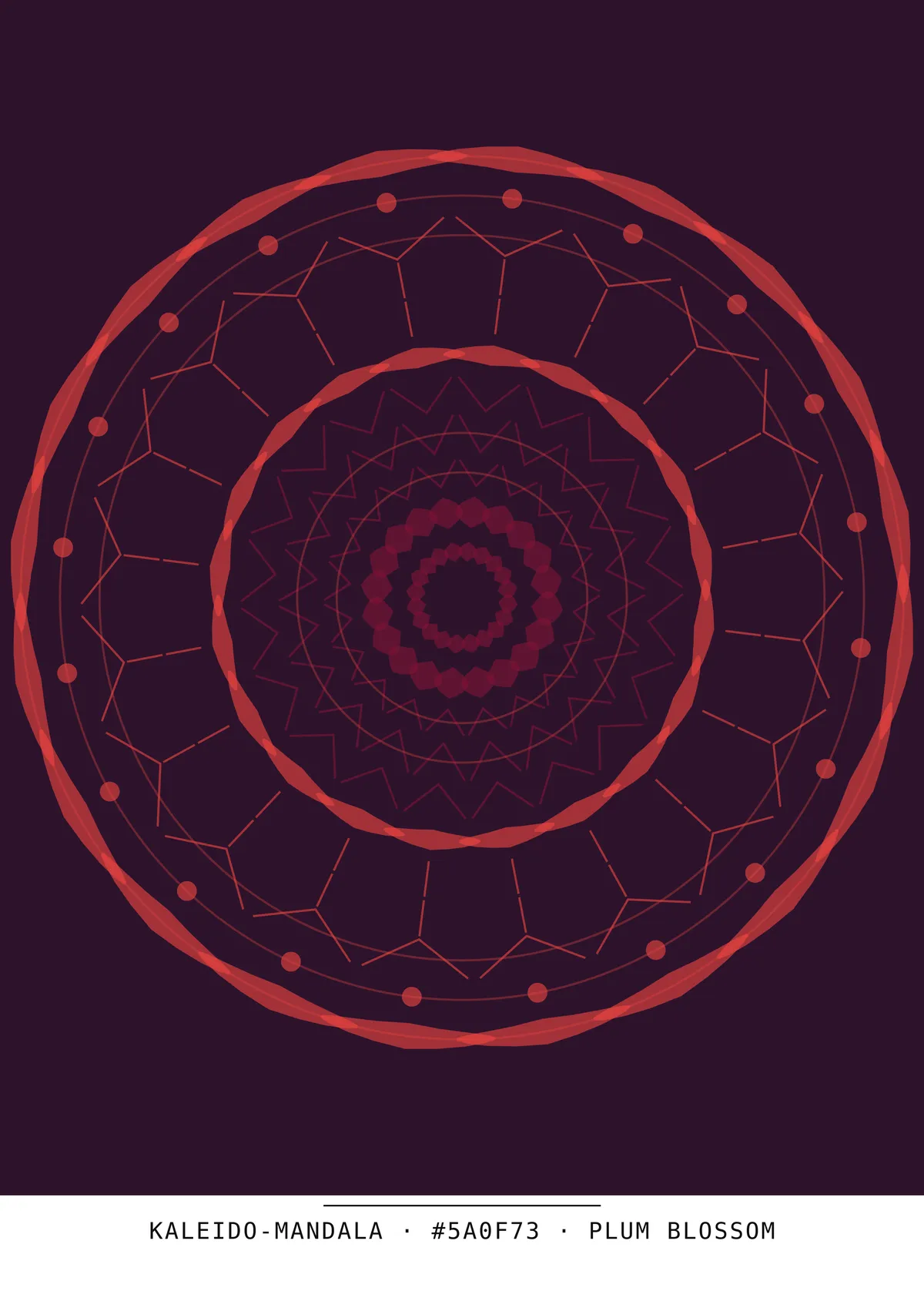
- Dihedral Mandala
- Concentric rings of geometric motifs. Each motif is drawn once in the fundamental domain, then replayed on the 2n copies; some rings also carry a thin guide circle.
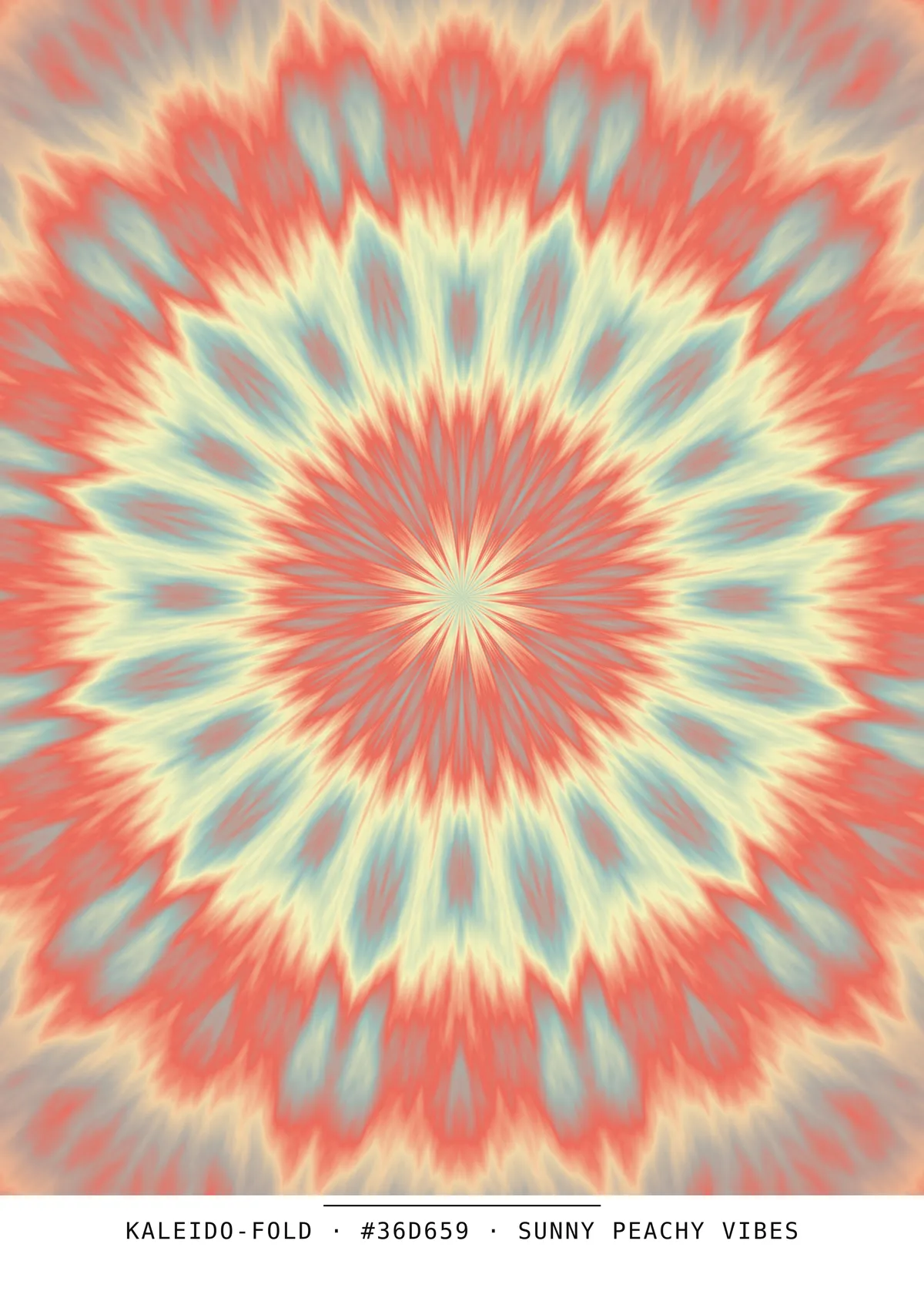
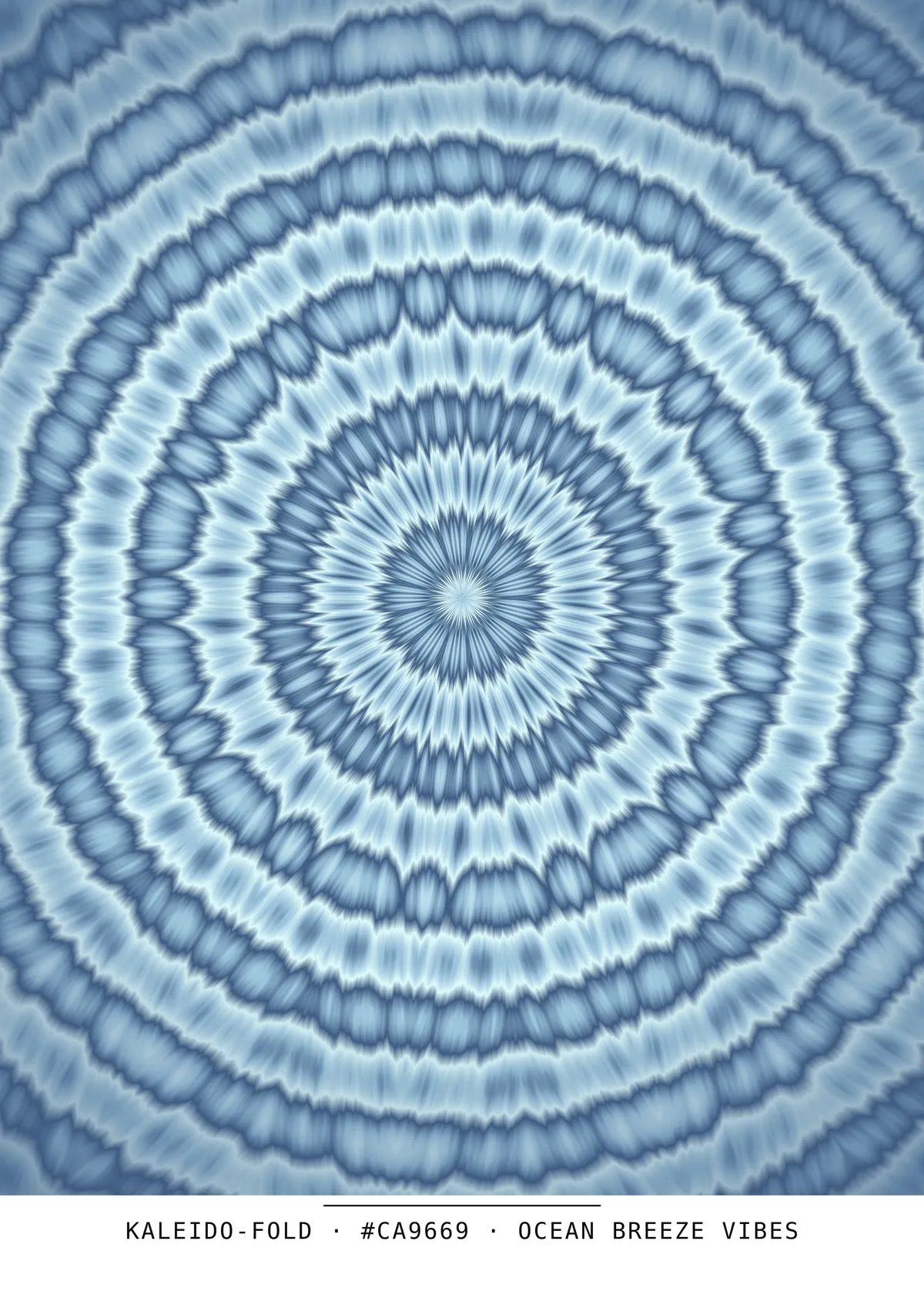
- Kaleidoscopic Fold
- The optical kaleidoscope, with no drawn stroke. Each pixel is folded into the fundamental domain before sampling a continuous field (fractal noise and radial waves): the symmetry costs only an angle fold.
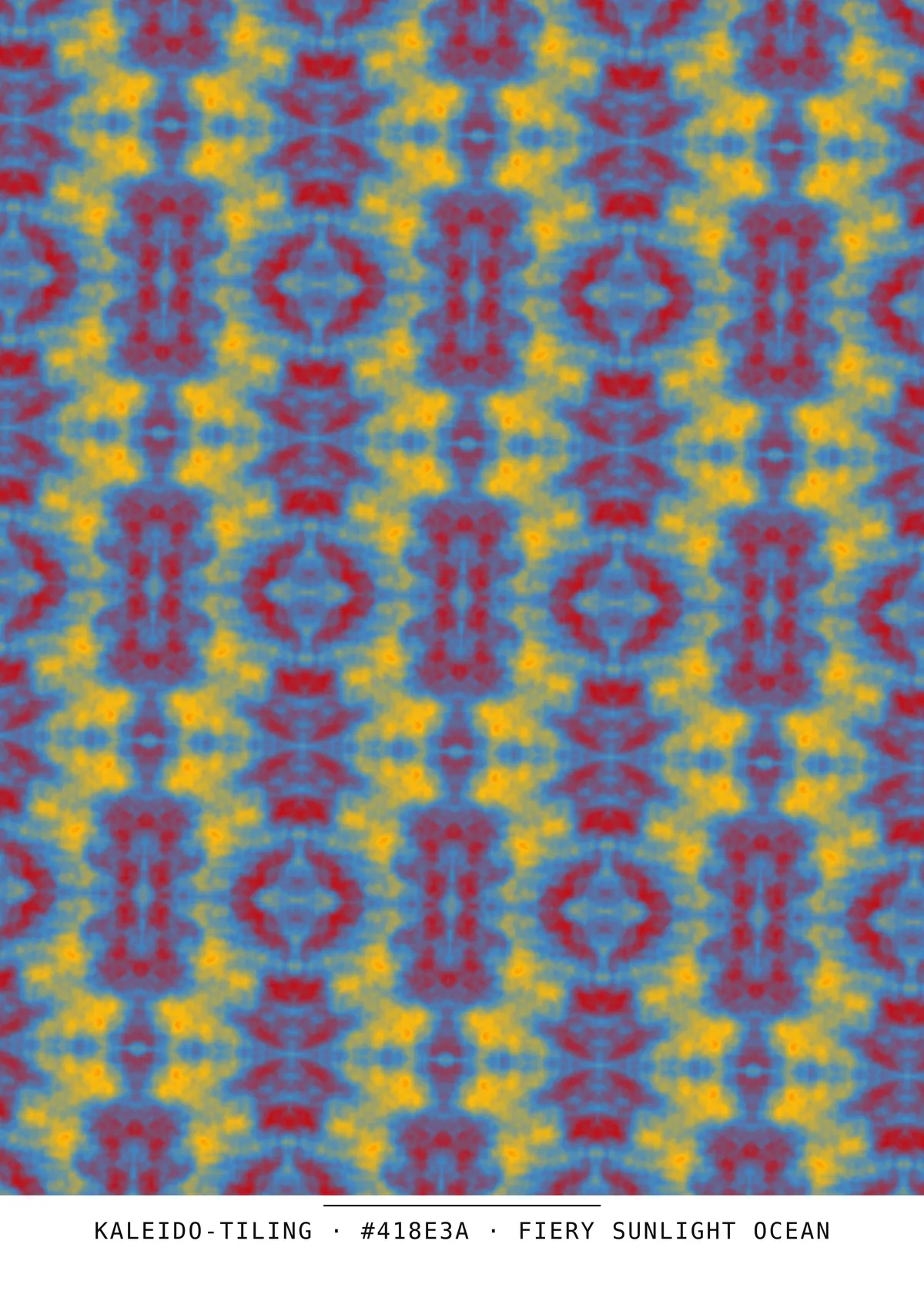
- p4m Tiling
- The symmetry leaves the centre and tiles the whole plane (the p4m wallpaper group). Each pixel is folded into the fundamental triangle of a square cell, by horizontal, vertical and diagonal mirrors, then samples a continuous field.
What chance decides
For each artwork, the program draws these settings at random, between bounds set in advance.
- Number of sectors Dihedral Mandala from 6 to 18
- Number of rings Dihedral Mandala from 5 to 14
- Twist Kaleidoscopic Fold from -1.6 to 1.6
The algorithms in this family
- Stained-Glass Shards
- Frost Ribbons
- Dihedral Mandala
- Kaleidoscopic Fold
- p4m Tiling