Collection · Sierpiński triangle
Sierpiński Triangle Art, Numbered Limited-Edition Prints
The Sierpiński triangle is probably the most famous fractal there is: take a triangle, remove the middle one, then do the same in the three that remain, again and again. Waclaw Sierpiński described it in 1915, and it's been hiding everywhere since, even inside Pascal's triangle. Here we turn it into posters: self-similar patterns computed down to the smallest detail. Every day one work from the family goes out as a numbered, signed, limited edition.
- Limited numbered edition
- 300 DPI fine art print
- Ed25519-signed certificate
What is the Sierpiński triangle?
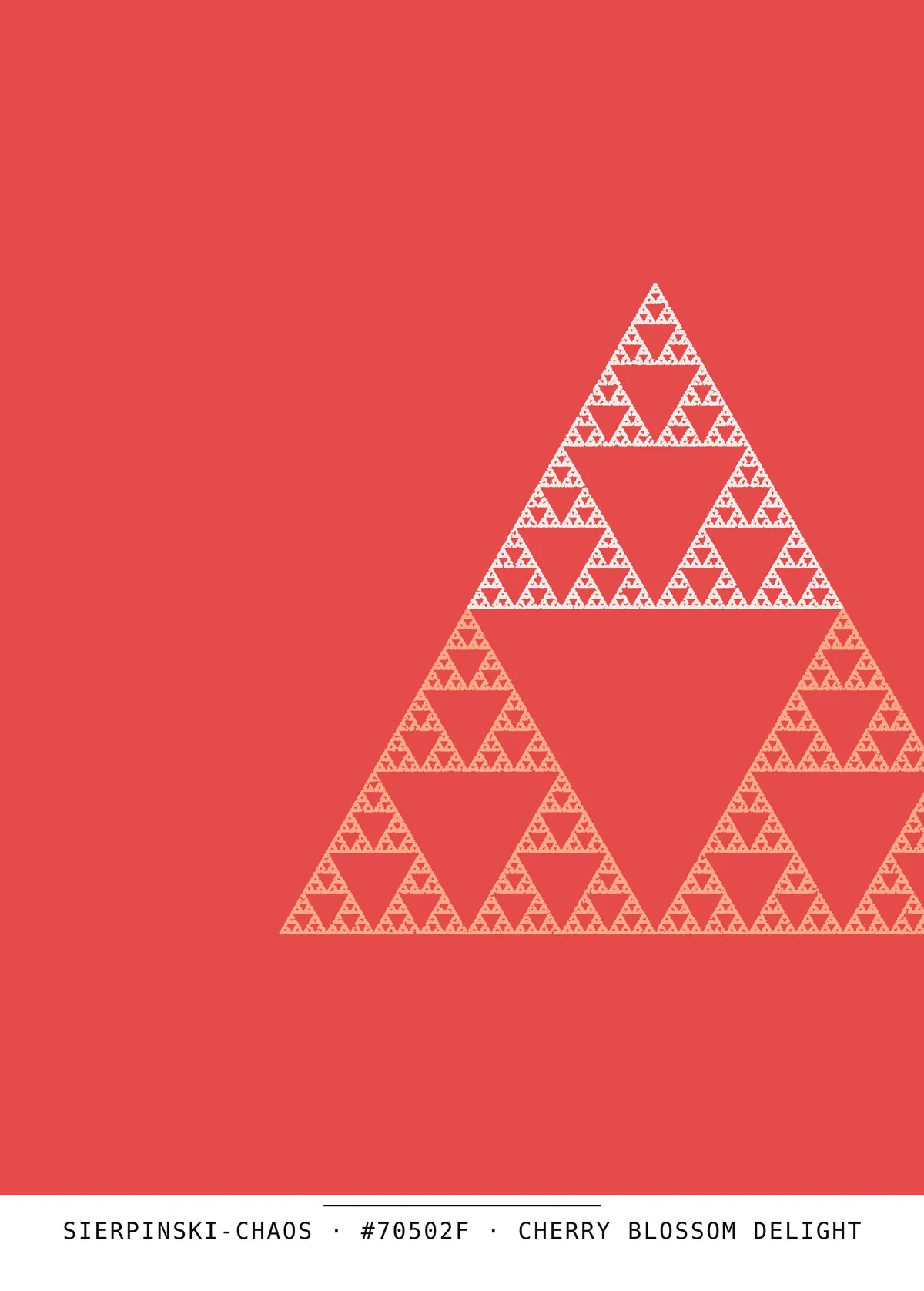
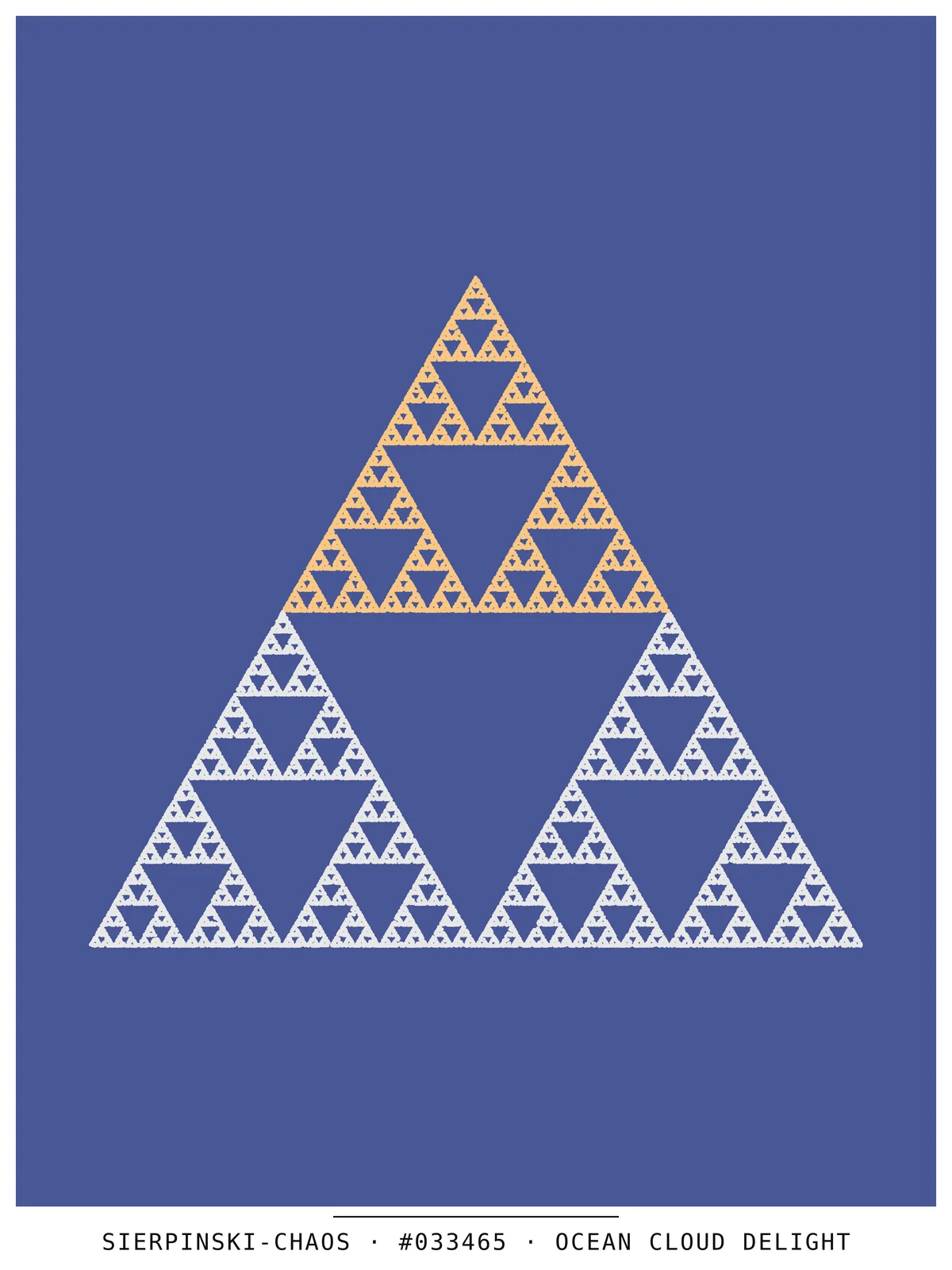
Start with a solid triangle. Cut it into four smaller ones and remove the middle: three are left. Do the same in each of the three, then in the next nine, and so on. In the limit, what's left is the Sierpiński triangle: a shape full of holes where every piece looks like the whole. That's what a fractal is: the same shape repeating at every scale. Waclaw Sierpiński, a Polish mathematician, formalised it in 1915, but you also find it in Pascal's triangle and in some seashells.
How are these prints generated?
Every work starts from a seed. That seed fixes the parameters (the recursion depth, the pattern variant) and the palette, and the same seed always produces exactly the same image, here and everywhere else. Nothing is painted by hand, nothing is retouched: the algorithm cuts, removes, repeats, and the lace appears. The seed and parameters are frozen into a fingerprint, so the work can't exist twice. That fingerprint is then signed with a cryptographic key (Ed25519), and the certificate that comes with your print can be verified by anyone, without going through me.
Why a print, not just a wallpaper?
Because a fractal is made to be looked at up close. The pattern repeats from the big triangle down to the smallest ones, and the closer you get, the more there is to see. A small screen cuts half the detail. We print at 300 DPI on fine art paper, in several formats. Every print is numbered and ships with its signed certificate. Once an edition sells out, it's gone for good: the work doesn't go back into production.
The triangle, the carpet and the pentaflake
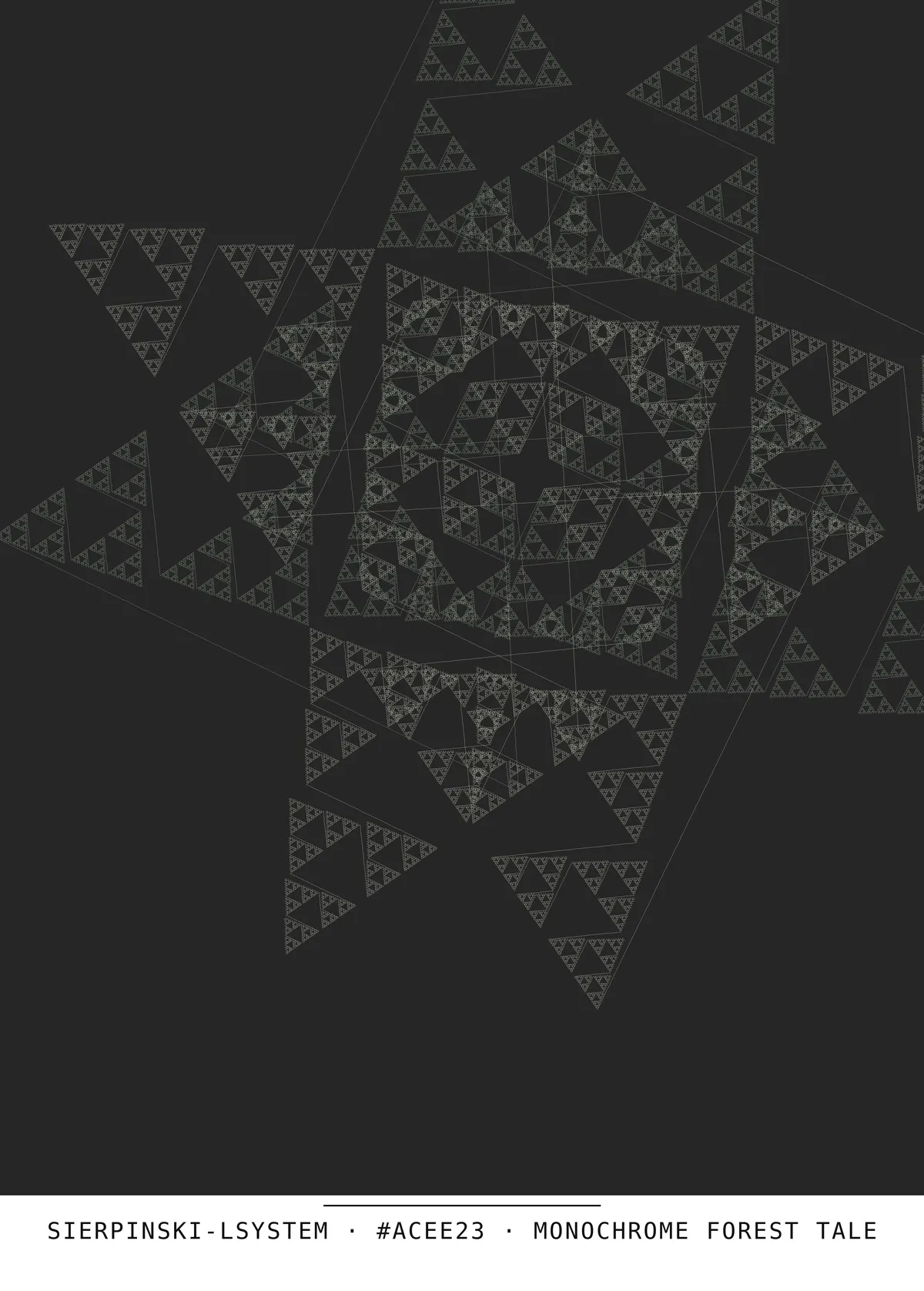
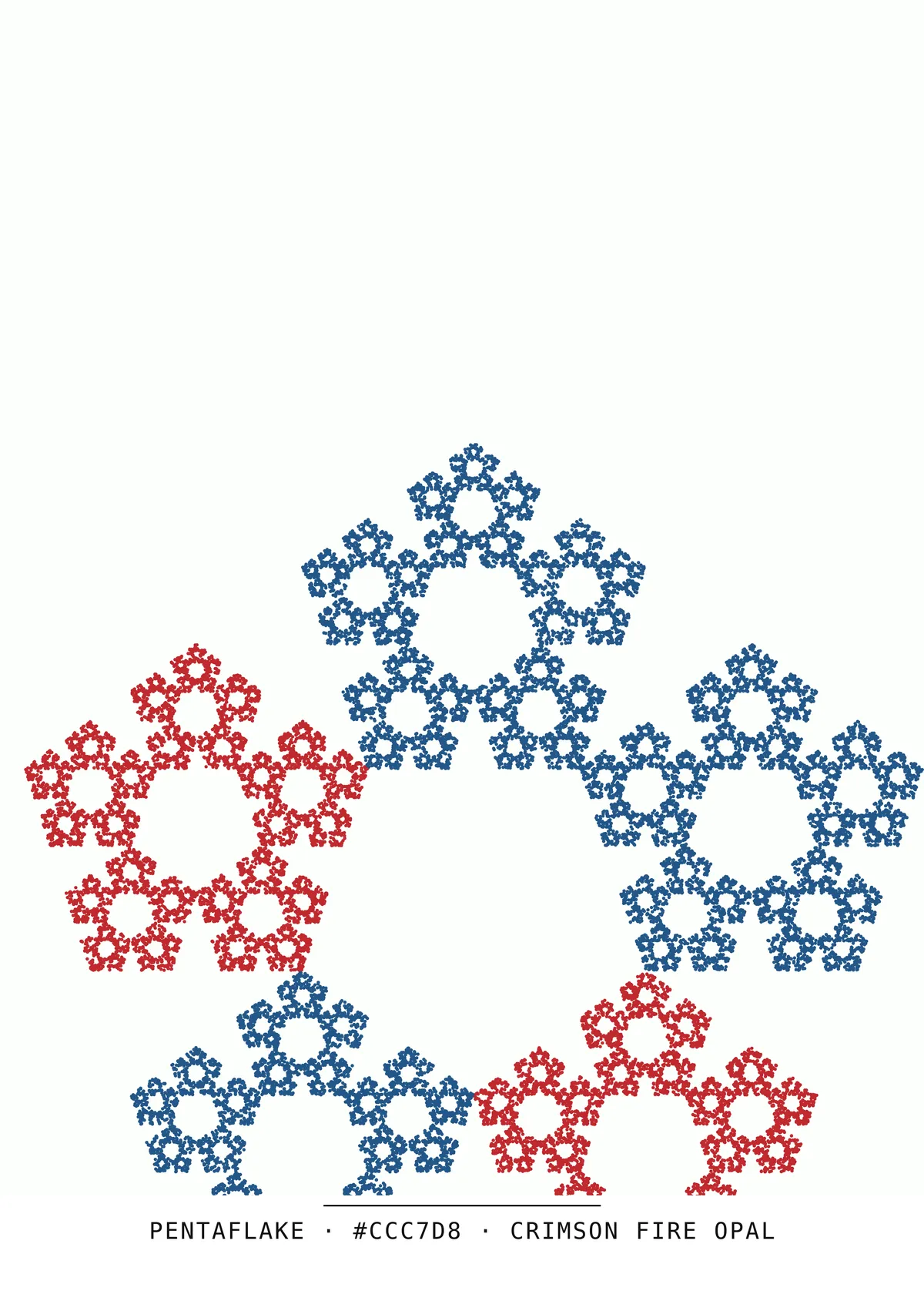
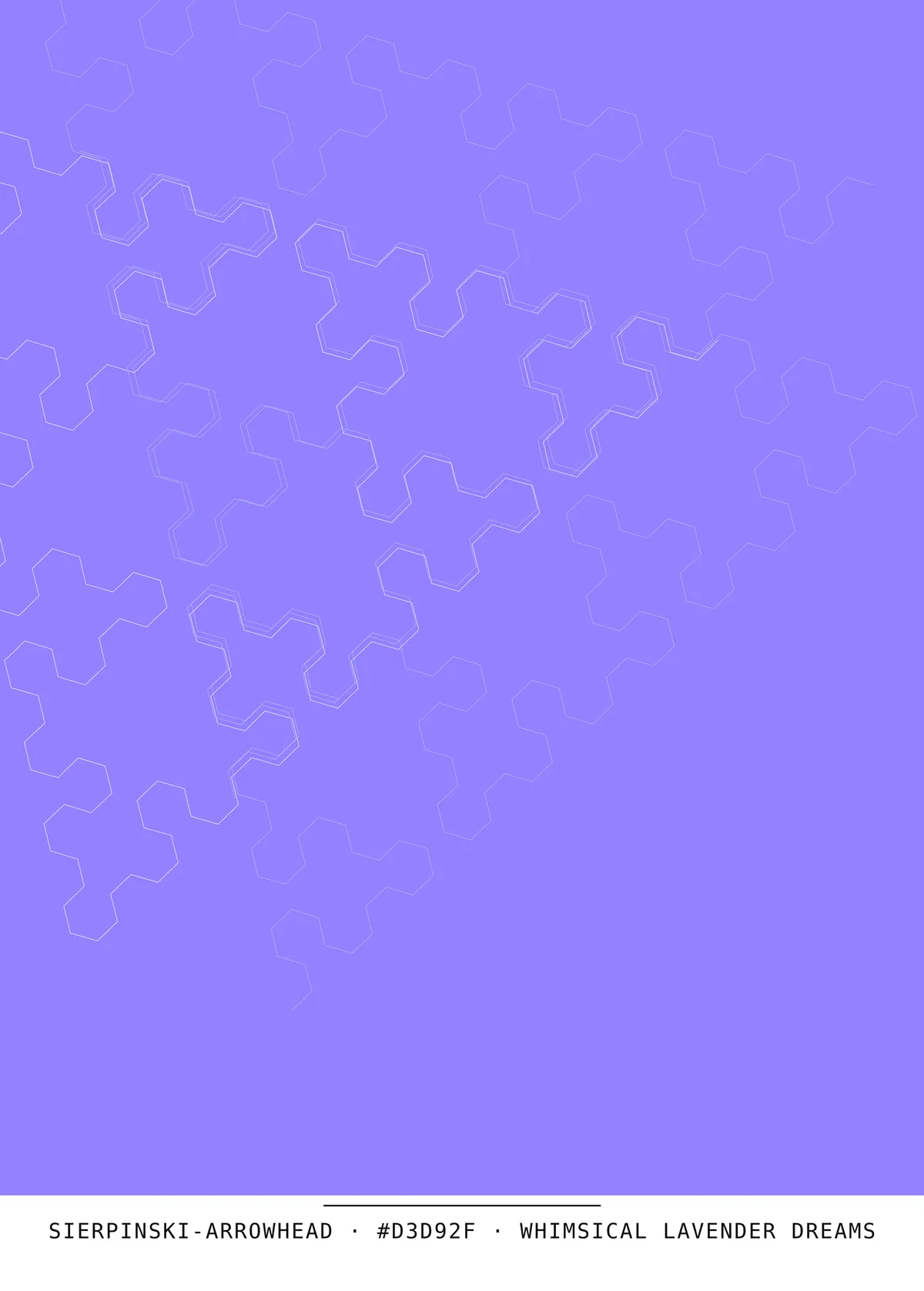
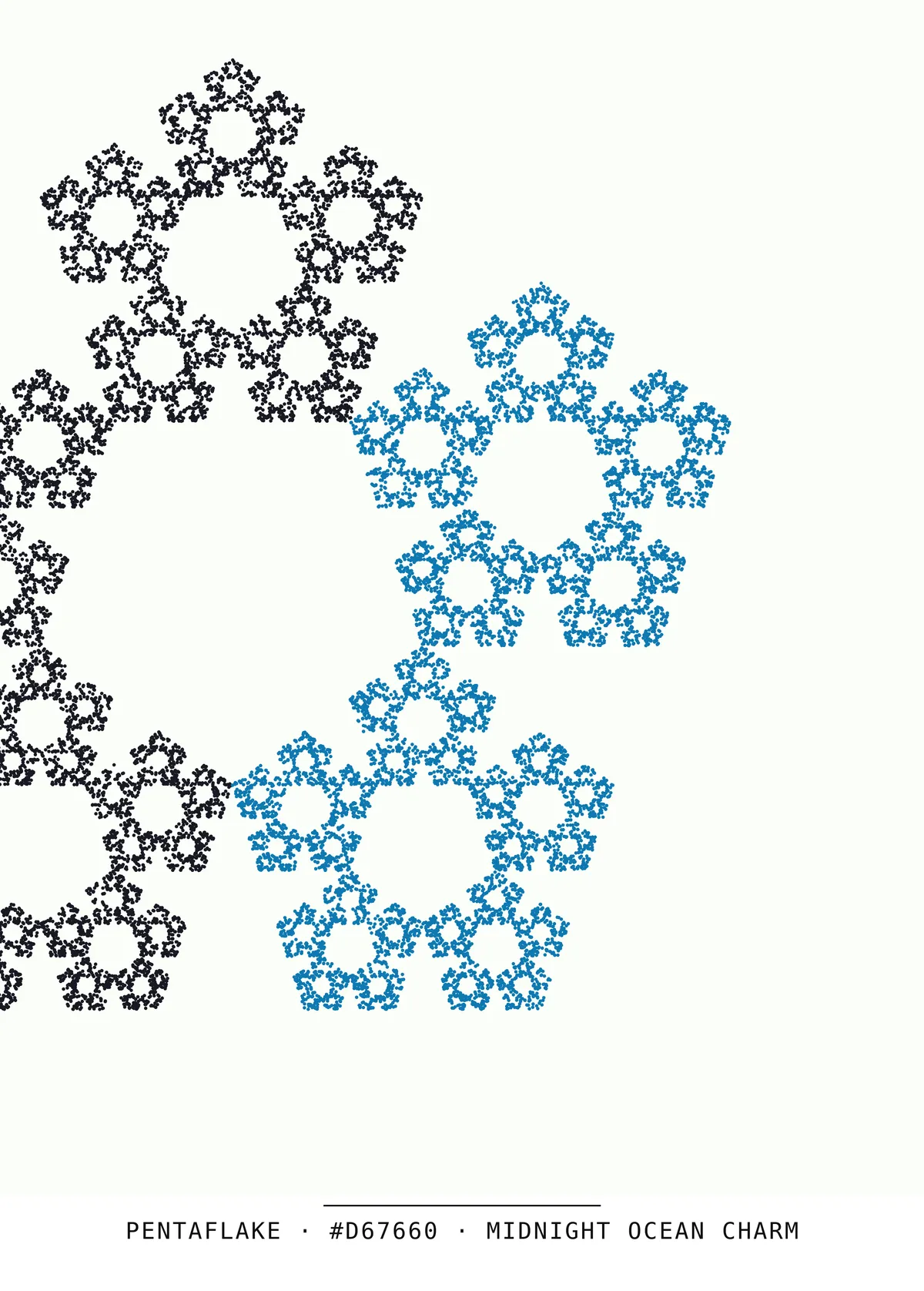
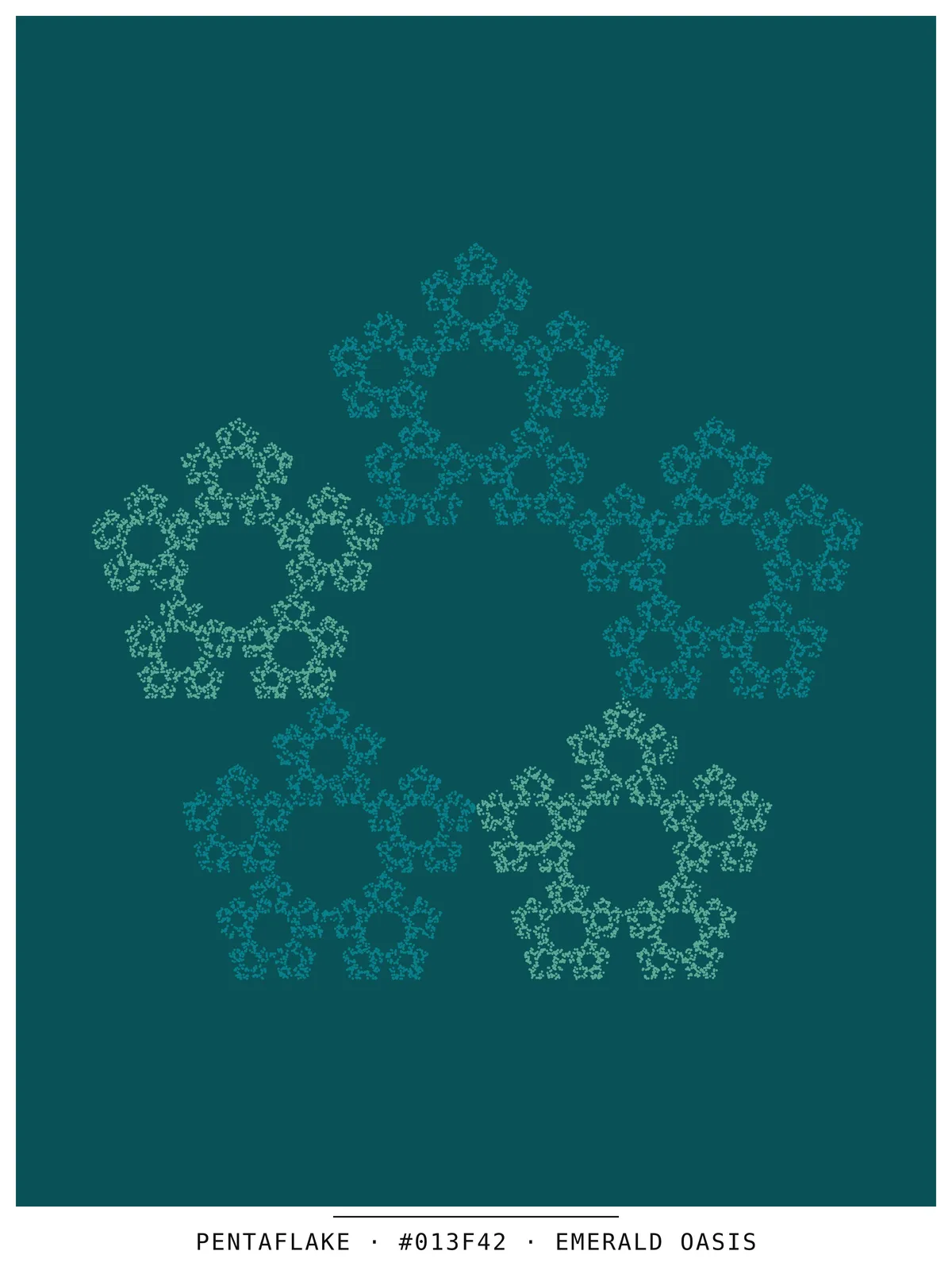
The collection gathers several ways to spin the same idea. For the triangle, there's the arrowhead curve that fills it in one stroke, the L-system version, and the chaos game, where thousands of randomly drawn points end up tracing it on their own. There's also the Sierpiński carpet, the same idea on a square cut into nine, and the pentaflake, the five-sided cousin. We publish one work a day, just one. Come back tomorrow for the next, or dig through the works already published just above.
Frequently asked questions
What is a Sierpiński triangle poster?
A paper print of a fractal pattern built on the Sierpiński triangle: a self-similar shape full of holes, where every part looks like the whole. Here, every poster is a unique work, numbered and signed, with parameters and a palette that exist only once.
Who invented the Sierpiński triangle?
The Polish mathematician Waclaw Sierpiński described it in 1915. But the pattern predates him: it shows up in Pascal's triangle, and appears naturally whenever you repeat a simple cut at every scale.
What is the certificate of authenticity for?
It ships with your print, carrying the work's fingerprint and its cryptographic signature (Ed25519). Anyone can verify the certificate matches the artwork, without going through me.
What formats and print quality?
300 DPI on fine art paper, in several formats. Production is on demand, then the print ships straight to your door.