Collection · Math and Science Gifts
Math Art Gifts, Numbered Science Art Prints
A gift for someone who loves science: an image that works on a wall before it works on a blackboard. Twenty-three algorithms, sorted by profile: maths, physics and astronomy, computer science, life and chemistry. Every work goes out as a numbered, signed, limited edition, from €19.99 to €69.99 depending on the format. For Christmas, it is a gift with no drawn fir tree: a Koch snowflake or a fractal plant, computed instead of illustrated. The deadline to order in time is in the FAQ below.
- Limited numbered edition
- 300 DPI fine art print
- Ed25519-signed certificate






For people who love maths
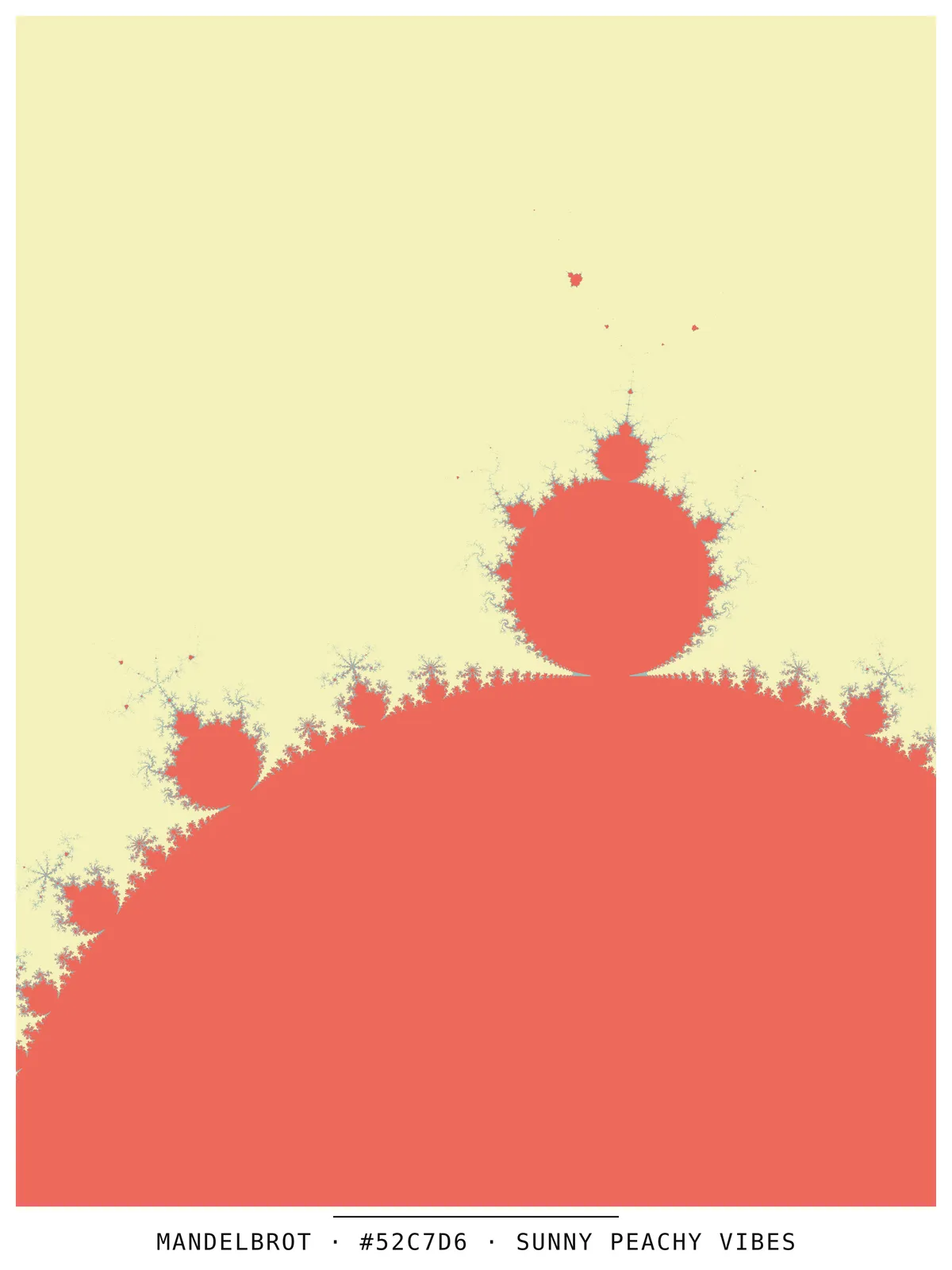
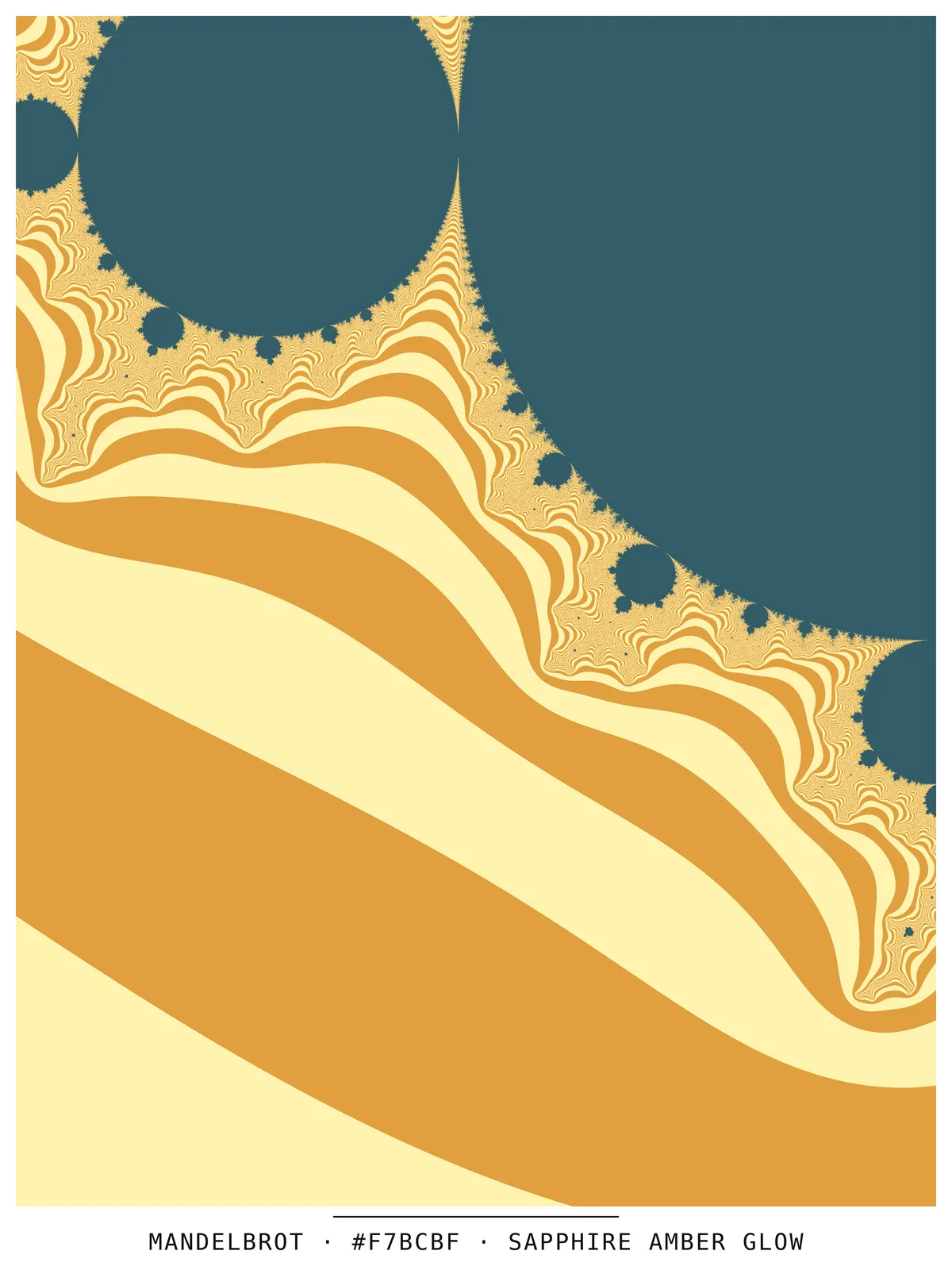
The Mandelbrot set is the set of complex numbers c for which the sequence z² + c stays bounded, and the whole boundary of the image comes from that one rule. The Julia set uses the same formula with c fixed. The Koch snowflake has an infinite perimeter for a finite area, which shows very well on a wall. Next to them, the Fibonacci spiral, the Apollonian gasket (circles that are all tangent), the Pythagoras tree (squares built on the sides of a right triangle) and the Sierpinski carpet, a square with its centre removed, again and again. You give the image, the proof comes later.
For physics and astronomy fans
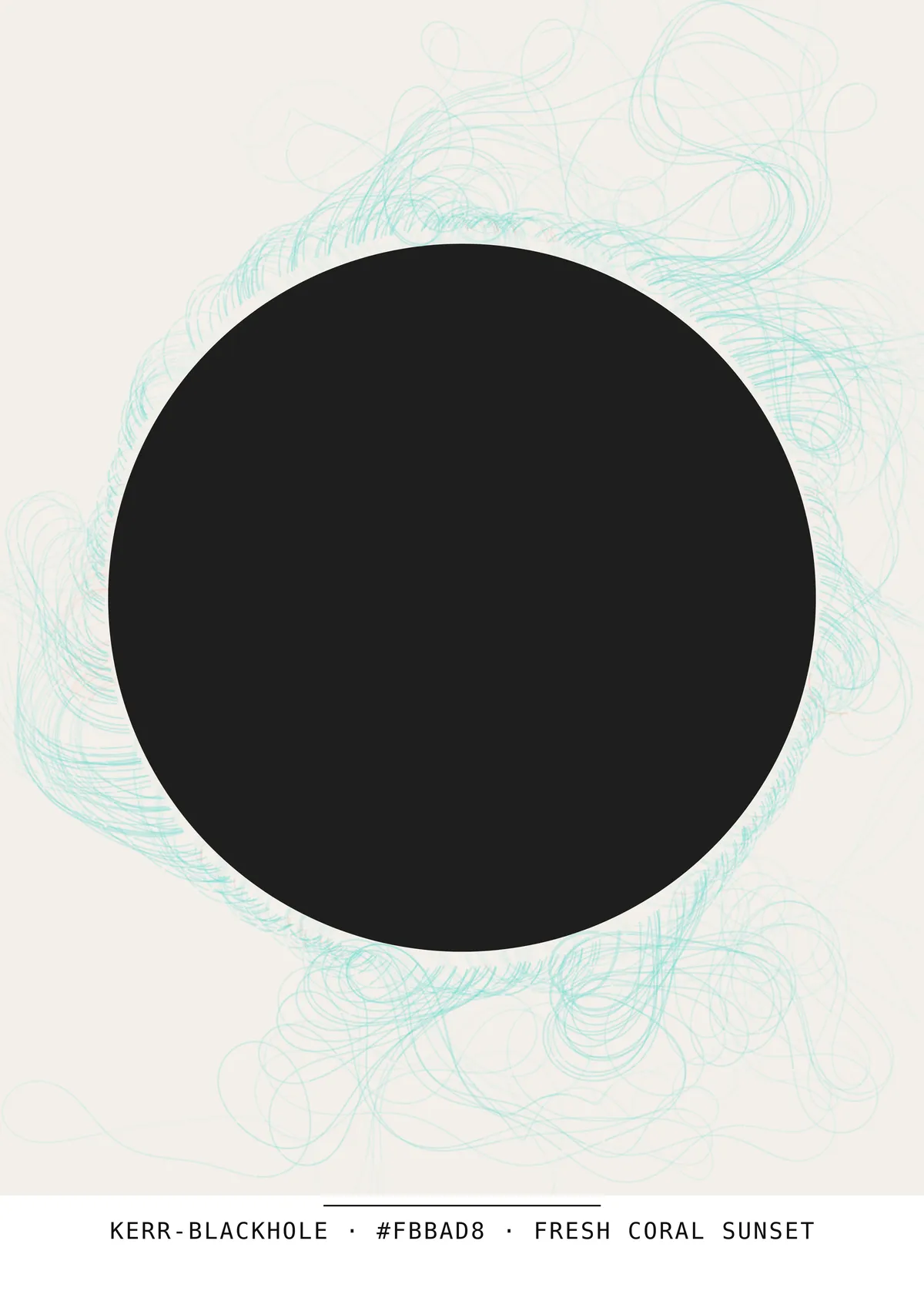
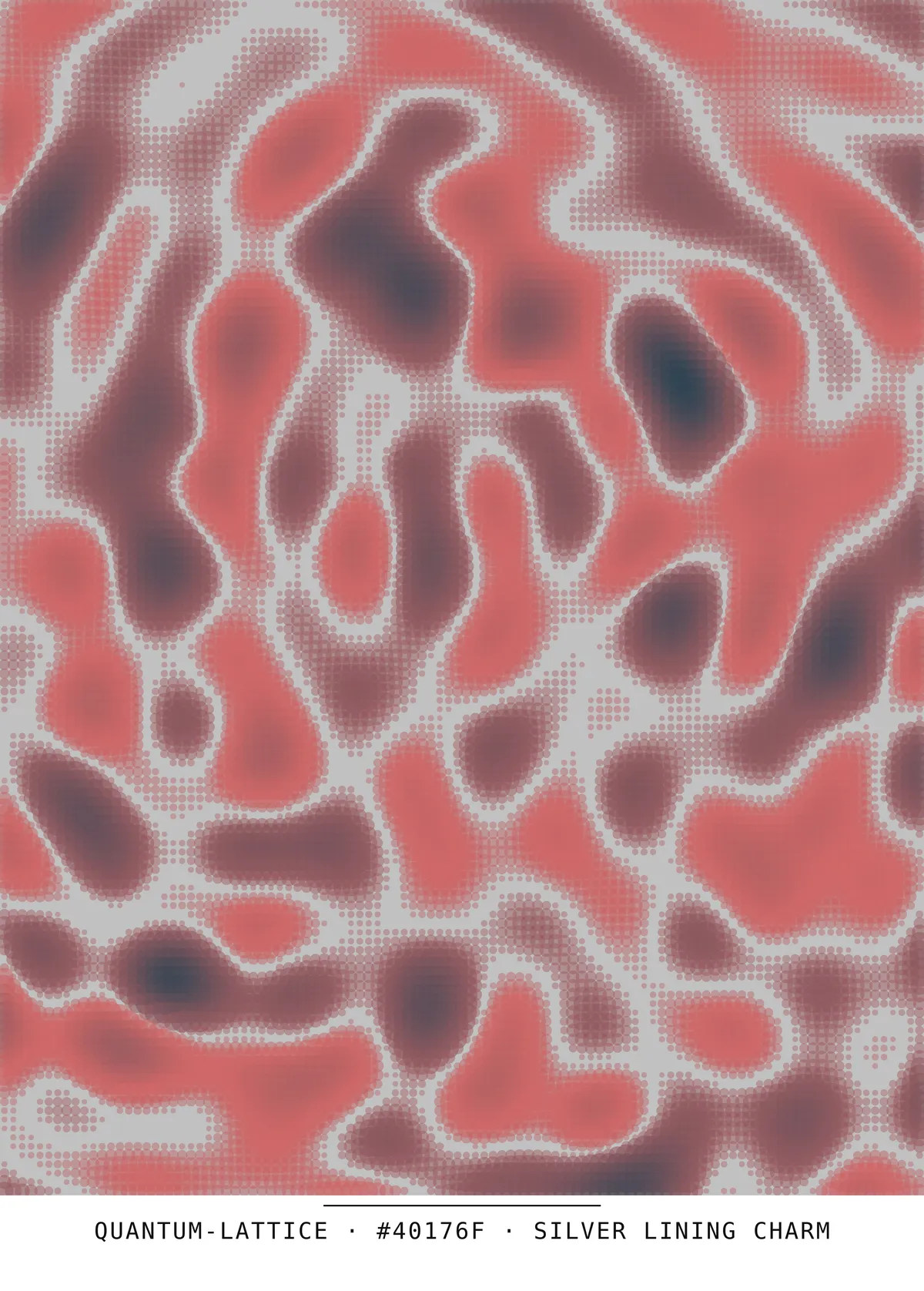
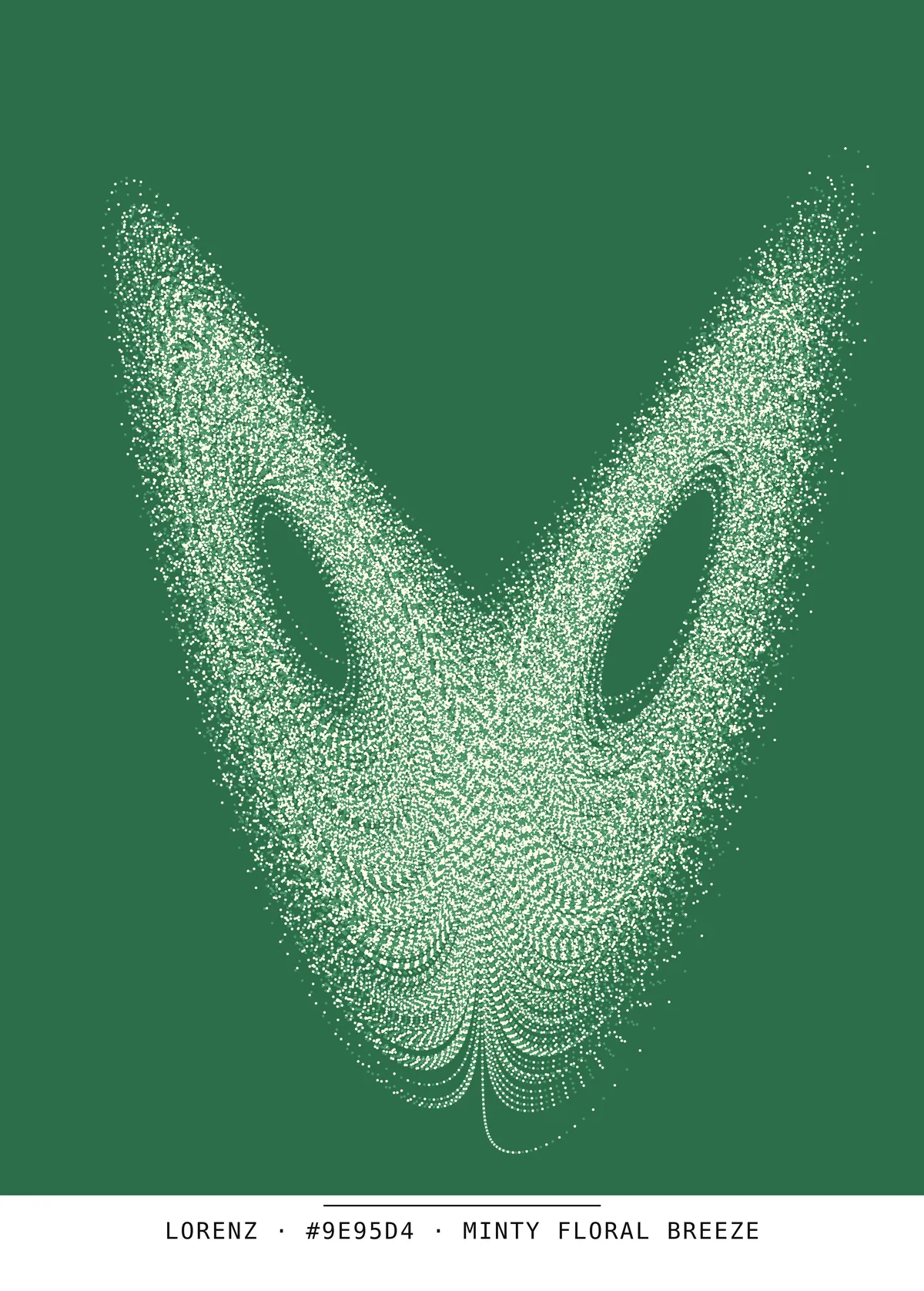
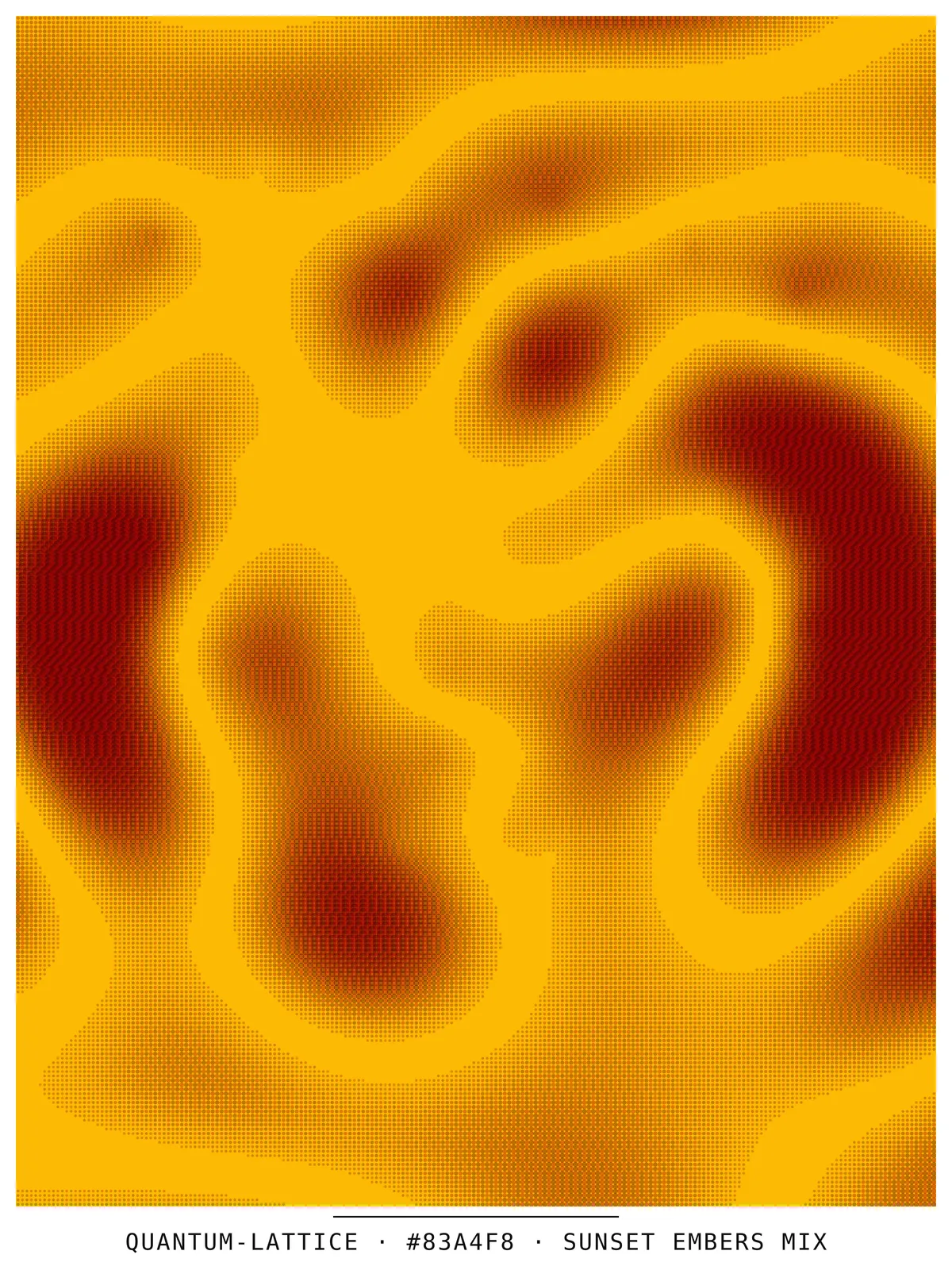
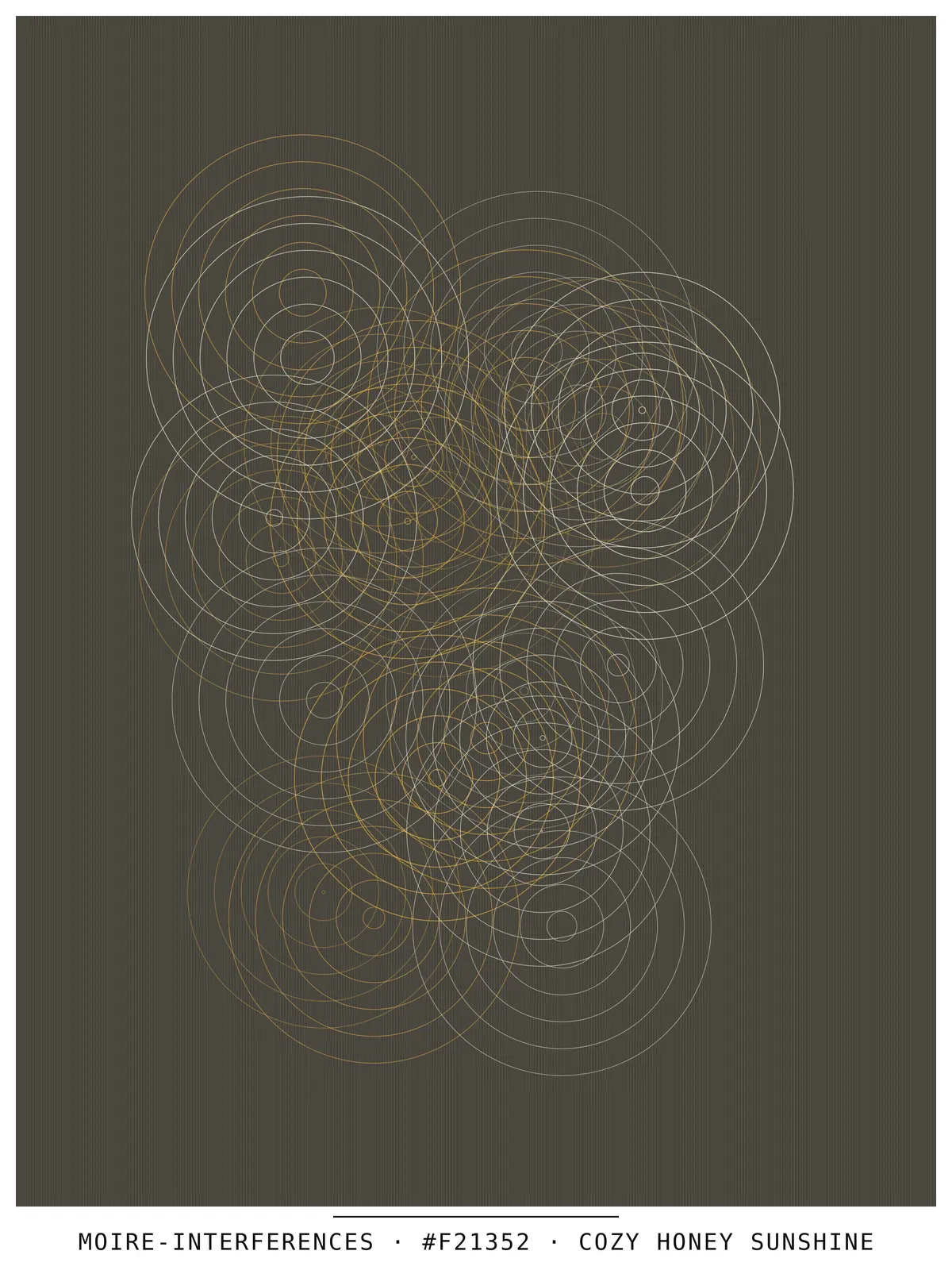
A rotating Kerr black hole, a gravitational lens bending the light behind it, the Lorenz attractor, born in 1963 from a simplified weather model, and the Clifford attractor, another family of strange attractors. Add an interference lattice and moiré interference, two grids that cross and create patterns that neither of them contains. These are images of phenomena, computed, not textbook illustrations. The result reads as a poster, even if you do not know the formula.
For computer scientists
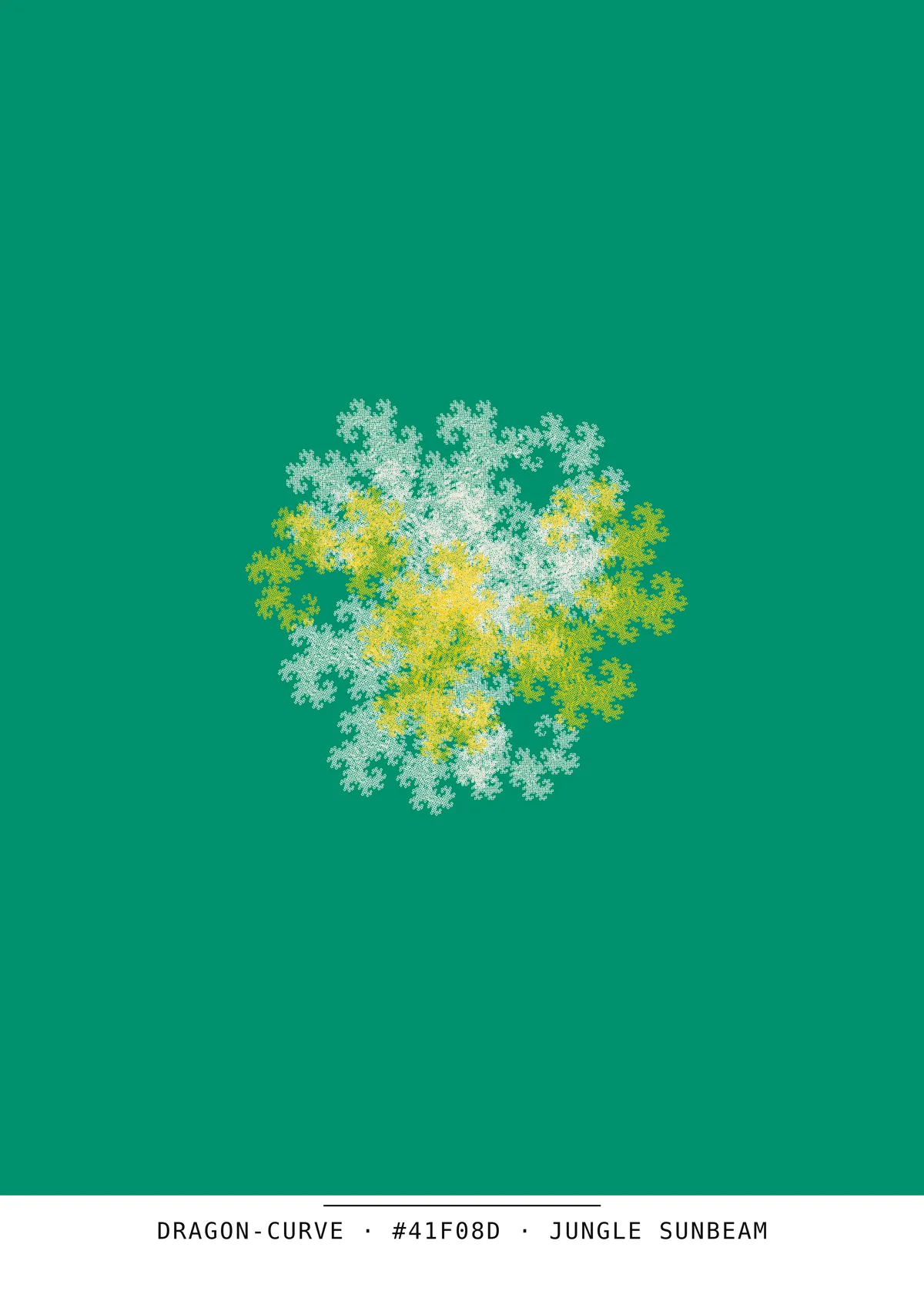
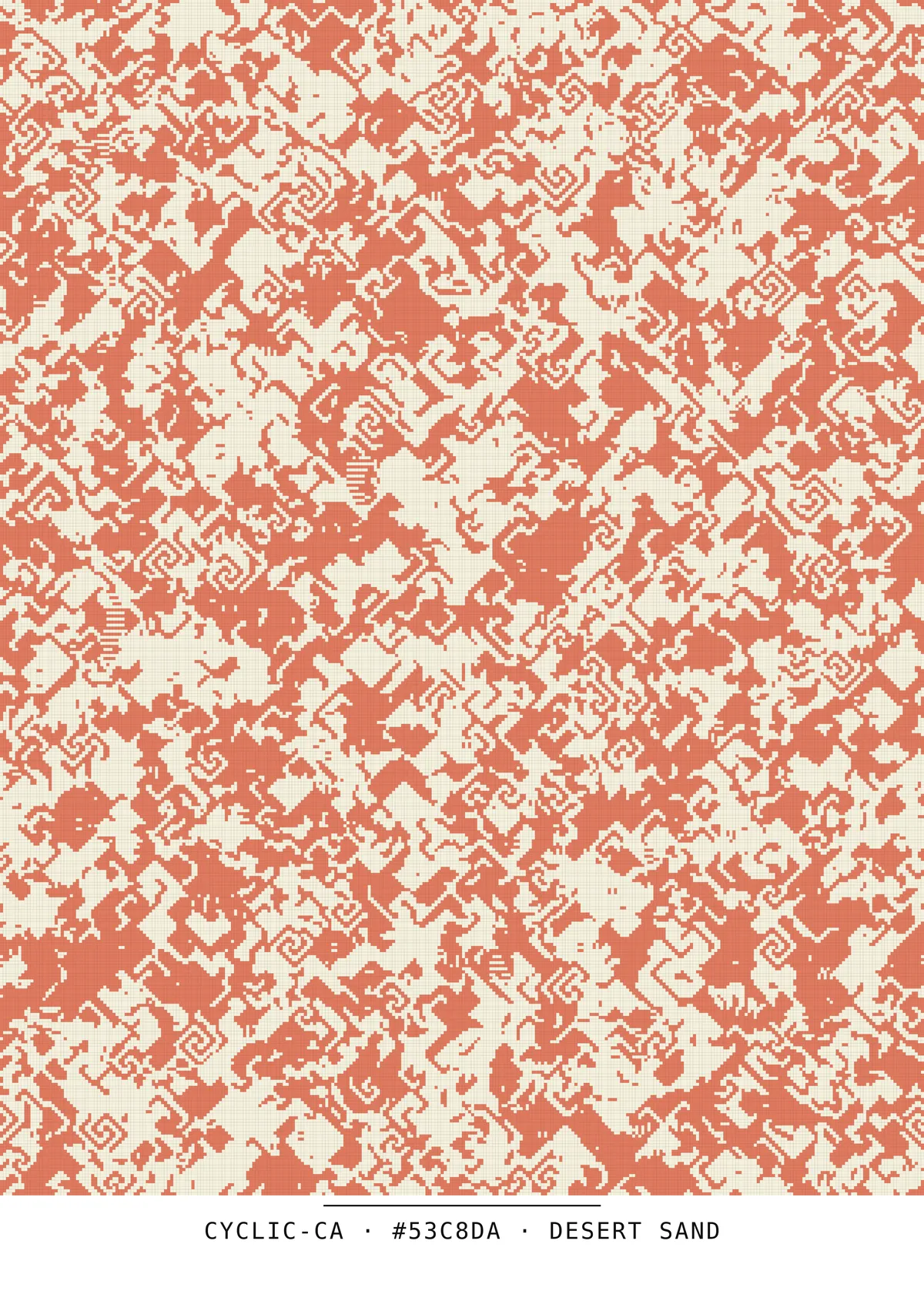
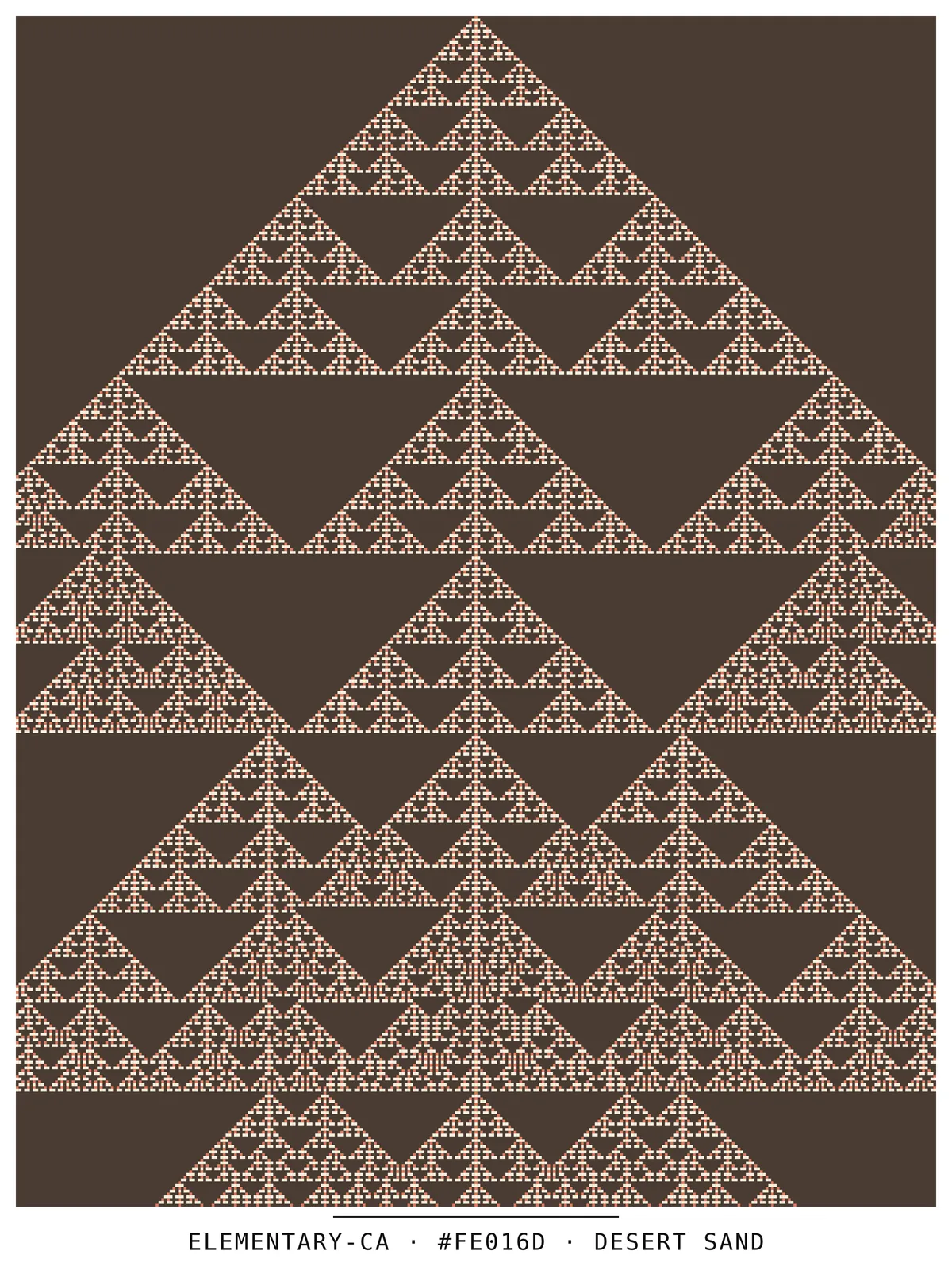
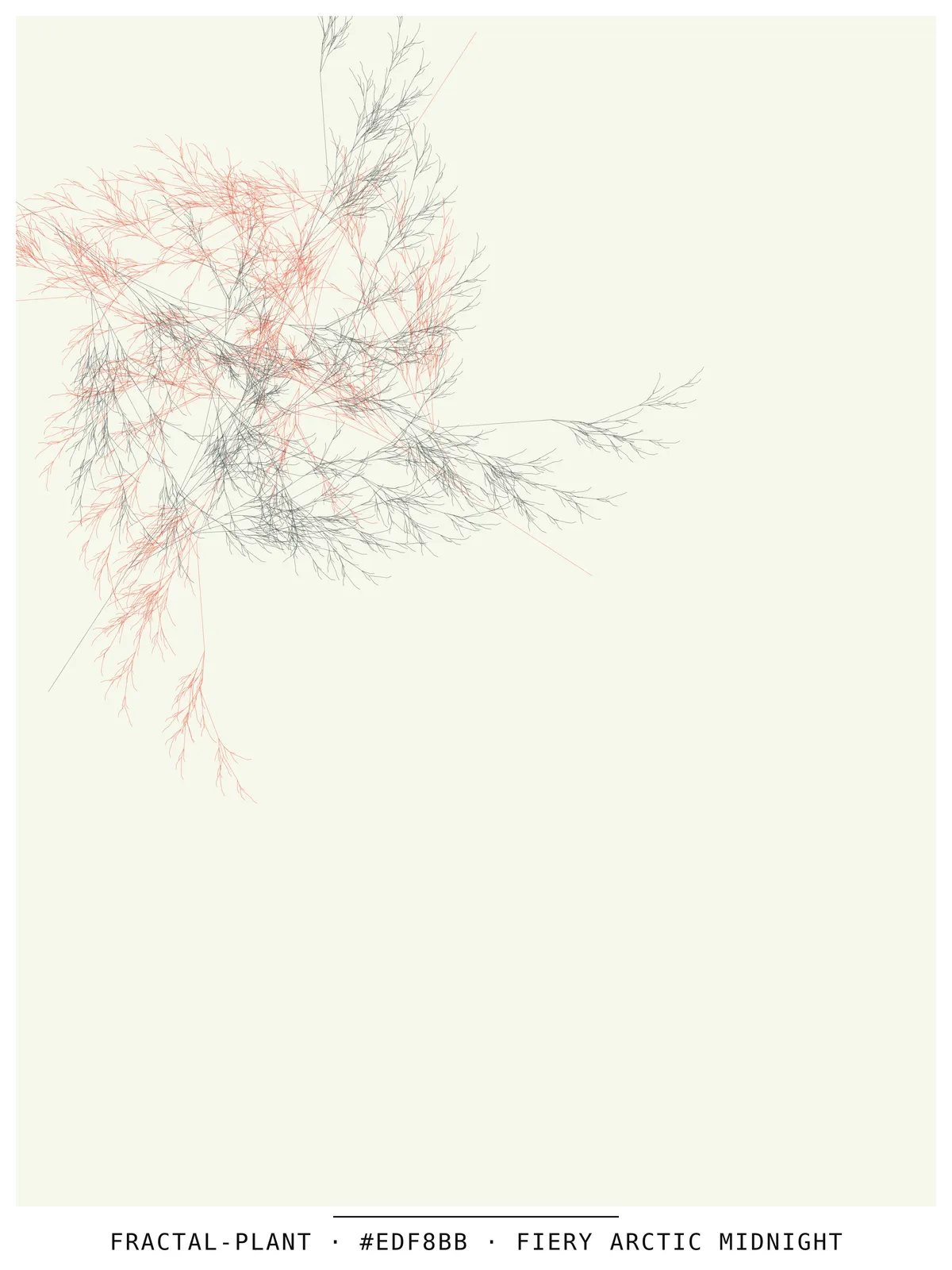
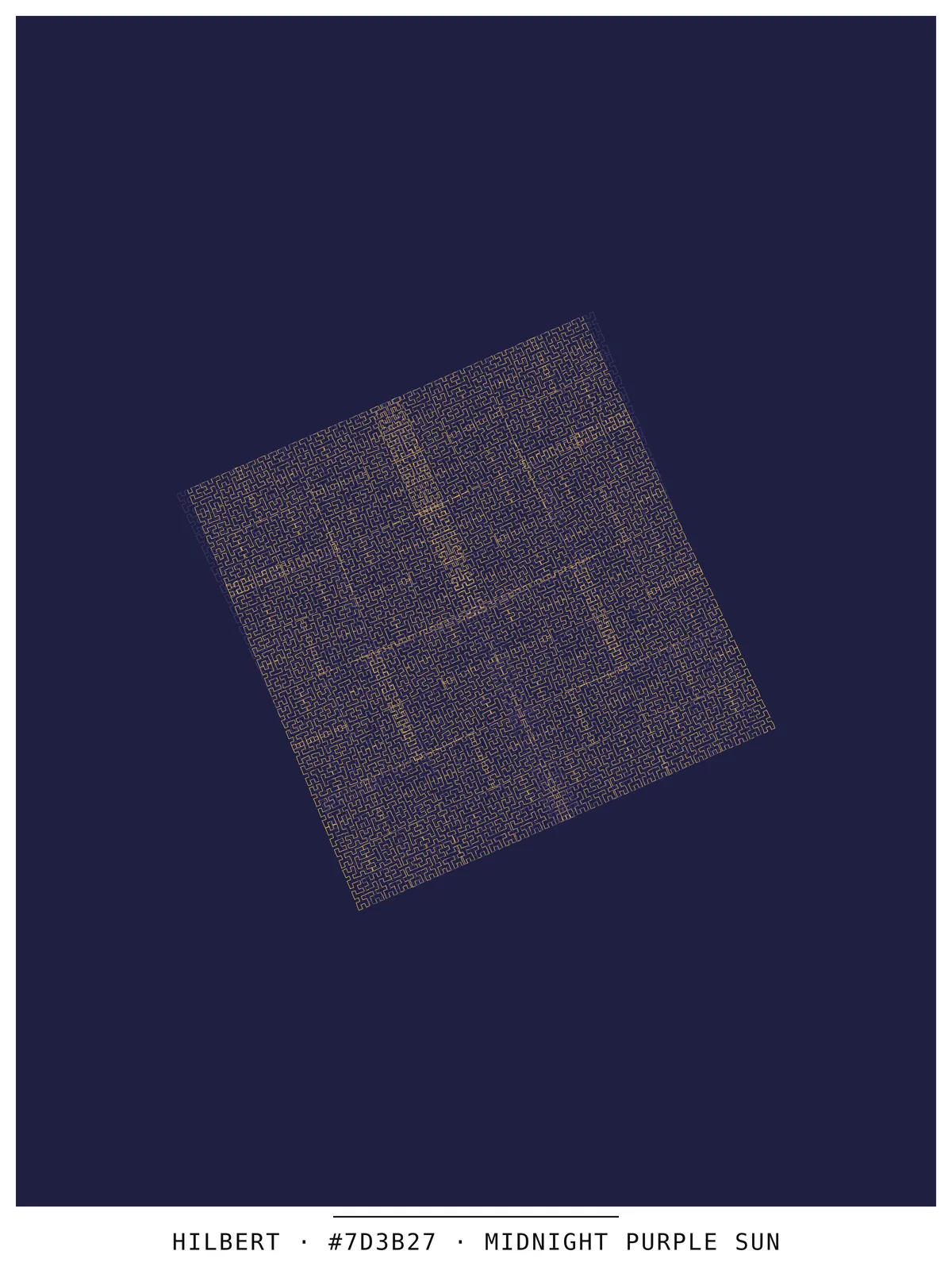
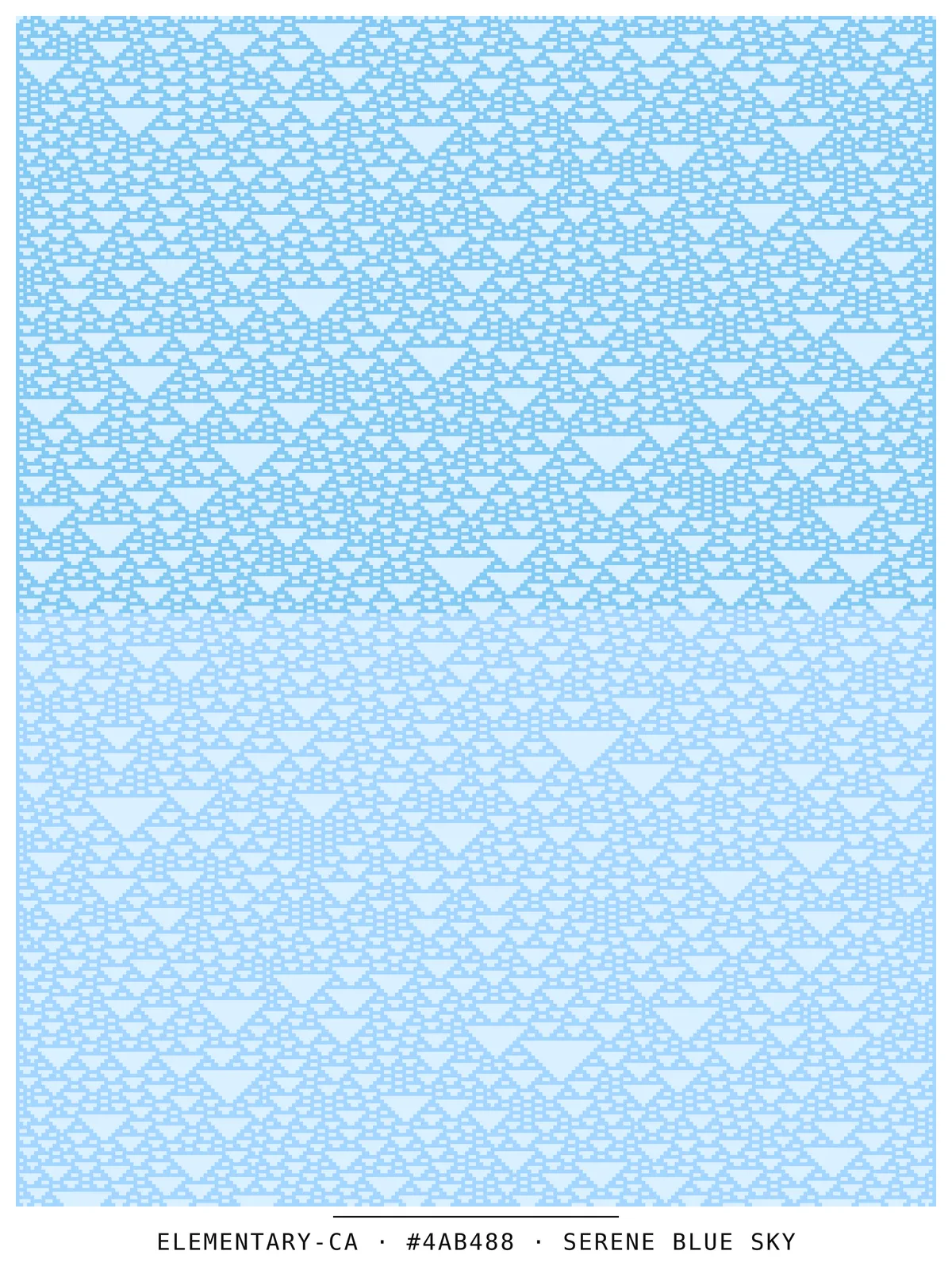
Elementary cellular automata, where a rule on three neighbouring cells is enough to produce complexity (there are 256 in all, numbered by Wolfram). A cyclic automaton, the Hilbert curve that fills a square without ever crossing itself, the dragon curve you get by folding a strip of paper, and a fractal plant written with an L-system, a rewriting grammar. Here the code is the subject, and the print is what the code draws.
For life and chemistry
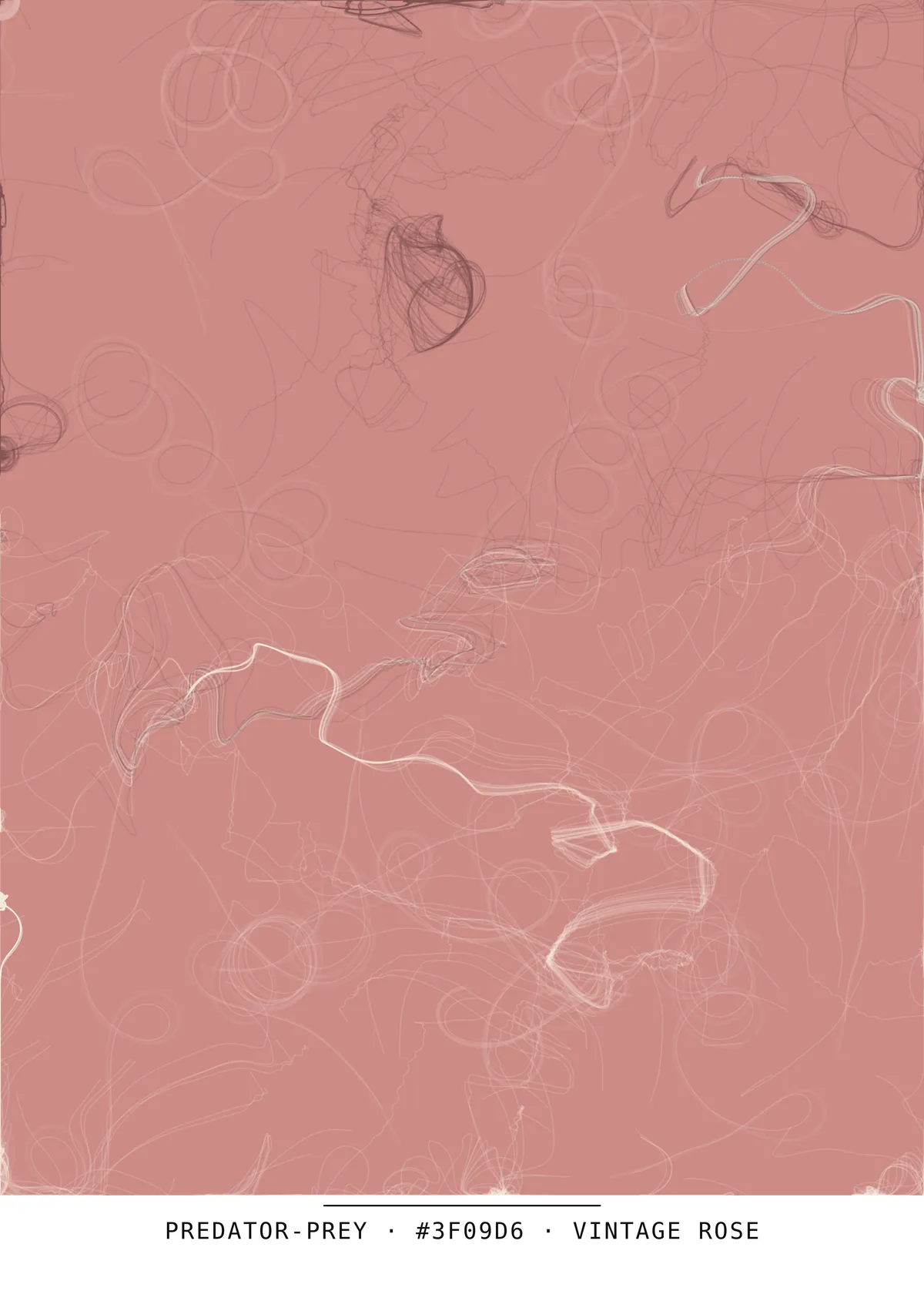
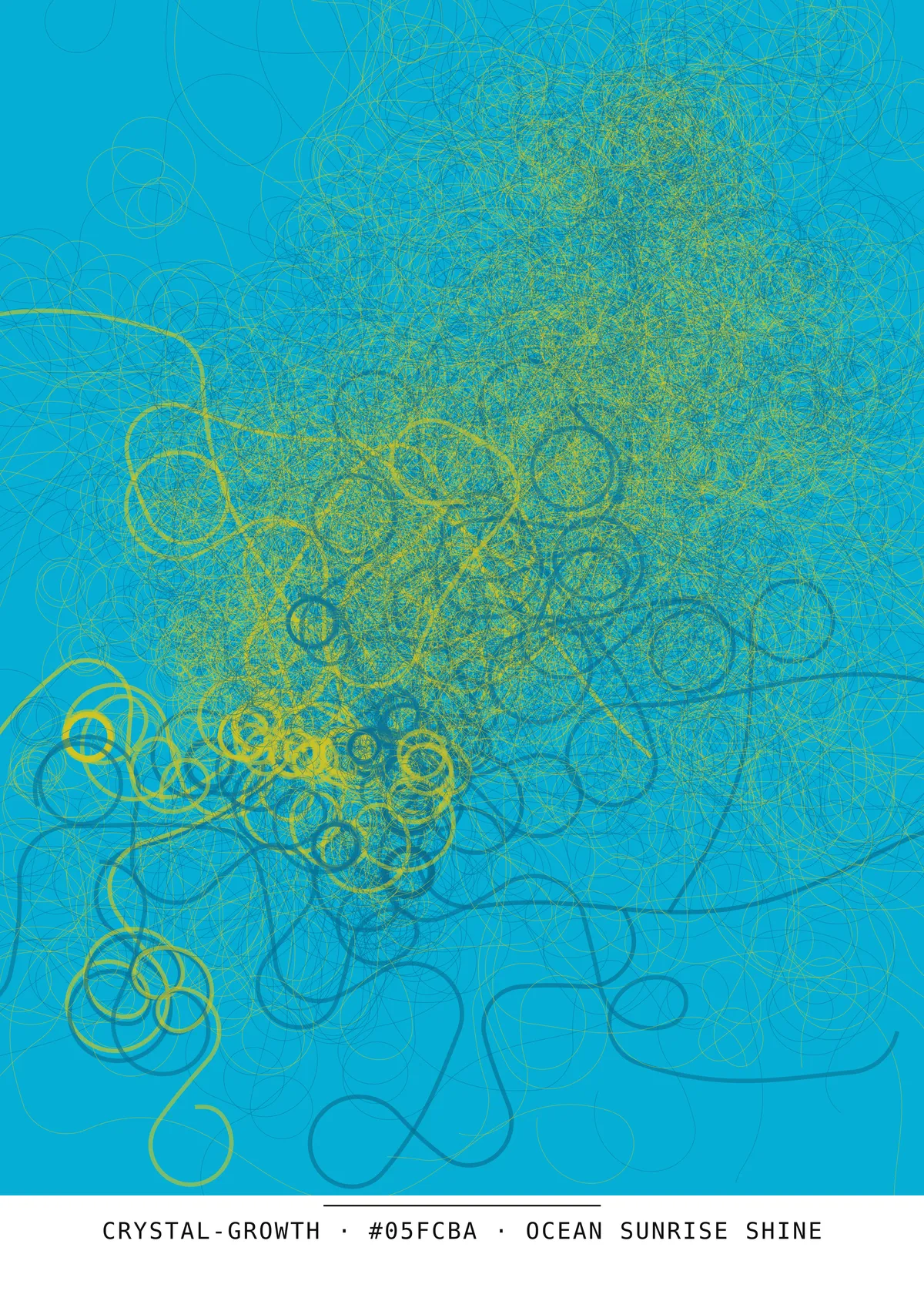
Gray-Scott, a reaction-diffusion system in the line of what Alan Turing proposed to explain spots and stripes. A predator-prey model, where two populations rise and fall as they chase each other. Crystal growth, the Barnsley fern, built with an iterated function system, and a Voronoi diagram, where each cell groups the points closest to the same seed. Living things and matter, seen as simple rules that repeat.
Frequently asked questions
Who is this math and science art gift for?
For someone who likes maths, physics, computer science or biology, without needing to know the formula behind the image. The object is first of all an art print. The scientific idea is the anecdote, and its signed certificate, sent as a PDF, can be checked by anyone.
Which format should I give?
The 15 × 20 cm unframed print (€19.99) suits a desk or a shelf. The 30 × 40 cm unframed print (€31.99) is the usual choice for a wall. In 30 × 40 cm with a frame, the price is €59.99 for the metal frame and €69.99 for the wood frame, both ready to hang.
What is the certificate of authenticity for?
It ships with your print, carrying the work's fingerprint and its cryptographic signature (Ed25519). Anyone can verify the certificate matches the artwork, without going through me.
What formats and print quality?
300 DPI on fine art paper, in several formats. Production is on demand, then the print ships straight to your door.
Can I give a print as a gift?
Yes. The copy is numbered. Its signed certificate of authenticity, which carries the number, is emailed to you as a PDF when the print is made, and you can print it out to slip in with the gift. The order is delivered to the address you enter at checkout, so it goes straight to the person who receives it.
What is the last day to order for delivery before Christmas?
Based on the lead times announced by our printer, you need to order at least 10 days before 24 December. This is an estimate and not a commitment: production is on demand and delivery depends on the carrier.