Collection · Space-filling curves
Hilbert Curve & Space-Filling Curve Art, Numbered Limited-Edition Prints
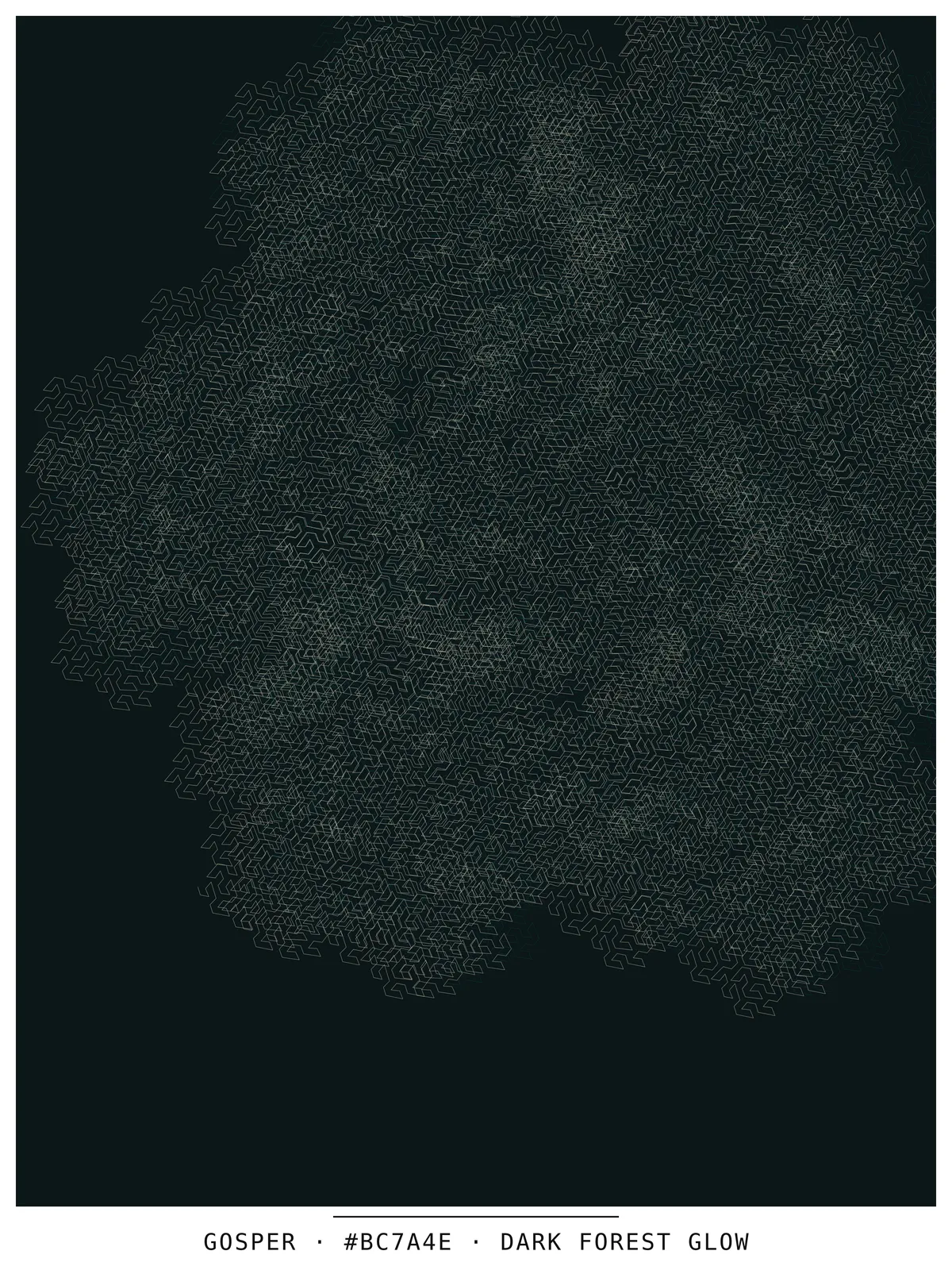
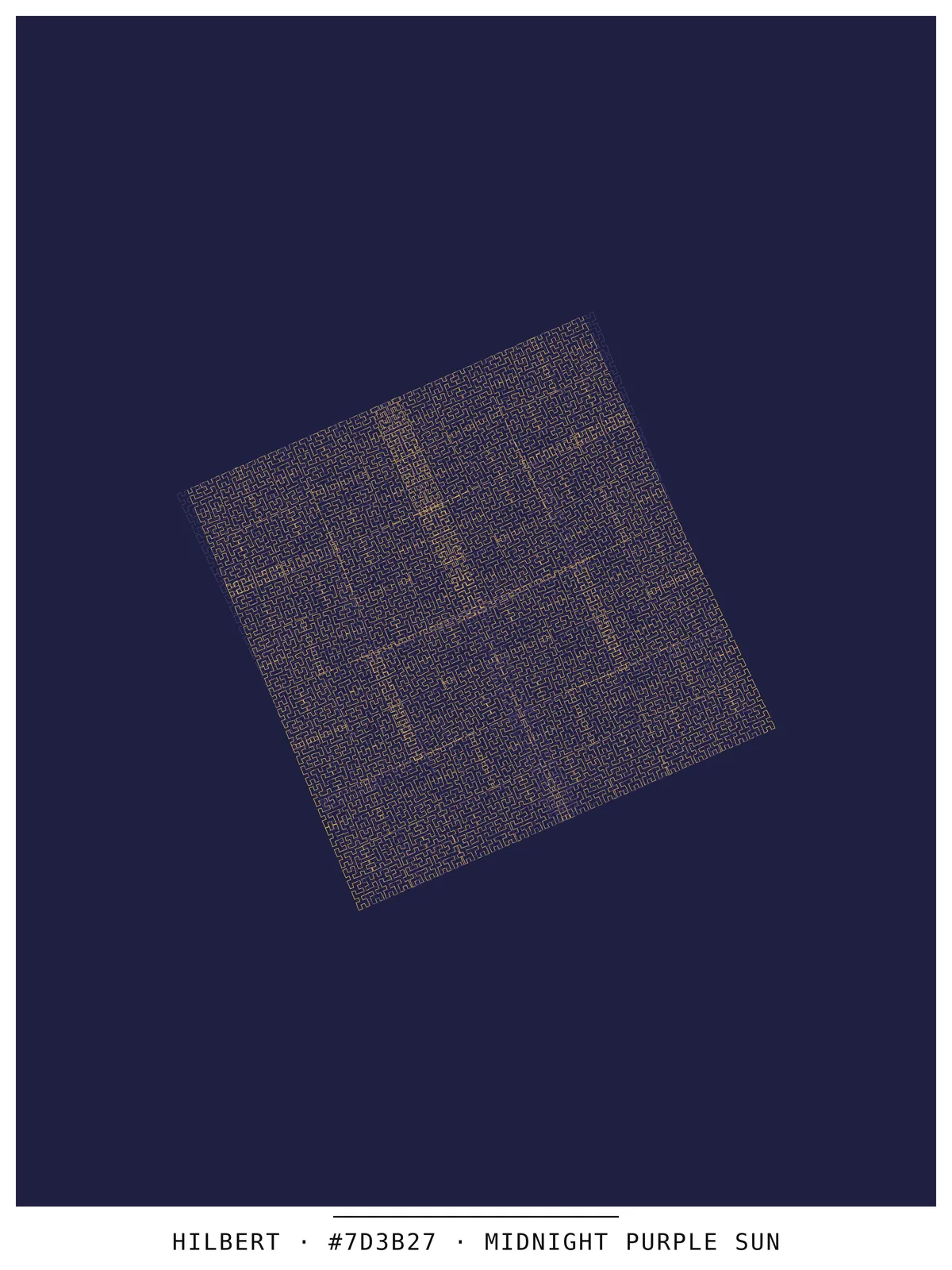
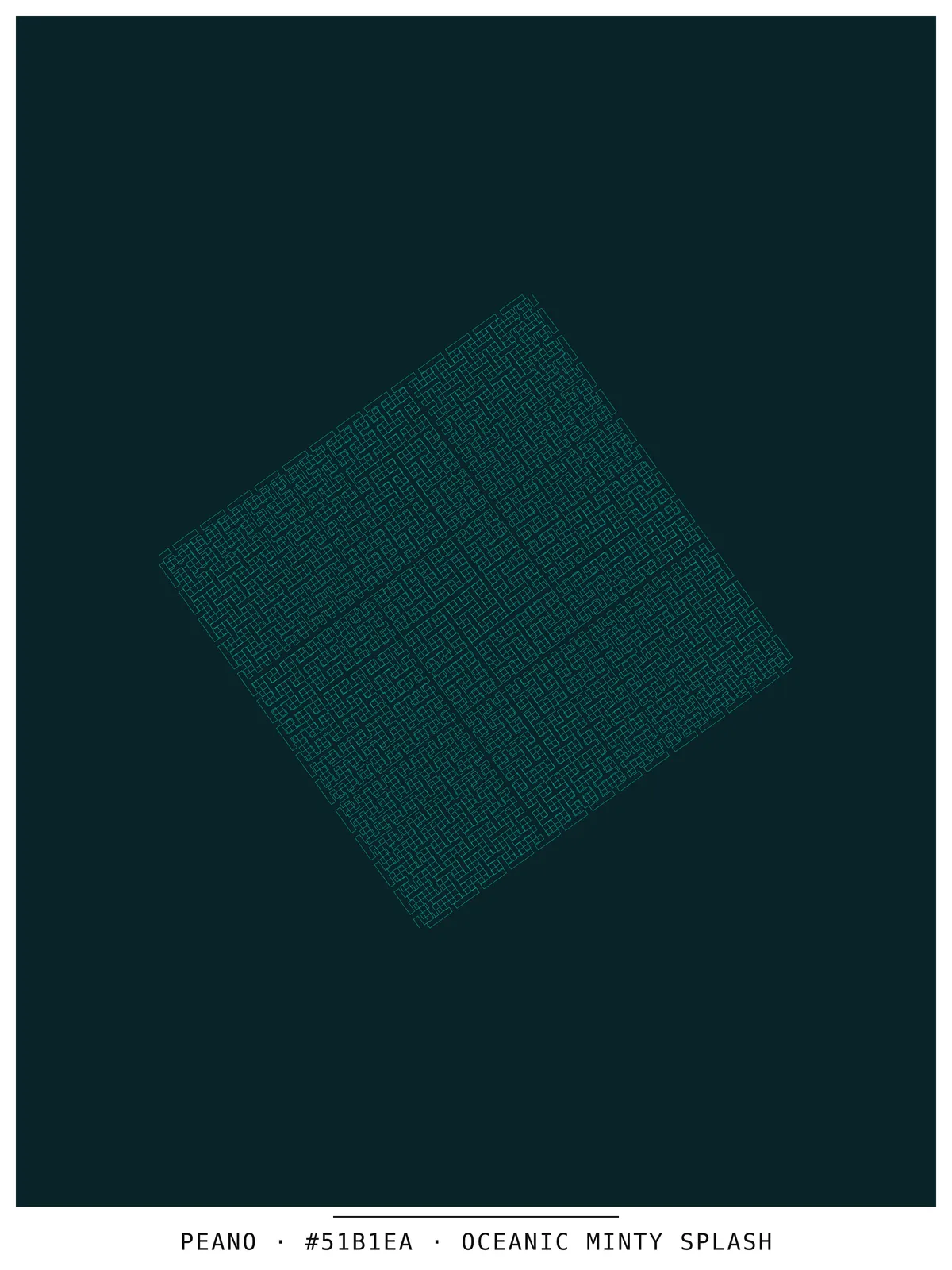
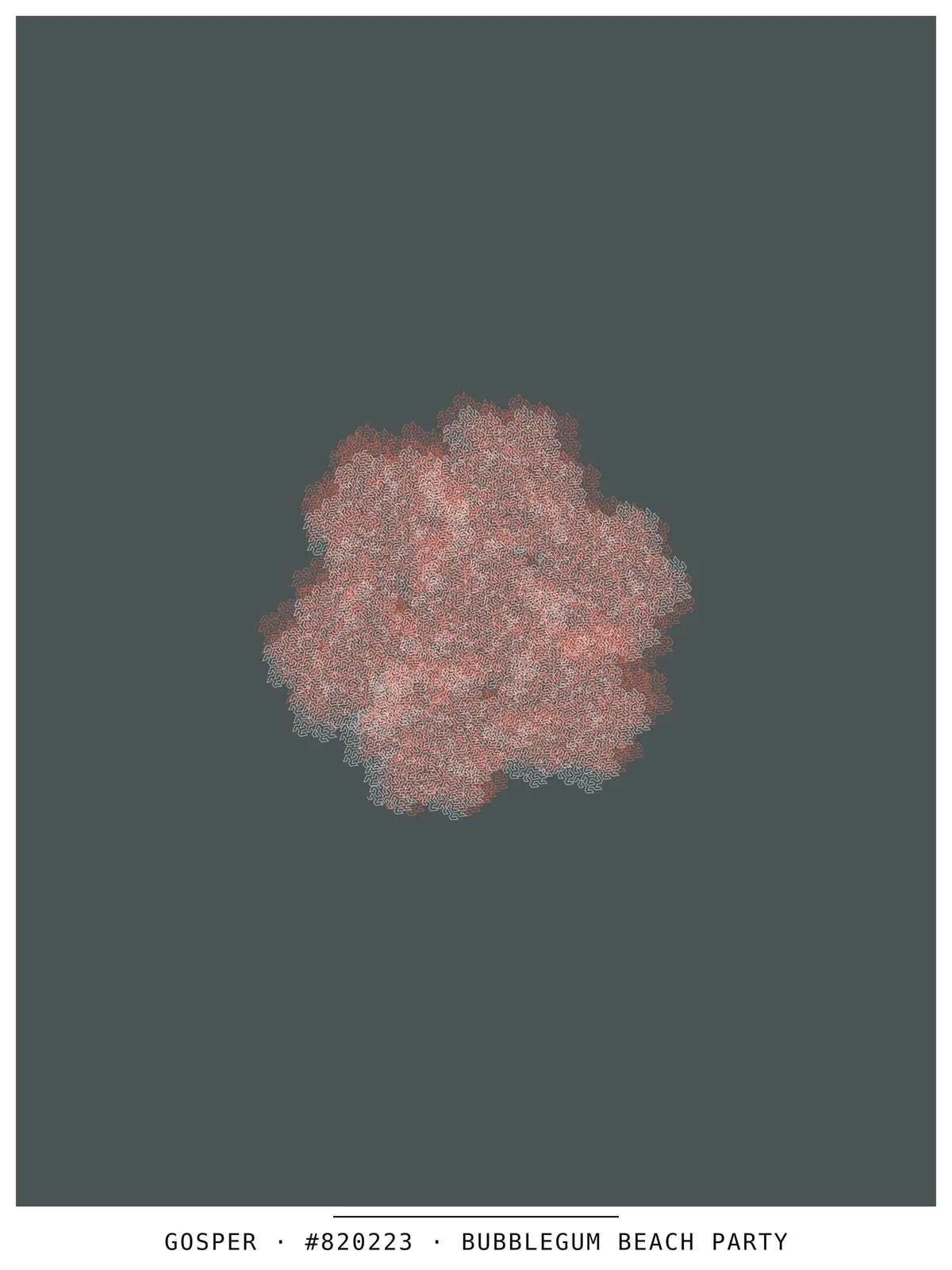
One single line, never lifted and never crossing itself, that ends up passing through every point of a square. That's a space-filling curve, and the best known one is the Hilbert curve. Next to it sit Peano, Moore and Gosper, a whole family of paths that fold and refold until they fill the surface. Here we turn them into posters. Every day one work from the family goes out as a numbered, signed, limited edition.
- Limited numbered edition
- 300 DPI fine art print
- Ed25519-signed certificate
What is a Hilbert curve?
Picture a single line winding through a square that, by folding back on itself again and again, ends up passing right next to every point of that square. A line, a one-dimensional object, filling a two-dimensional surface: in the 19th century that came as a shock. Giuseppe Peano was the first to show it was possible, in 1890; David Hilbert gave a version in 1891 you can draw step by step, easier to follow with the eye. At each step you replace every segment with a smaller copy of the pattern, and the more you repeat, the tighter the line hugs the square. That's a fractal: the same shape returning at every scale.
How are these prints generated?
Every work starts from a seed. That seed fixes the parameters (the order of the curve, meaning how many folds, the variant, the palette), and the same seed always produces exactly the same image, here and everywhere else. Nothing is drawn by hand, nothing is retouched: the algorithm folds the line step after step, and the curve fills the square on its own. The seed and parameters are frozen into a fingerprint, so the work can't exist twice. That fingerprint is then signed with a cryptographic key (Ed25519), and the certificate that comes with your print can be verified by anyone, without going through me.
Why a print, not just a wallpaper?
Because a space-filling curve is made to be followed with your eye. A single line starts in one corner, winds, folds back, and ends up covering the whole surface without ever crossing itself. The closer you get, the more of the small repeating turns you see. A small screen crushes half of that detail. We print at 300 DPI on fine art paper, in several formats. Every print is numbered and ships with its signed certificate. Once an edition sells out, it's gone for good: the work doesn't go back into production.
Hilbert, Peano, Moore and the Gosper curve
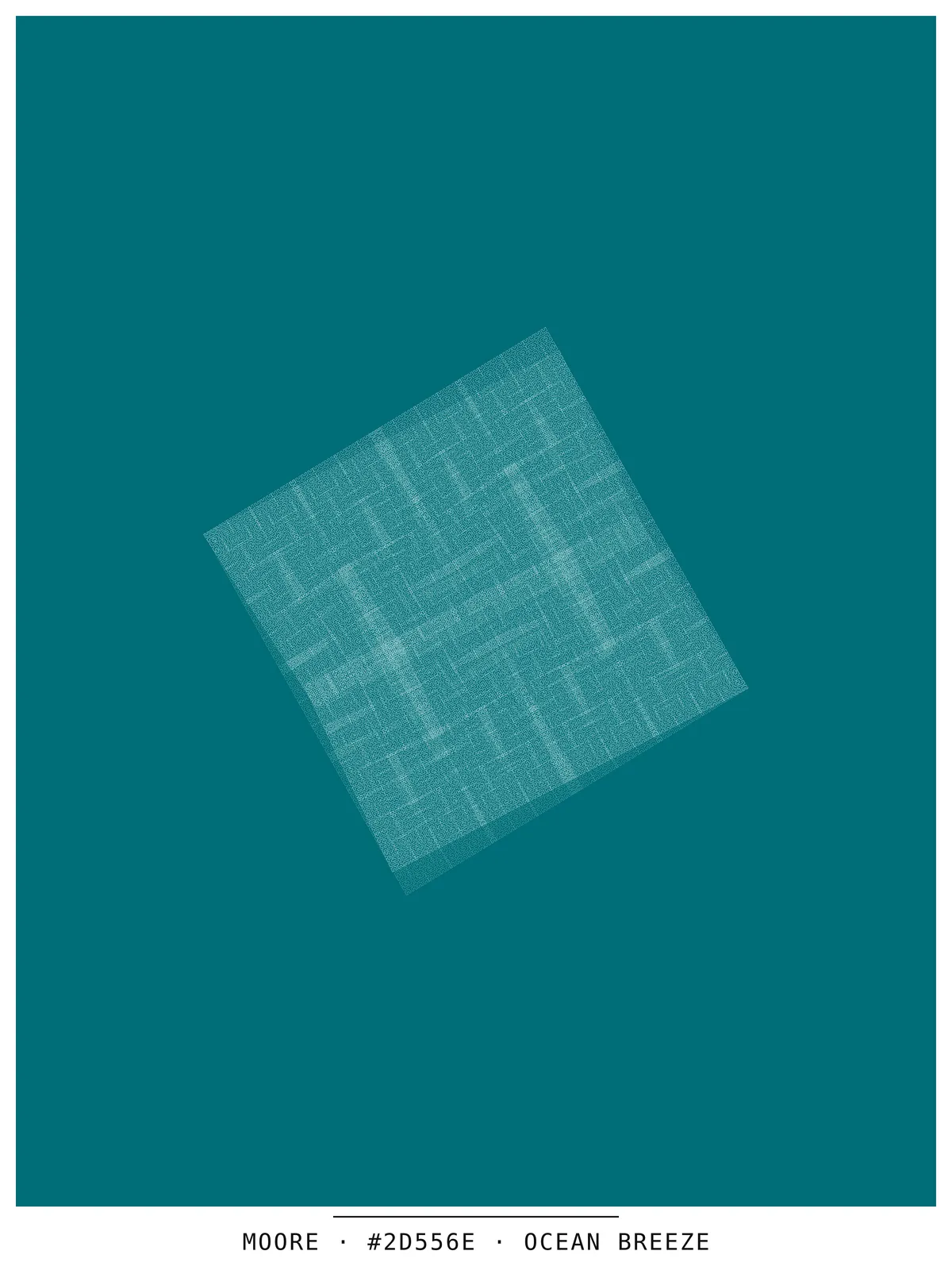
The collection gathers several ways to fill a square with a single line. There's the Hilbert curve, the most readable, folding in right angles. There's the Peano curve, the 1890 ancestor, splitting into nine instead of four. There's the Moore curve, a cousin of Hilbert's that closes back into a loop. And there's the Gosper curve, also called the flowsnake, which fills a jagged-edged tile rather than a clean square. We publish one work a day, just one. Come back tomorrow for the next, or dig through the works already published just above.
Frequently asked questions
What is a Hilbert curve poster?
A paper print of a space-filling curve, the Hilbert curve: a single line that folds back on itself until it passes through every point of a square, never crossing, where every part looks like the whole. Here, every poster is a unique work, numbered and signed, with parameters and a palette that exist only once.
Who invented the Hilbert curve?
The German mathematician David Hilbert, in 1891. He built on a discovery by Giuseppe Peano the year before, in 1890: Peano was the first to show a line could fill a surface. Hilbert's version has the advantage of being drawn step by step, which makes it easier to follow with the eye.
What is the certificate of authenticity for?
It ships with your print, carrying the work's fingerprint and its cryptographic signature (Ed25519). Anyone can verify the certificate matches the artwork, without going through me.
What formats and print quality?
300 DPI on fine art paper, in several formats. Production is on demand, then the print ships straight to your door.