Collection · Fractal curves
Dragon Curve & Fractal Curve Art, Numbered Limited-Edition Prints
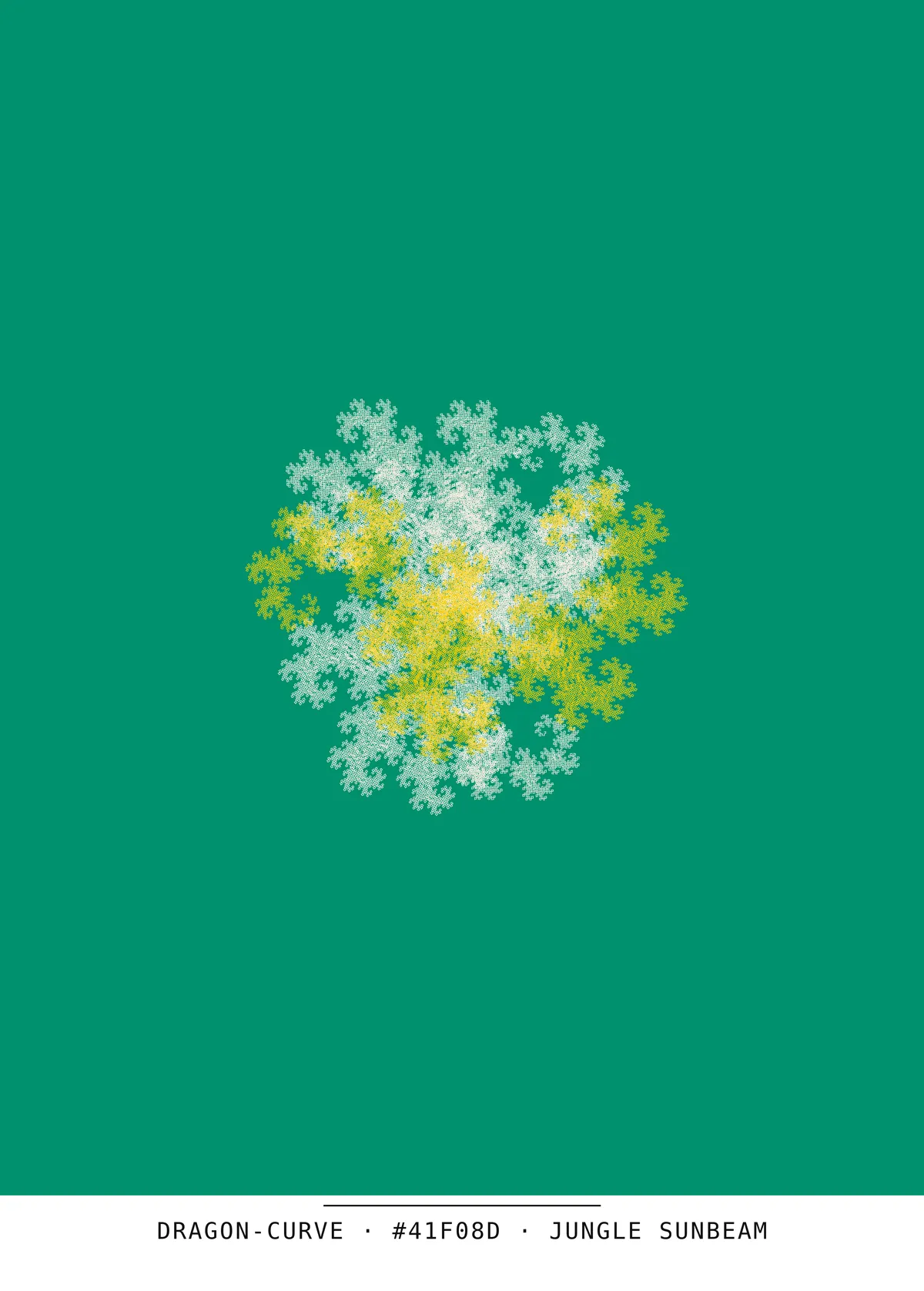
Take a long strip of paper, fold it in half, again, again, a dozen times. Unfold it, set every crease to a right angle, and there it is: a dragon that coils up without ever crossing itself. That's the dragon curve, and it's a fractal. Next to it sit the Koch snowflake, the Lévy C curve, the terdragon, a whole family of curves that fold back on themselves forever. Here we turn them into posters. Every day one work from the family goes out as a numbered, signed, limited edition.
- Limited numbered edition
- 300 DPI fine art print
- Ed25519-signed certificate
What is the dragon curve?
The easiest way in is paper. Take a strip, fold it in half the same way a dozen times. Unfold it, open every crease to 90°, and you get a line that turns, comes back, coils up, and never crosses its own path. Fold once more and the pattern doubles while looking just like itself: that's a fractal, the same shape returning at every scale. It's often called the Heighway dragon, after one of the physicists who studied it; Martin Gardner made it famous with the wider public in the late 1960s.
How are these prints generated?
Every work starts from a seed. That seed fixes the parameters (the number of folds, the curve variant, the turn angle) and the palette, and the same seed always produces exactly the same image, here and everywhere else. Nothing is drawn by hand, nothing is retouched: the algorithm folds the curve over and over, and the dragon appears on its own. The seed and parameters are frozen into a fingerprint, so the work can't exist twice. That fingerprint is then signed with a cryptographic key (Ed25519), and the certificate that comes with your print can be verified by anyone, without going through me.
Why a print, not just a wallpaper?
Because a fractal curve is made to be followed with your eye. It folds from the big shape down to the smallest turns, and the closer you get, the more there is to see. A small screen crushes half the detail. We print at 300 DPI on fine art paper, in several formats. Every print is numbered and ships with its signed certificate. Once an edition sells out, it's gone for good: the work doesn't go back into production.
The dragon, the Koch snowflake and the Lévy curve
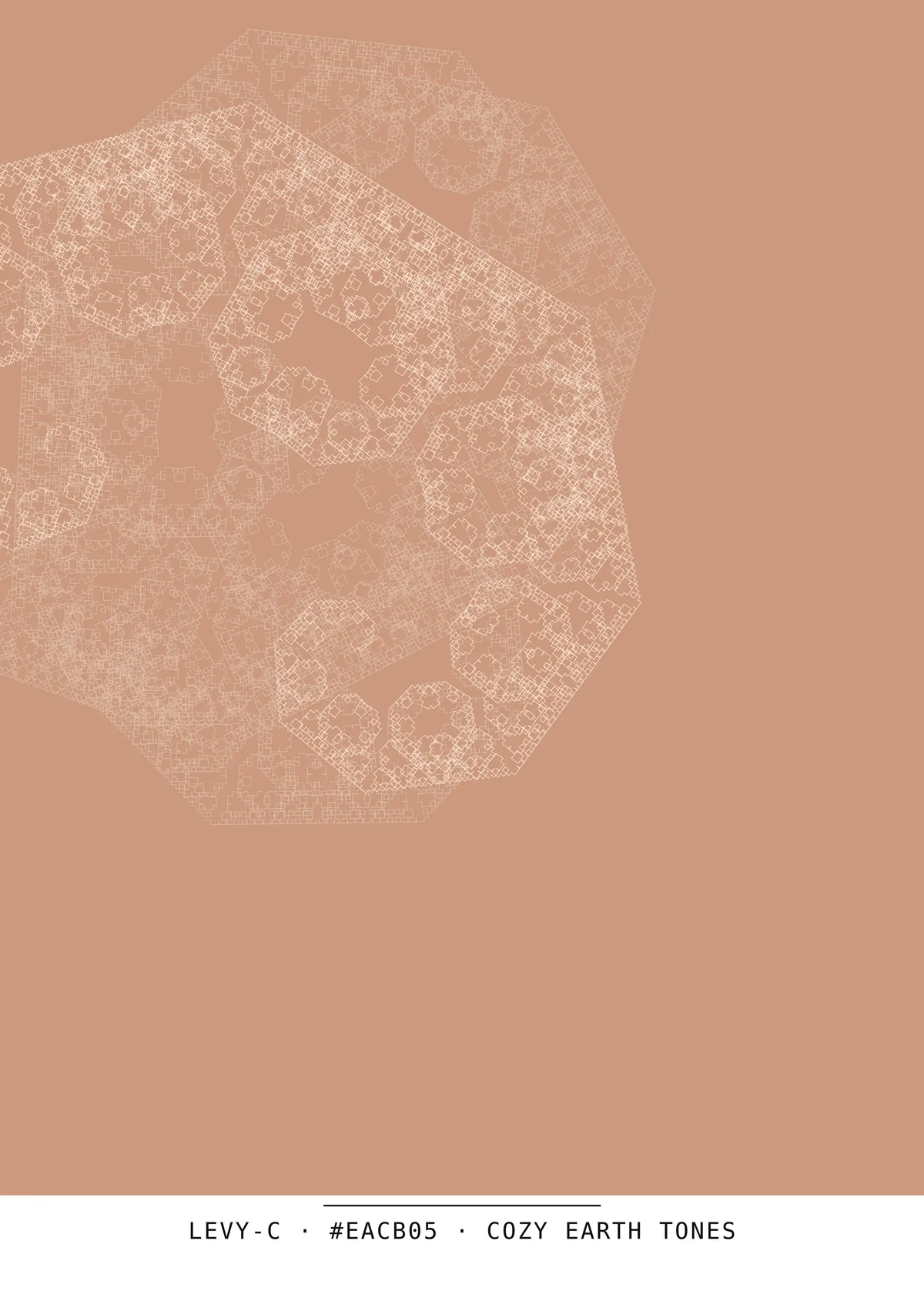
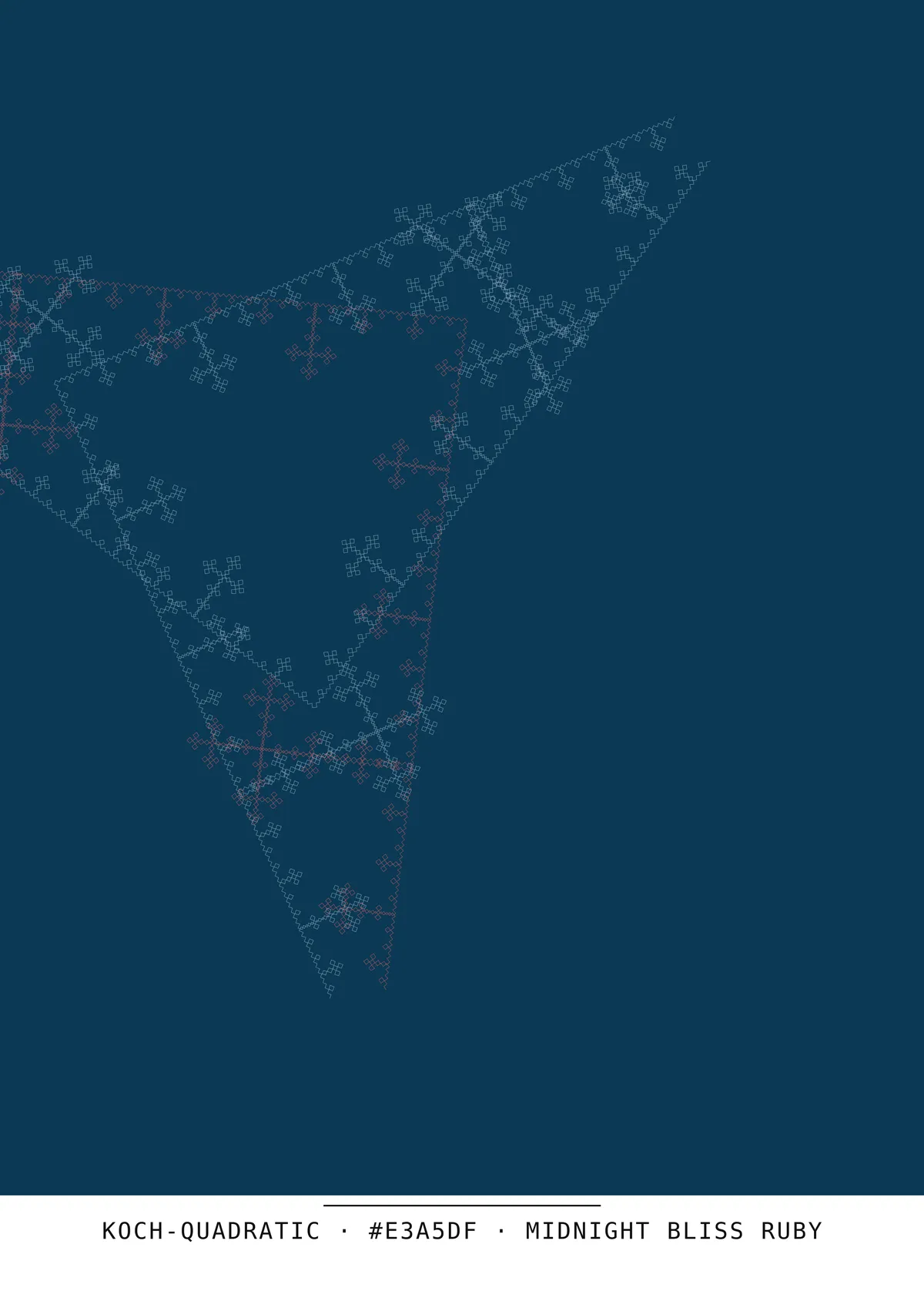
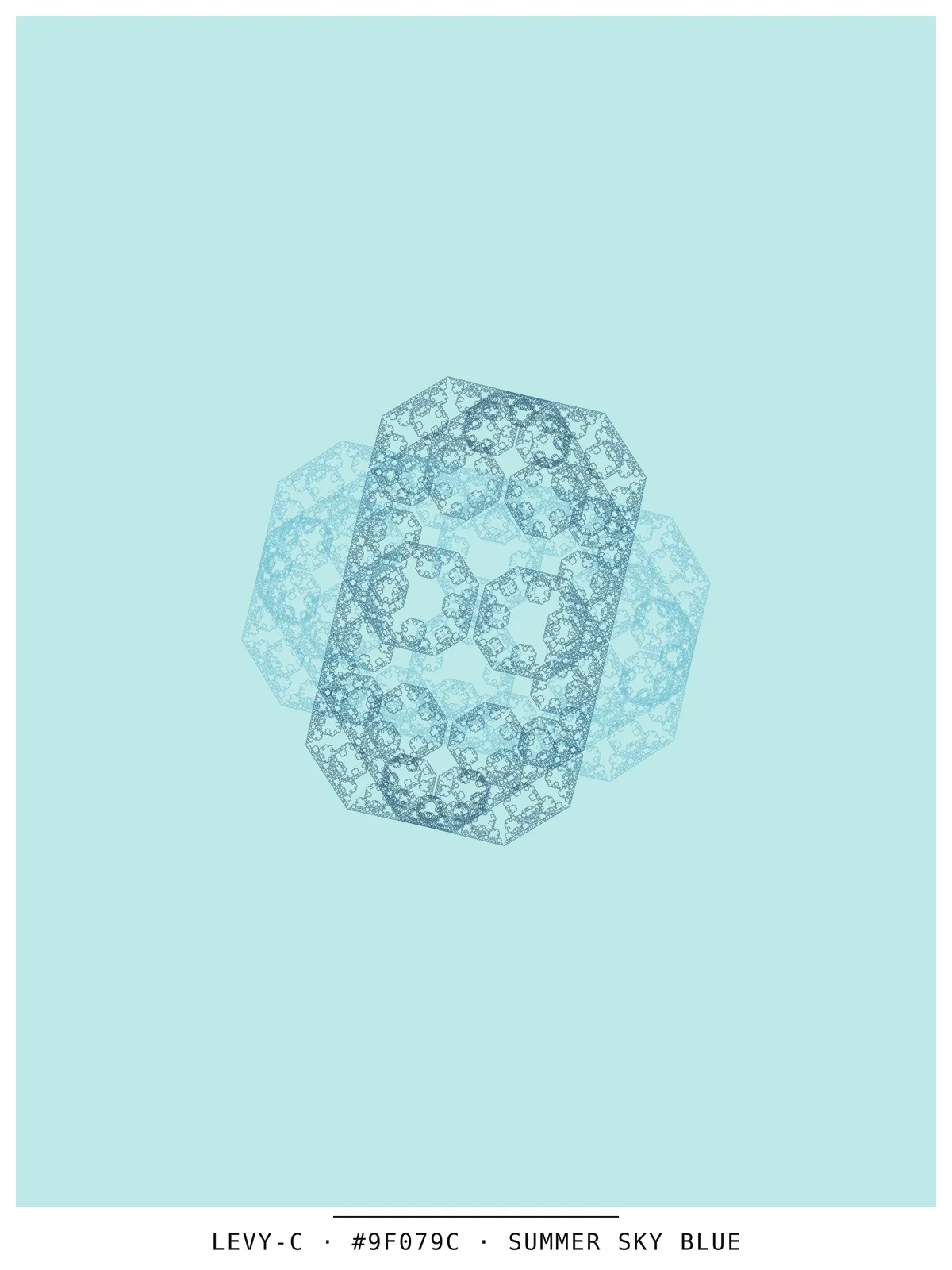
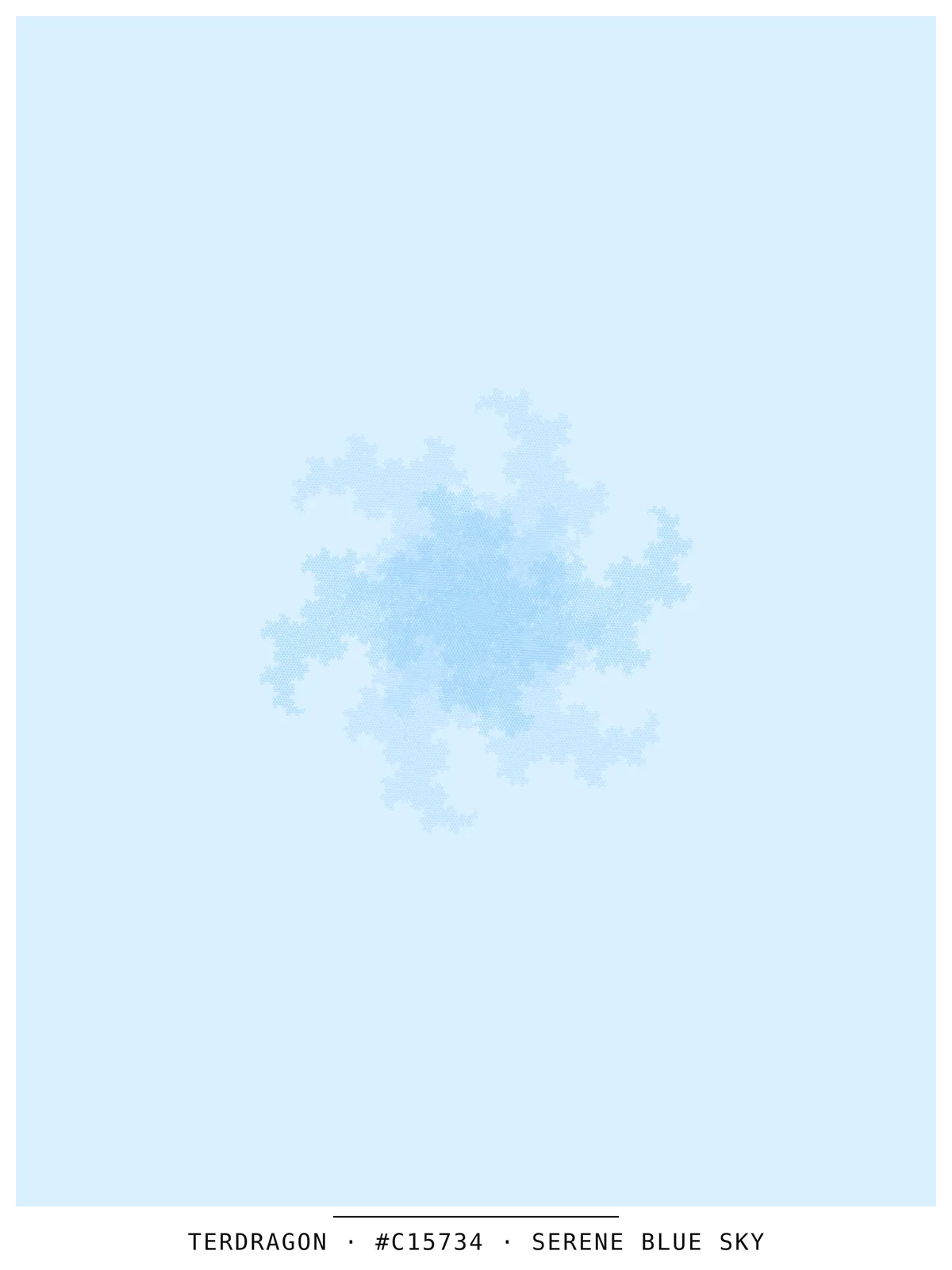
The collection gathers several ways to fold a line back on itself. There's the dragon curve and its cousin the terdragon, which folds in threes instead of twos. There's the Koch snowflake, described by Helge von Koch in 1904: a triangle you keep adding smaller bumps to, until the outline reaches an infinite length while still enclosing a finite area. There's its square version, all right angles, and the Lévy C curve, that big budding C. We publish one work a day, just one. Come back tomorrow for the next, or dig through the works already published just above.
Frequently asked questions
What is a dragon curve poster?
A paper print of a fractal curve, the dragon curve: a line that folds back on itself forever without ever crossing, where every part looks like the whole. Here, every poster is a unique work, numbered and signed, with parameters and a palette that exist only once.
Who discovered the dragon curve?
It's credited to three NASA physicists, one of them John Heighway, which is why it's also called the Heighway dragon. Martin Gardner popularised it in his mathematical games column in the late 1960s. The Koch snowflake goes further back, to the Swedish mathematician Helge von Koch in 1904.
What is the certificate of authenticity for?
It ships with your print, carrying the work's fingerprint and its cryptographic signature (Ed25519). Anyone can verify the certificate matches the artwork, without going through me.
What formats and print quality?
300 DPI on fine art paper, in several formats. Production is on demand, then the print ships straight to your door.