Escape-time fractals
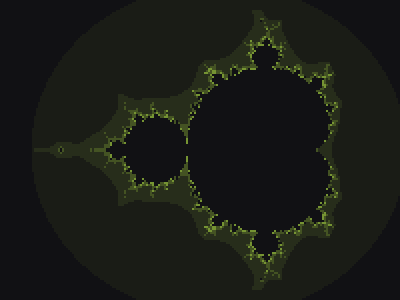
A pixel's colour tells how many rounds it took for the calculation to run away.
The rule
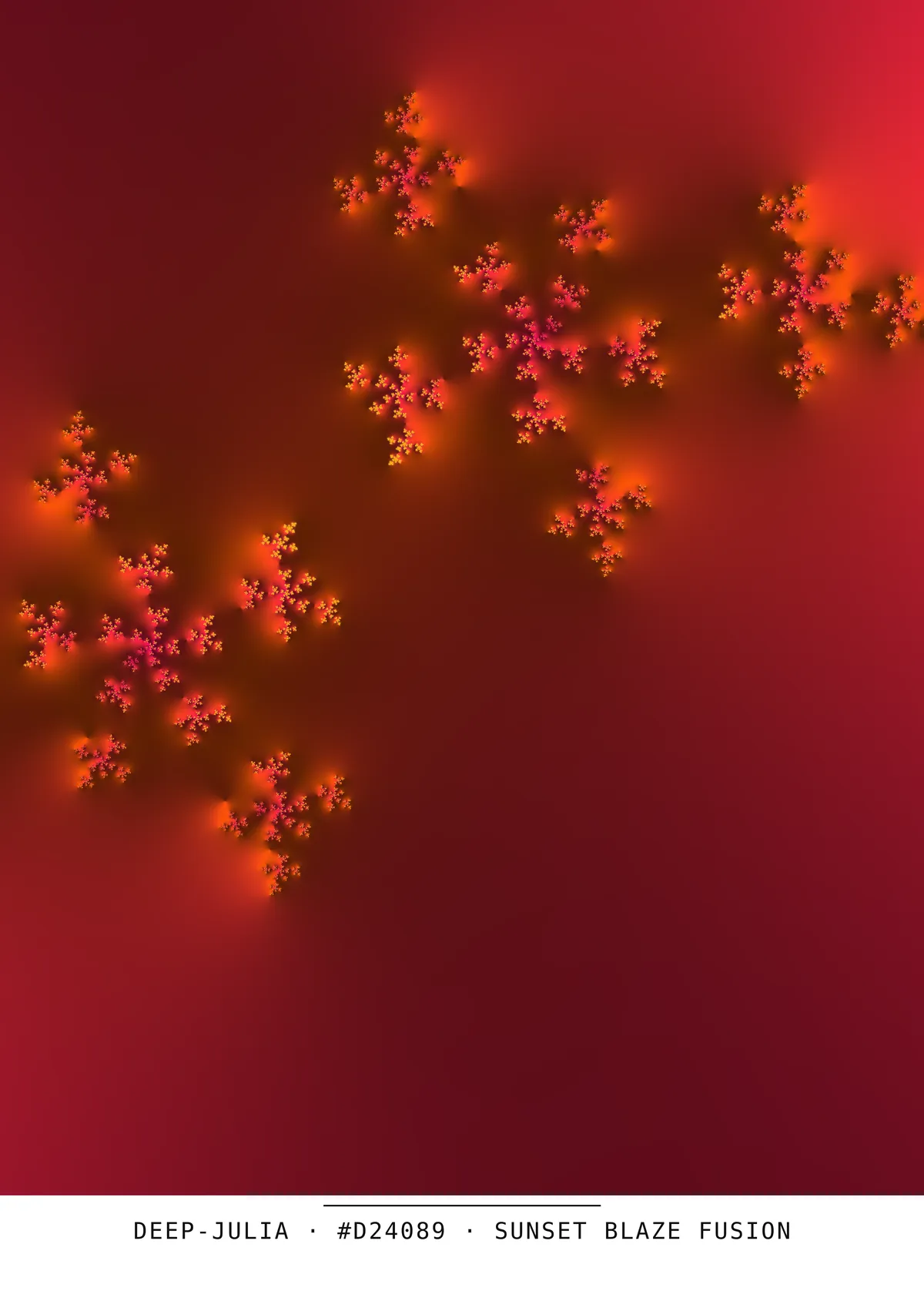
A point on the plane is a number with two coordinates. Call it c. Start from z = 0, then repeat the same operation: square z and add c.
z → z² + c
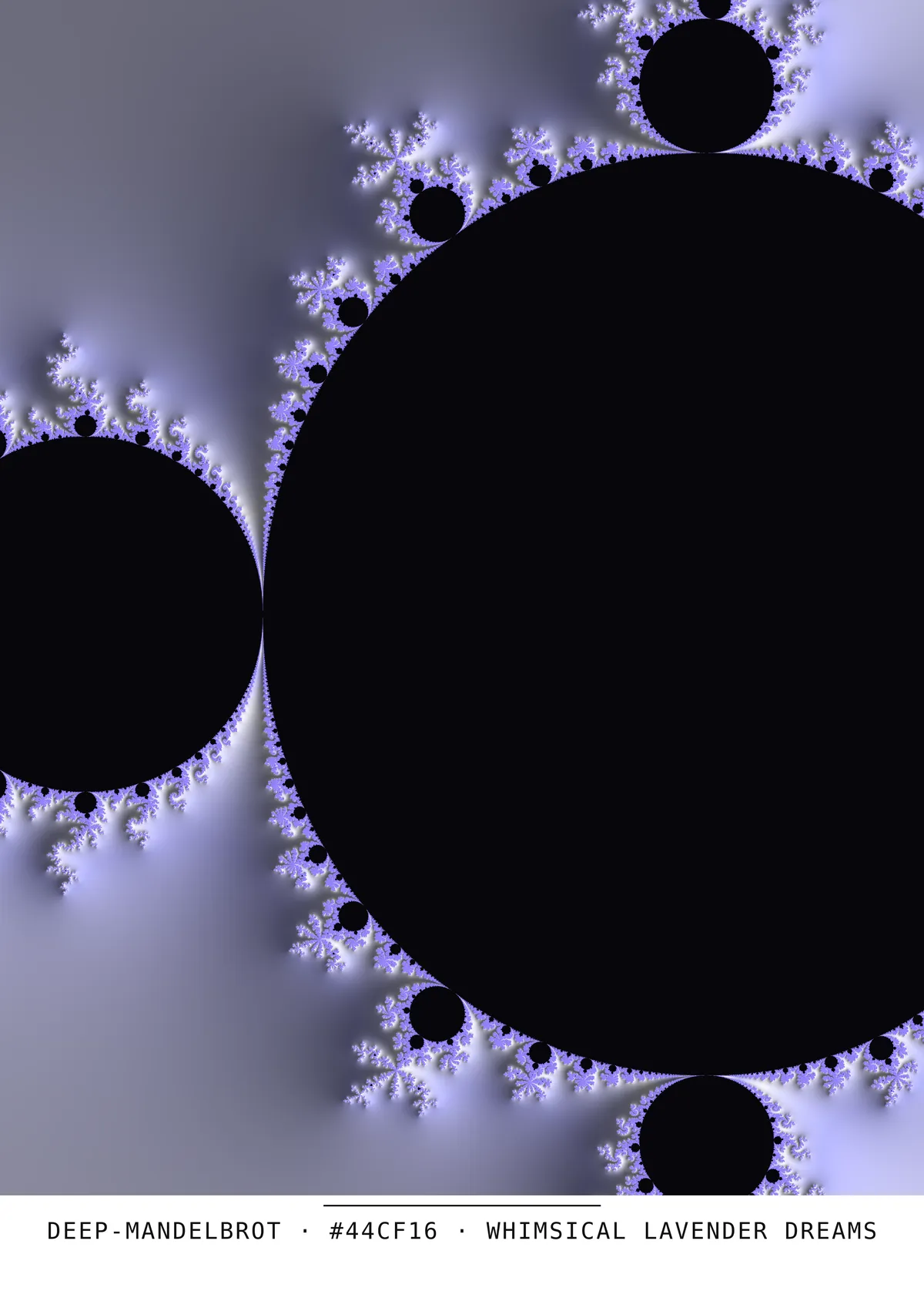
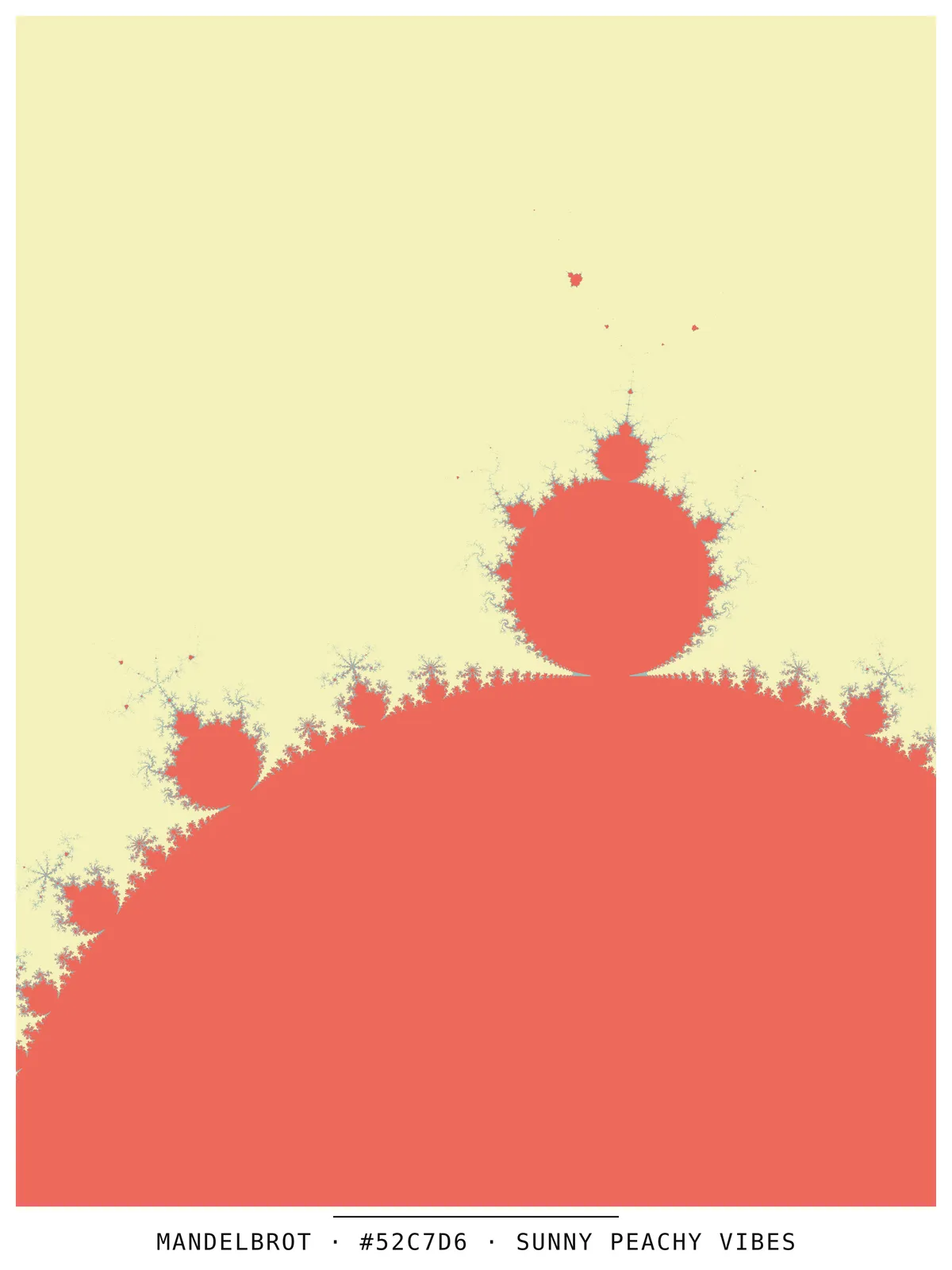
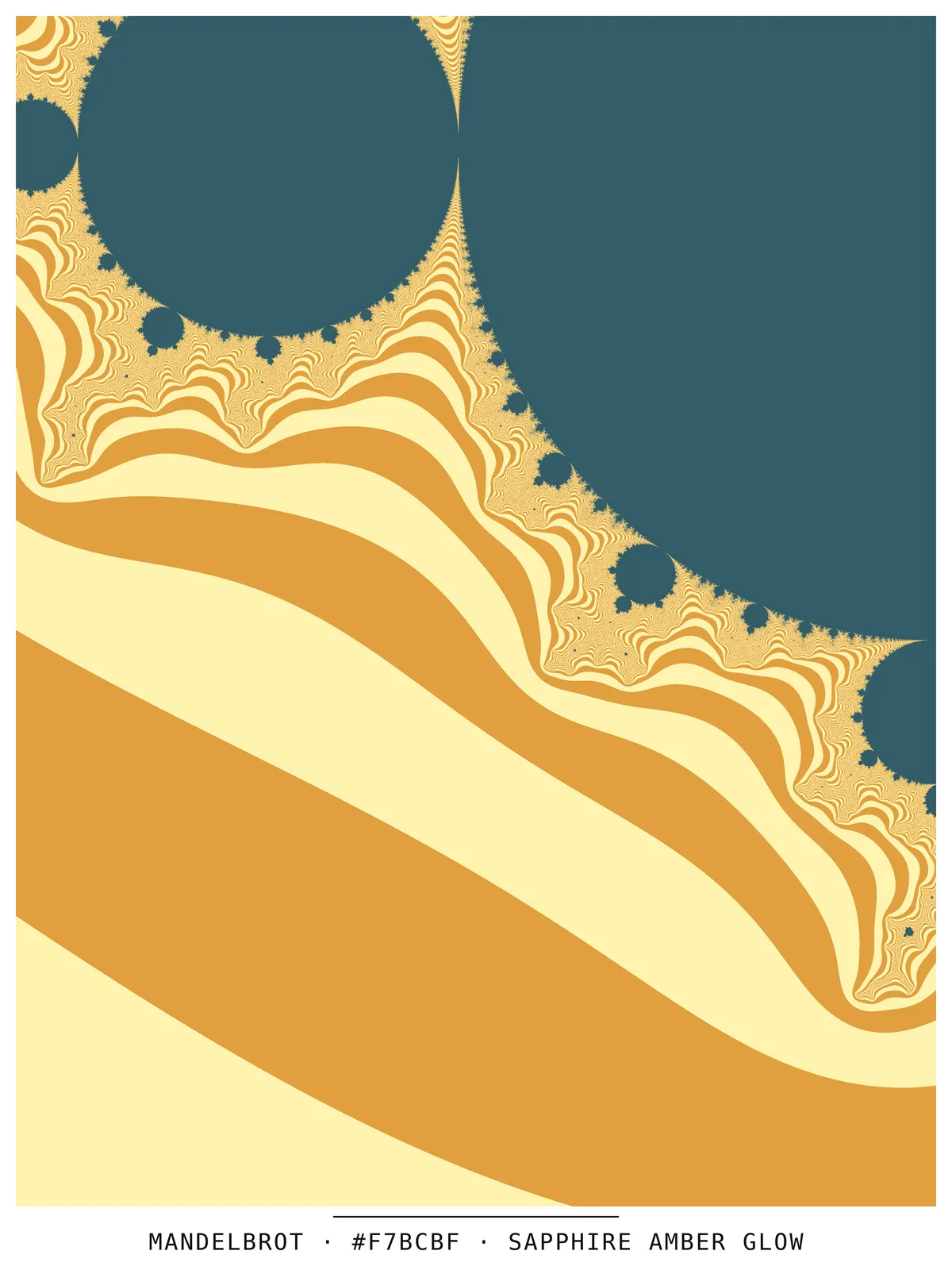
If z gets further than 2 from the origin, it will never come back. We then note after how many rounds it left: that number gives the pixel its colour. If z stays close to the origin for all the rounds we allowed, the point belongs to the set, and we paint it dark.
This is done for every pixel of the image. The border between what leaves quickly and what never leaves is the figure.
Your turn
On the left, the point under study changes at every pixel: this is the Mandelbrot set. Click on it and the cross lands there. On the right is the Julia figure of that point: c is fixed, and it is the starting point of z that changes from one pixel to the next.
The two sliders for c do the same thing as the click, from the keyboard. The iterations slider sets how many rounds each pixel is given: the higher it is, the better the border shows, and the longer the picture takes to arrive.
The drawing above is a teaching sketch, not the artwork: it shows the rule, it does not replay the colours, the size of the dots or the grain of the print.
Newton's basins
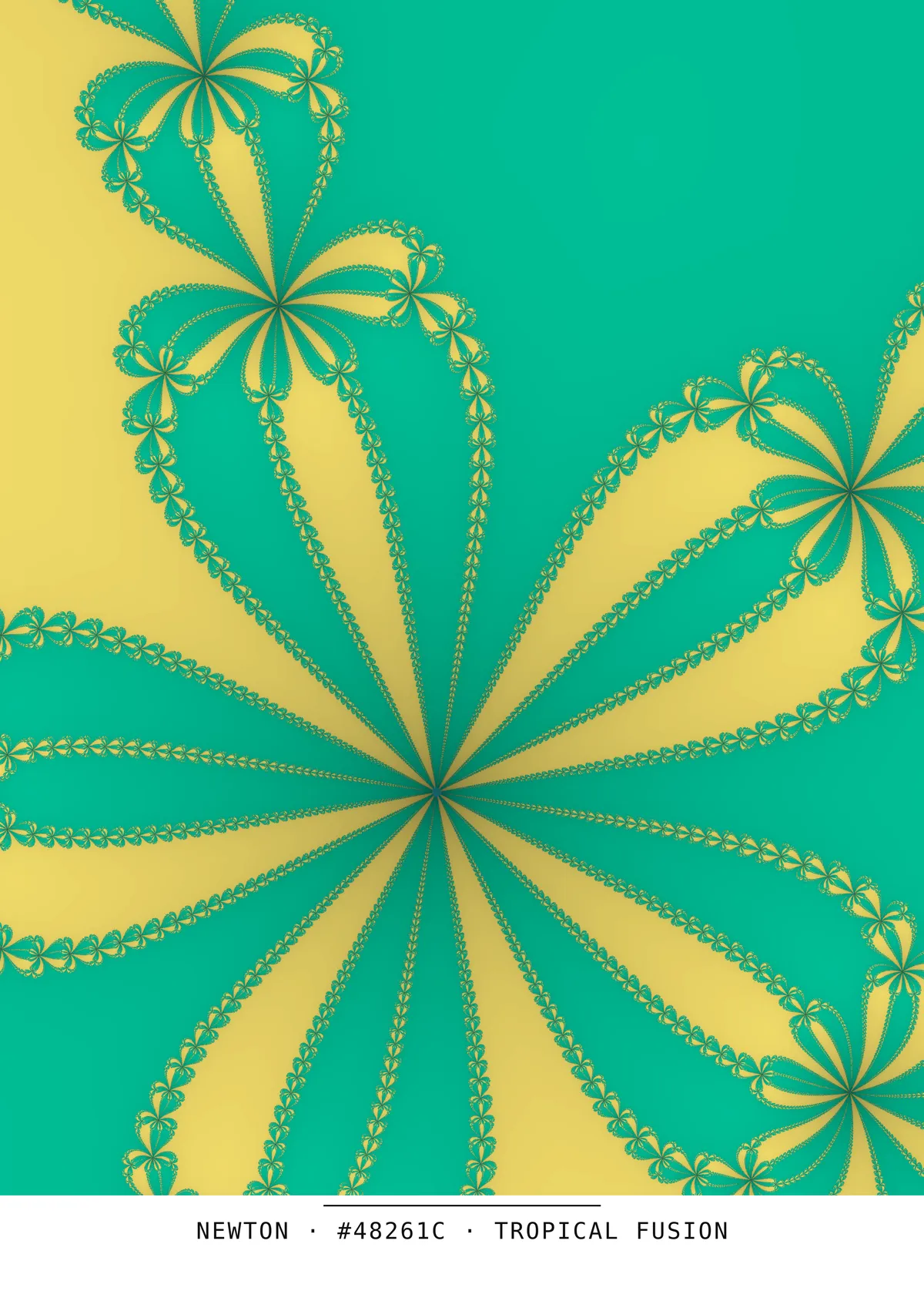
Newton and Nova do not count escapes. They look for a point where an equation reaches zero, here z³ − 1 = 0, which has three solutions. Every starting point ends up closing in on one of the three: the pixel is painted with the colour of the one it reaches.
The sketch has only three roots. The program draws between three and six depending on the work. With few steps, many points have not chosen yet and stay dark.
What changes from one algorithm to the next
Almost everything lies in the line of calculation that is repeated. The rest is tuning.
- Mandelbrot and Julia Set
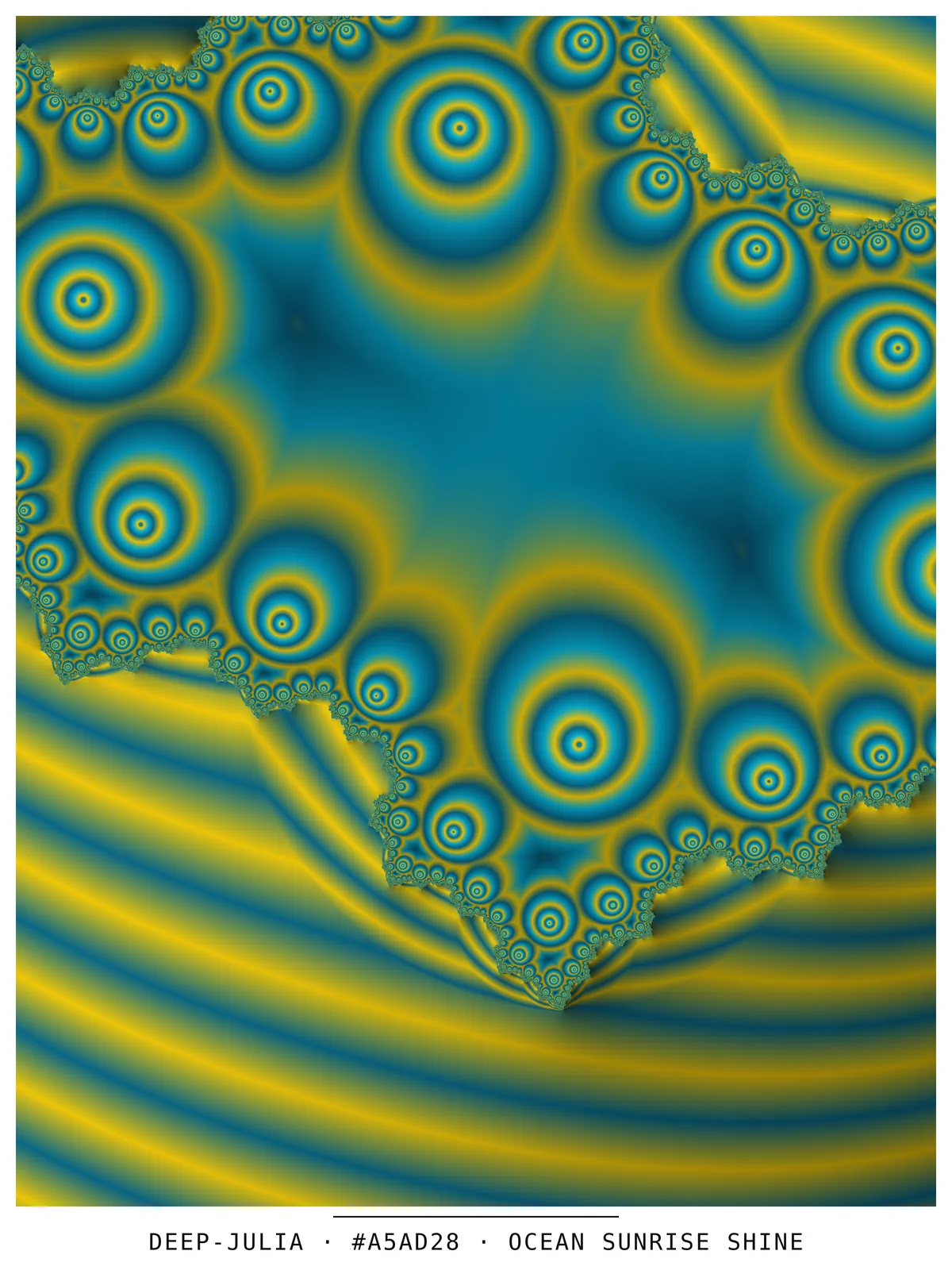
- The rule above. For Mandelbrot, c is the pixel. For Julia, c is chosen once for the whole image and it is the starting point that changes.
- Burning Ship
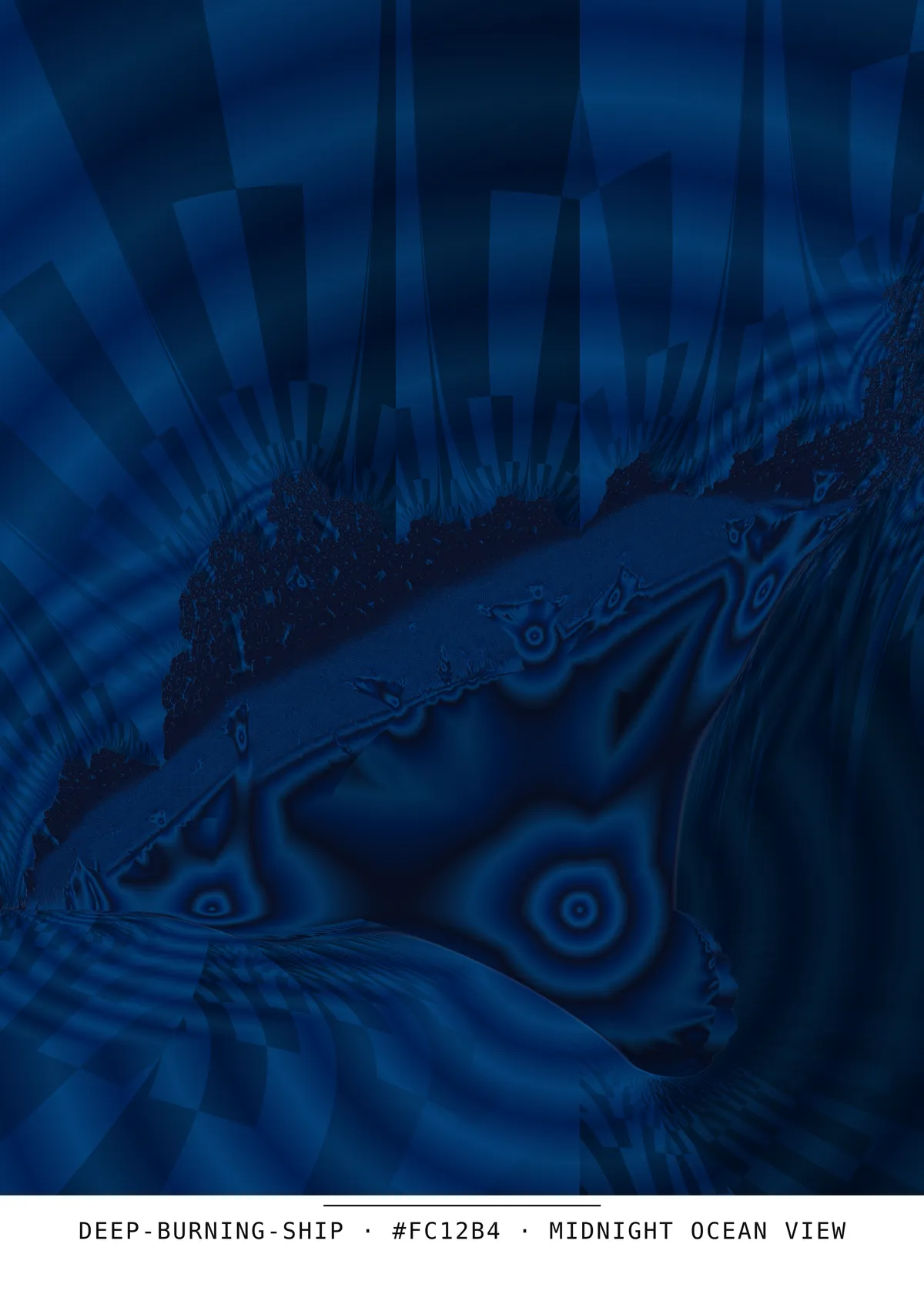
- The absolute value of both coordinates of z is taken before squaring it. The shapes come out like flames.
- Tricorn
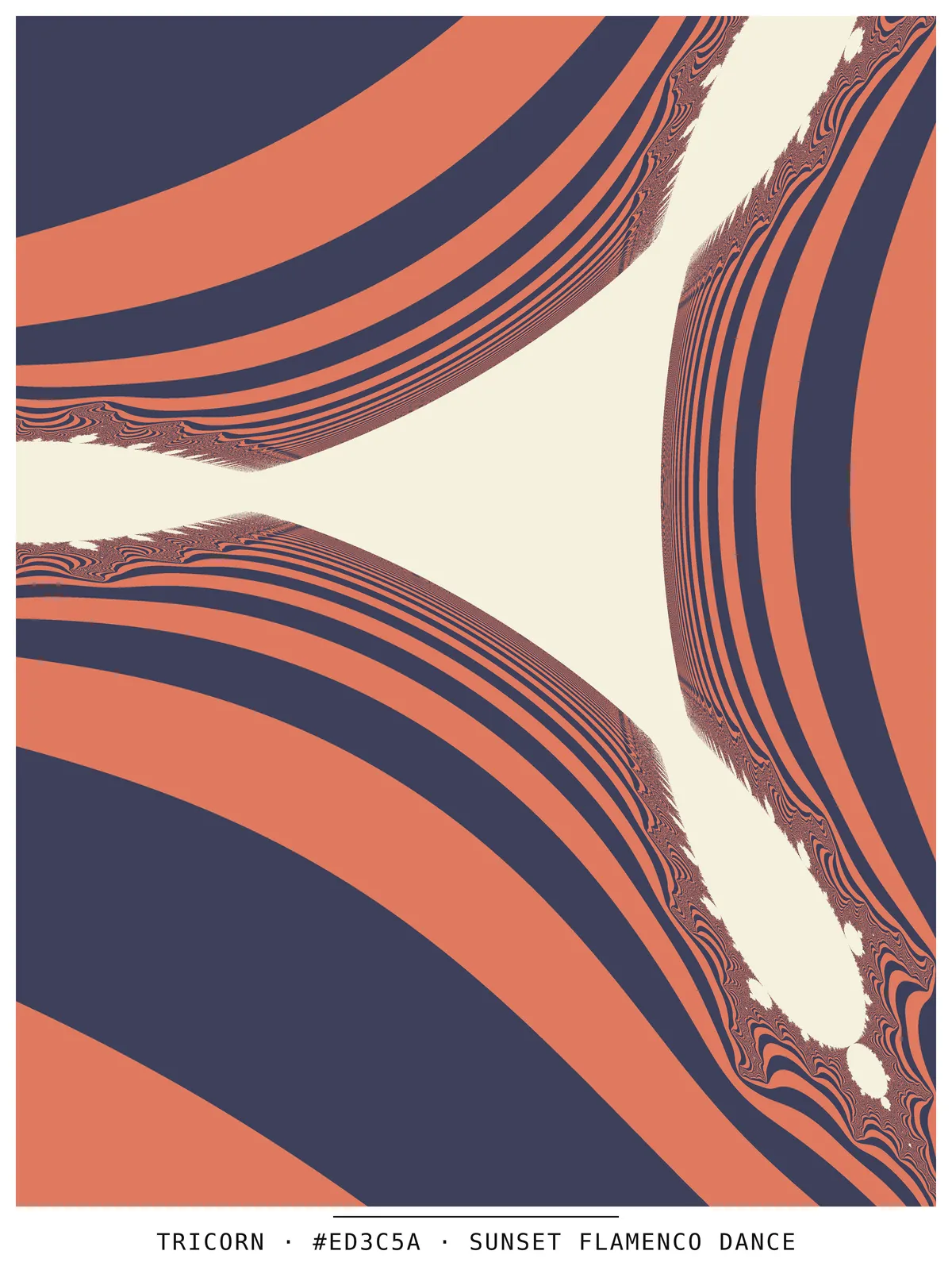
- z is replaced by its conjugate before being squared. The figure has three points.
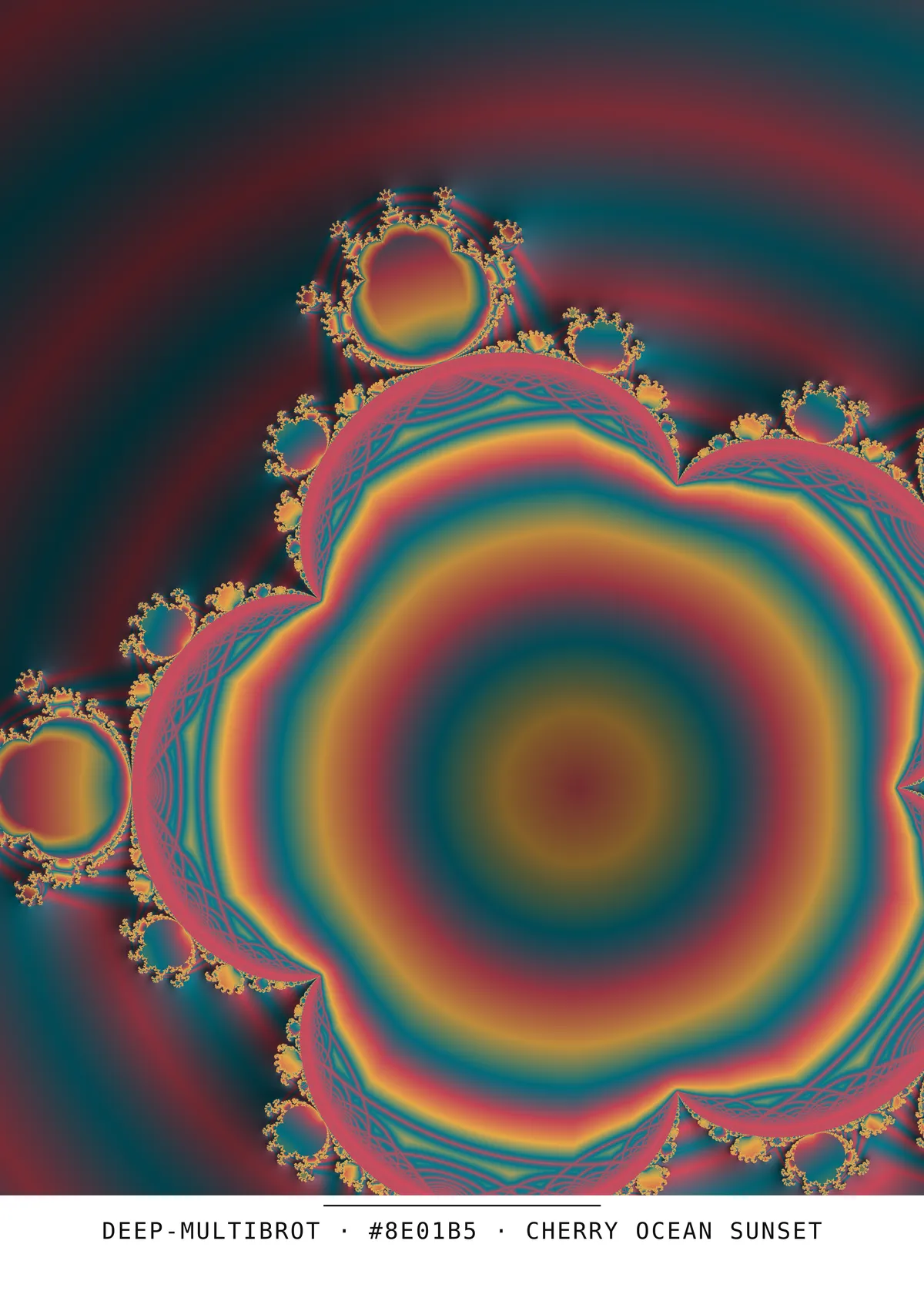
- Multibrot
- z is raised to an integer power d, from 3 to 6, instead of 2. The set gets d − 1 axes of symmetry.
- Phoenix Set
- The calculation remembers the previous round: a term proportional to the previous z is added. It is the only one in the family with a memory.
- Mandelbrot-Silk Fusion
- Same rule, but the pixels are not coloured. Points are drawn at random, the path of those that eventually escape is followed, and it is traced in very transparent strokes, repeated by rotation. The threads pile up.
- Mandelbrot Relief, Burning Ship Relief, Multibrot Relief and Julia Relief
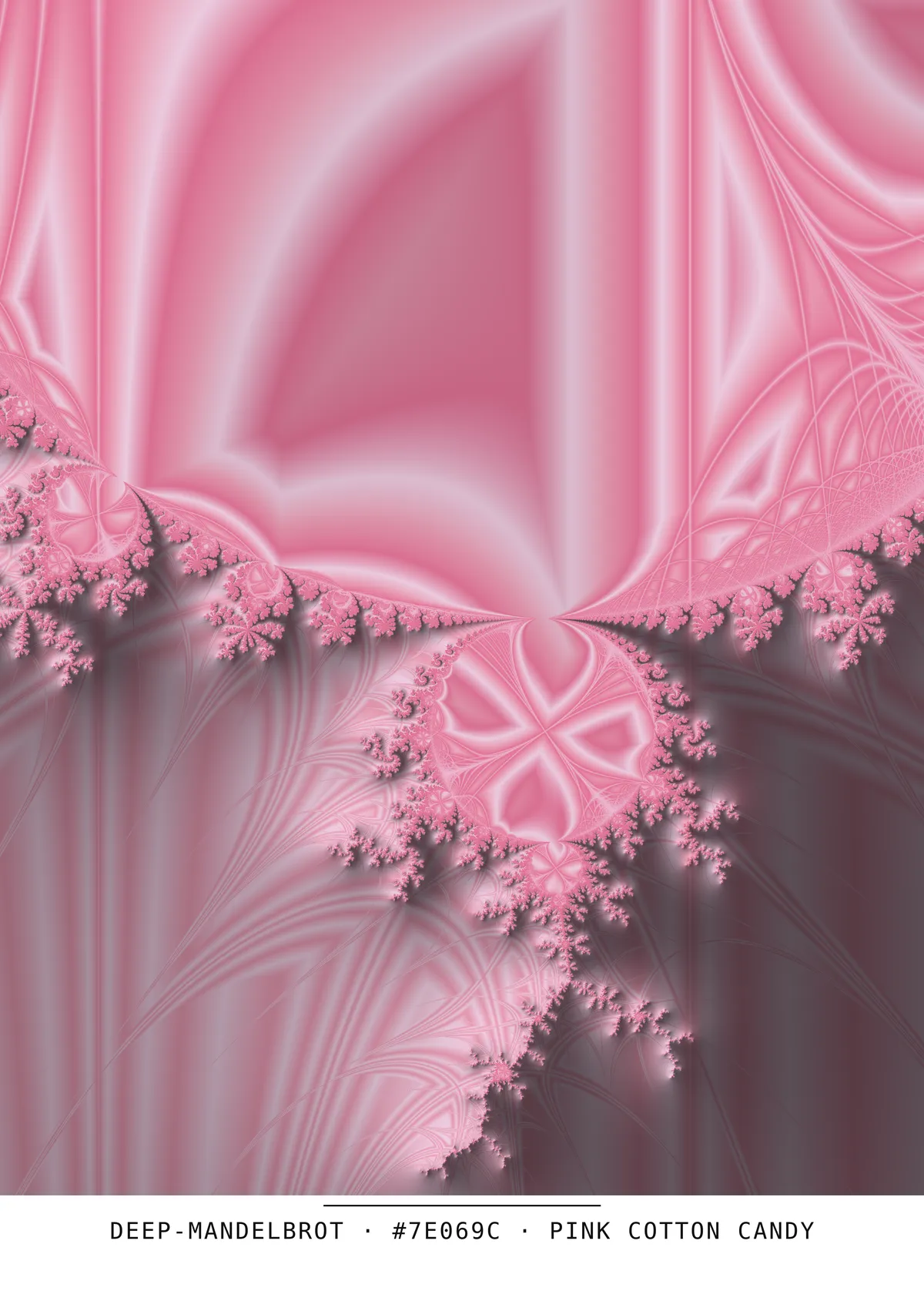
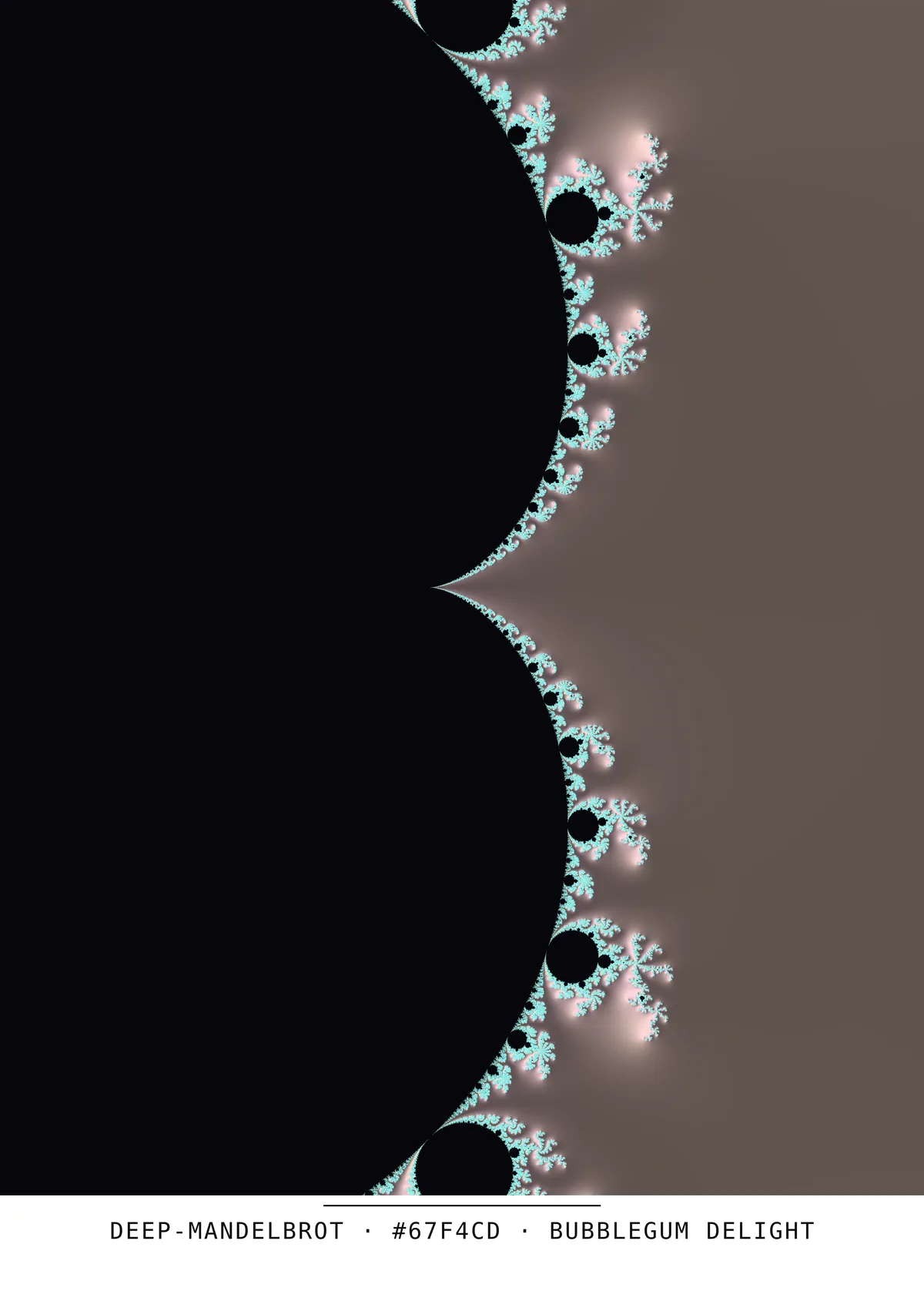
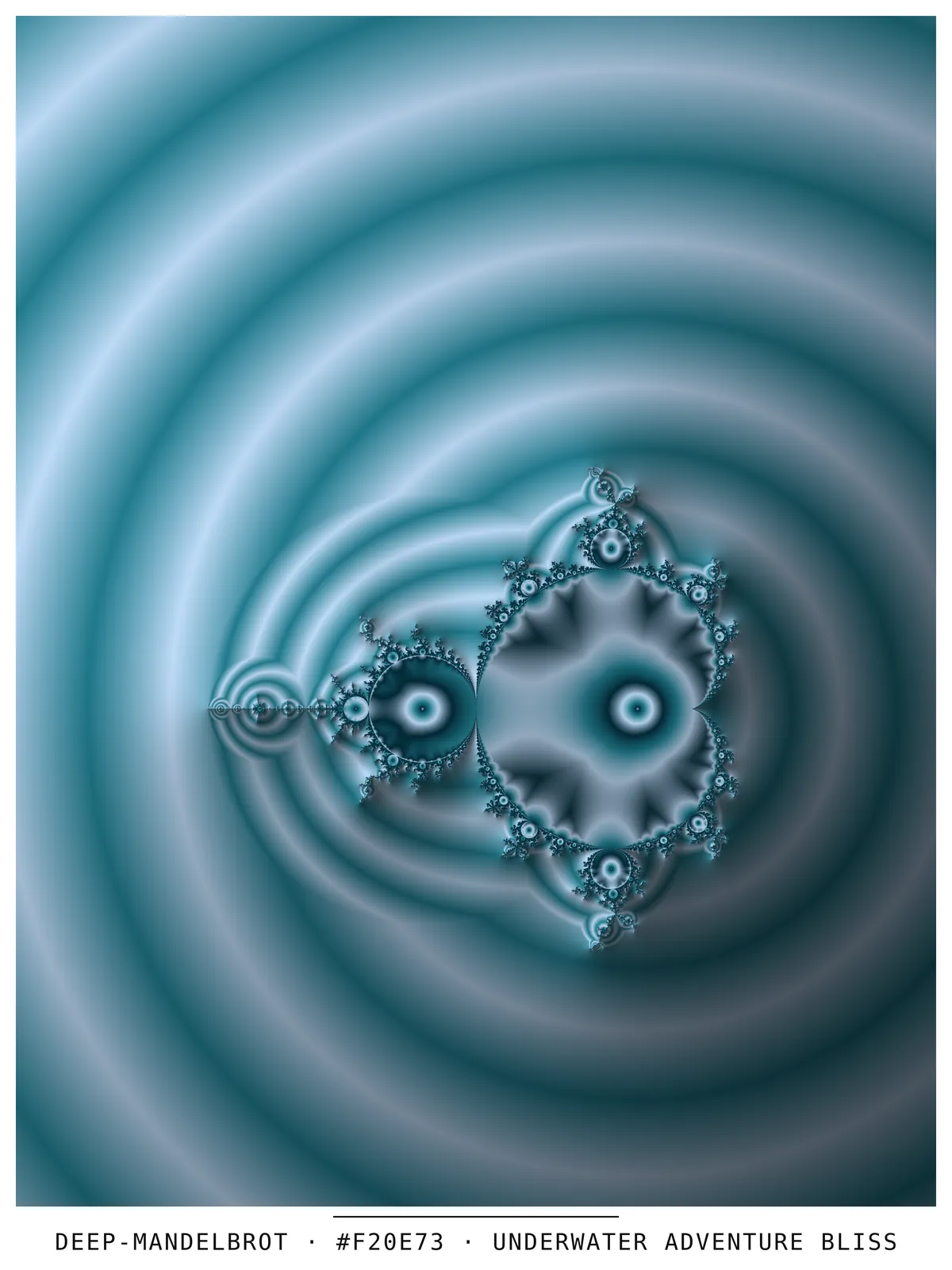
- The same rules as Mandelbrot, Burning Ship, Multibrot and Julia, but rendered in relief, with a continuous colour instead of steps. The work can also start very far into the zoom.
- Newton
- Newton's method on zⁿ − 1. Each pixel takes the colour of the root it reaches, darkened according to the number of steps it took to get there.
- Nova
- Newton with an extra constant: the image point serves as c and the starting point is fixed. The basins twist into swirls.
What chance decides
For each artwork, the program draws these settings at random, between bounds set in advance.
- Maximum number of rounds Mandelbrot from 80 to 220
- Power Multibrot from 3 to 6
- Real part of the constant Julia Set from -0.8 to 0.4
The algorithms in this family
- Mandelbrot
- Julia Set
- Burning Ship
- Tricorn
- Multibrot
- Phoenix Set
- Mandelbrot-Silk Fusion
- Mandelbrot Relief
- Burning Ship Relief
- Multibrot Relief
- Julia Relief
- Newton
- Nova