Flowing matter
The material is not drawn, it is given rules of behaviour.
The rule
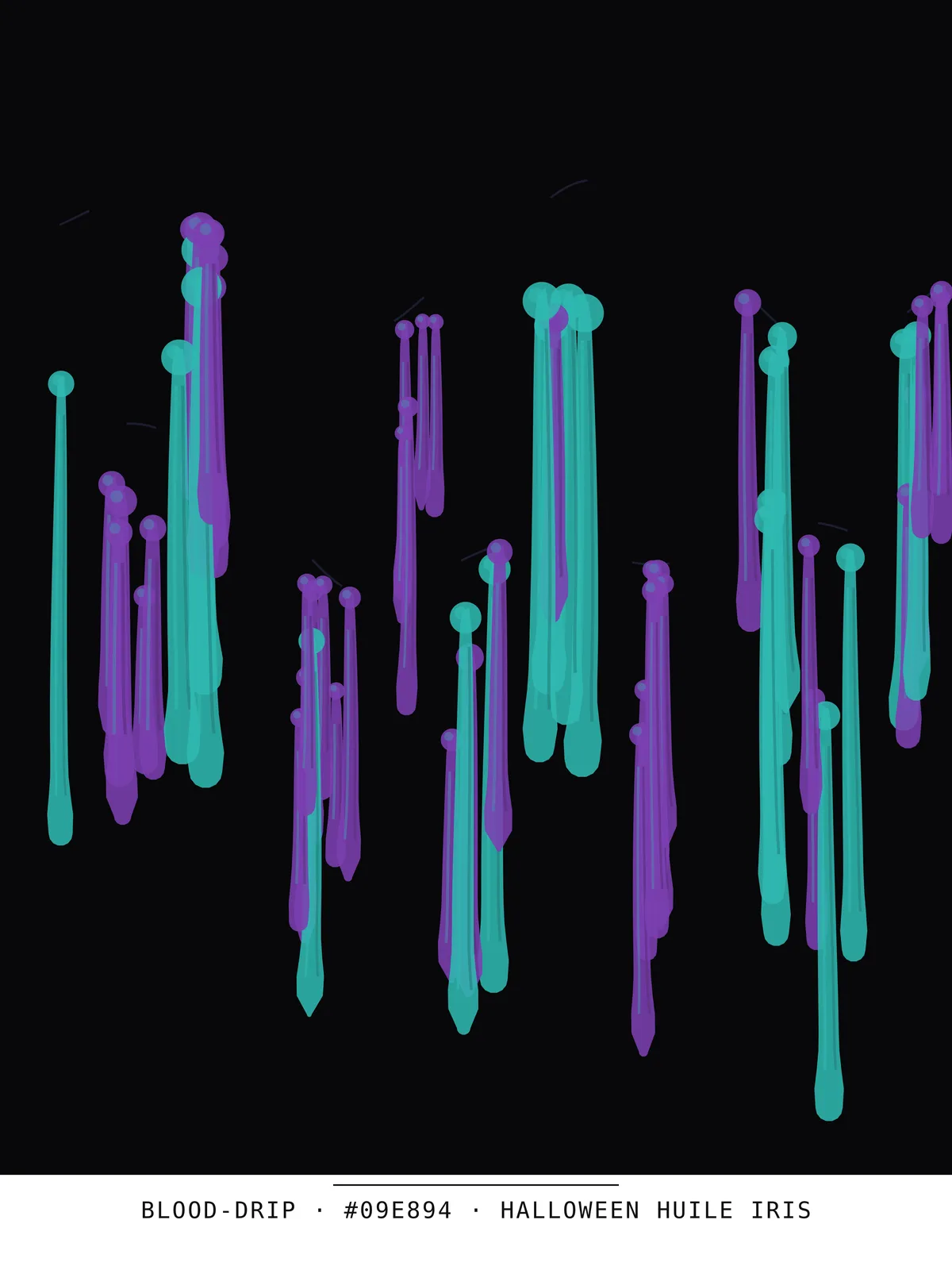
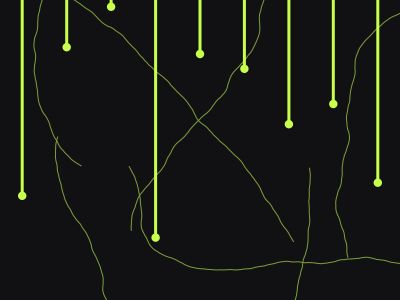
Nobody draws a run. A drop charges at the edge: at every step its mass grows by the flow rate. As long as that mass stays under the wall's adhesion, it holds. As soon as it goes over, it lets go all at once, picks up speed and runs to the bottom. It is this alternation of holding and letting go, not added noise, that gives the seepage its irregular rhythm: strong adhesion gives a few long runs, weak adhesion a shower of short tears.
mass ← mass + flow rate, then if mass > adhesion: the drop lets go, speed ← speed + gravity, y ← y + speed
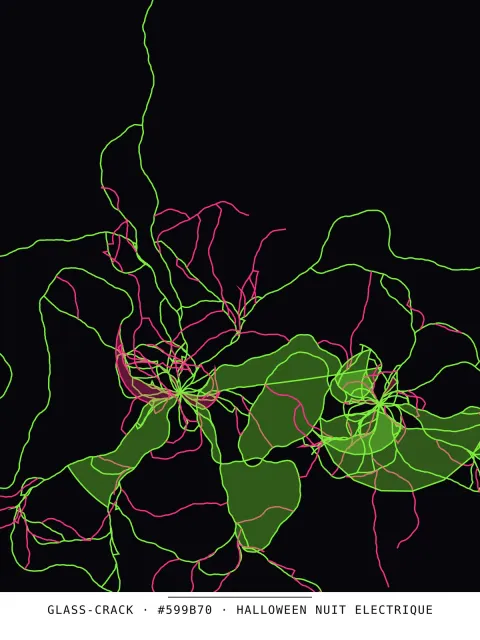
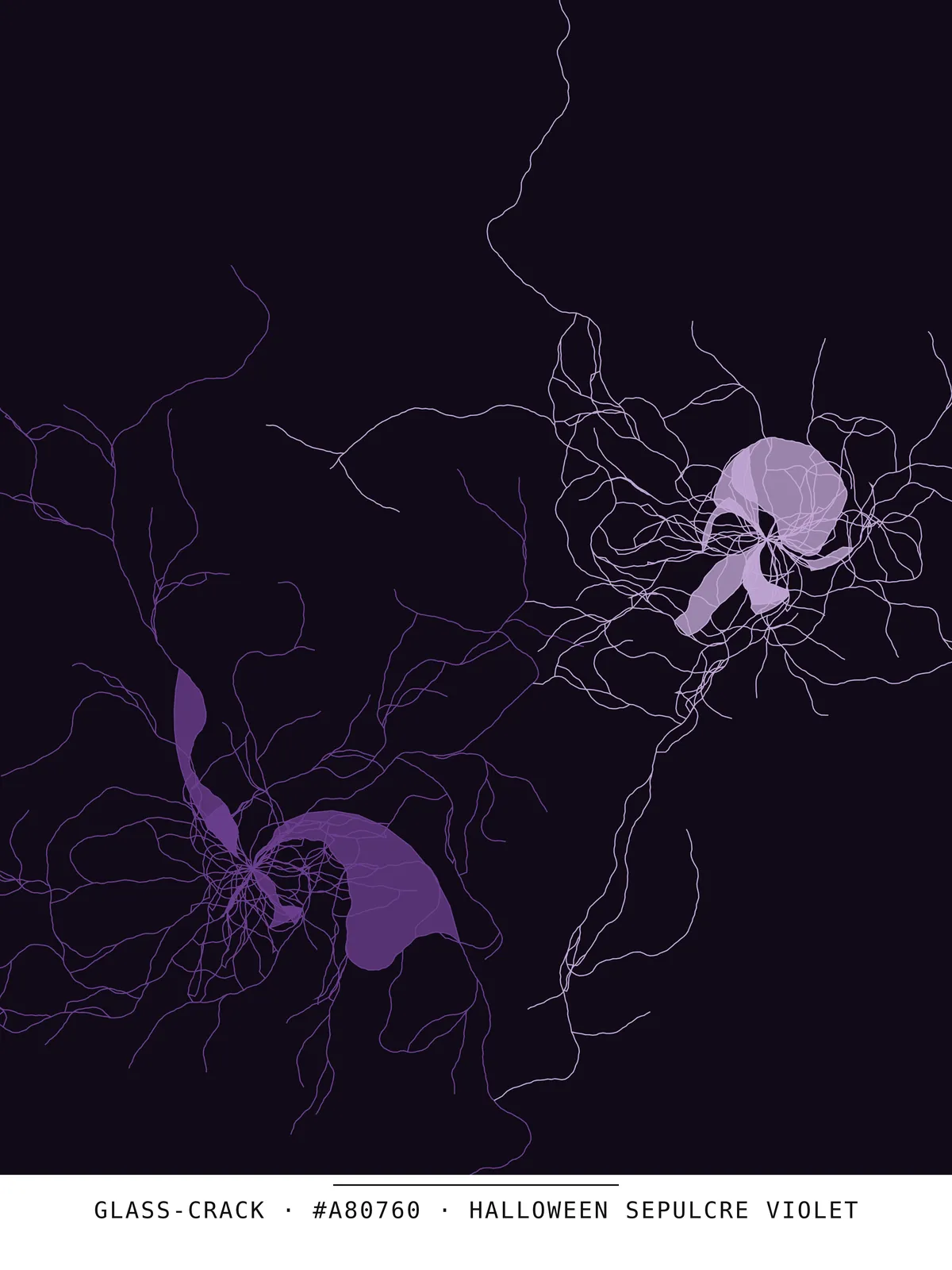
A crack follows a rule just as short. It starts at an impact point and moves in small steps. At every step its angle drifts a little, but never the overall direction: the crack remembers the blow that launched it, it does not meander.
angle ← angle ± drift, then x ← x + step · cos(angle), y ← y + step · sin(angle)
In both cases the matter is not drawn: it is left to rules of behaviour, and the shape comes from how they are tuned.
Your turn
The first sketch lines up drops along the top edge of a pane. The flow rate and the adhesion can be tuned as it goes: strong adhesion holds them longer. "Play" moves one step per frame, "Ten steps" jumps ten at once, "Restart" sets them down again, unevenly charged. In the second, a click or a touch on the pane starts a crack, or use the two position sliders and "Start a crack". The drift sets how far the angle strays at each step; at zero, the crack is straight. "Clear" erases every crack.
The drawing above is a teaching sketch, not the artwork: it shows the rule, it does not replay the colours, the size of the dots or the grain of the print.
What changes from one algorithm to the next
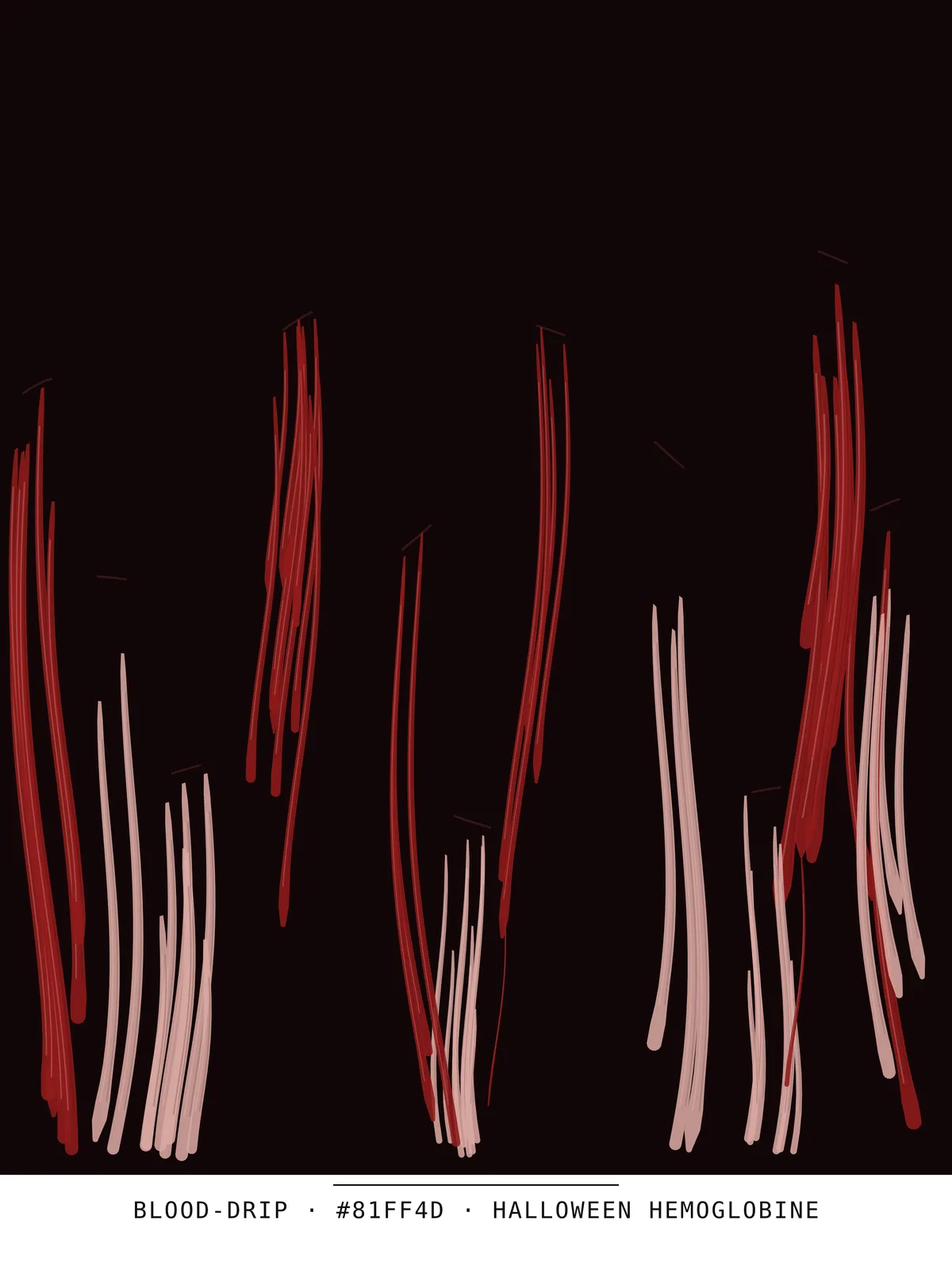
- Seepage
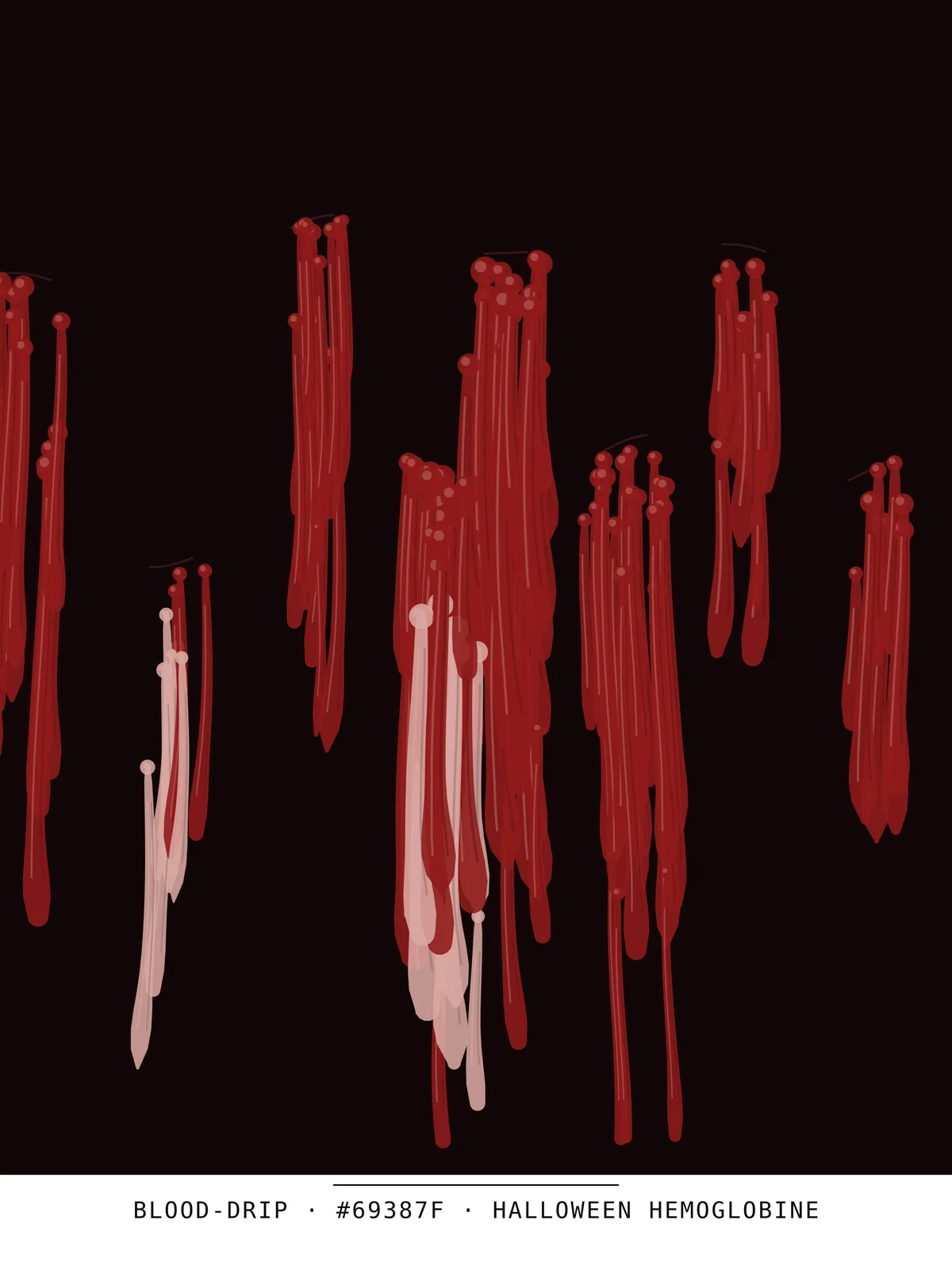
- A cracked wall that seeps, with the physics the toy borrows: the retained mass grows, and when it exceeds the adhesion the bead breaks away at once. The runs hang from cracks that wind and lean, never from the edge of the frame.
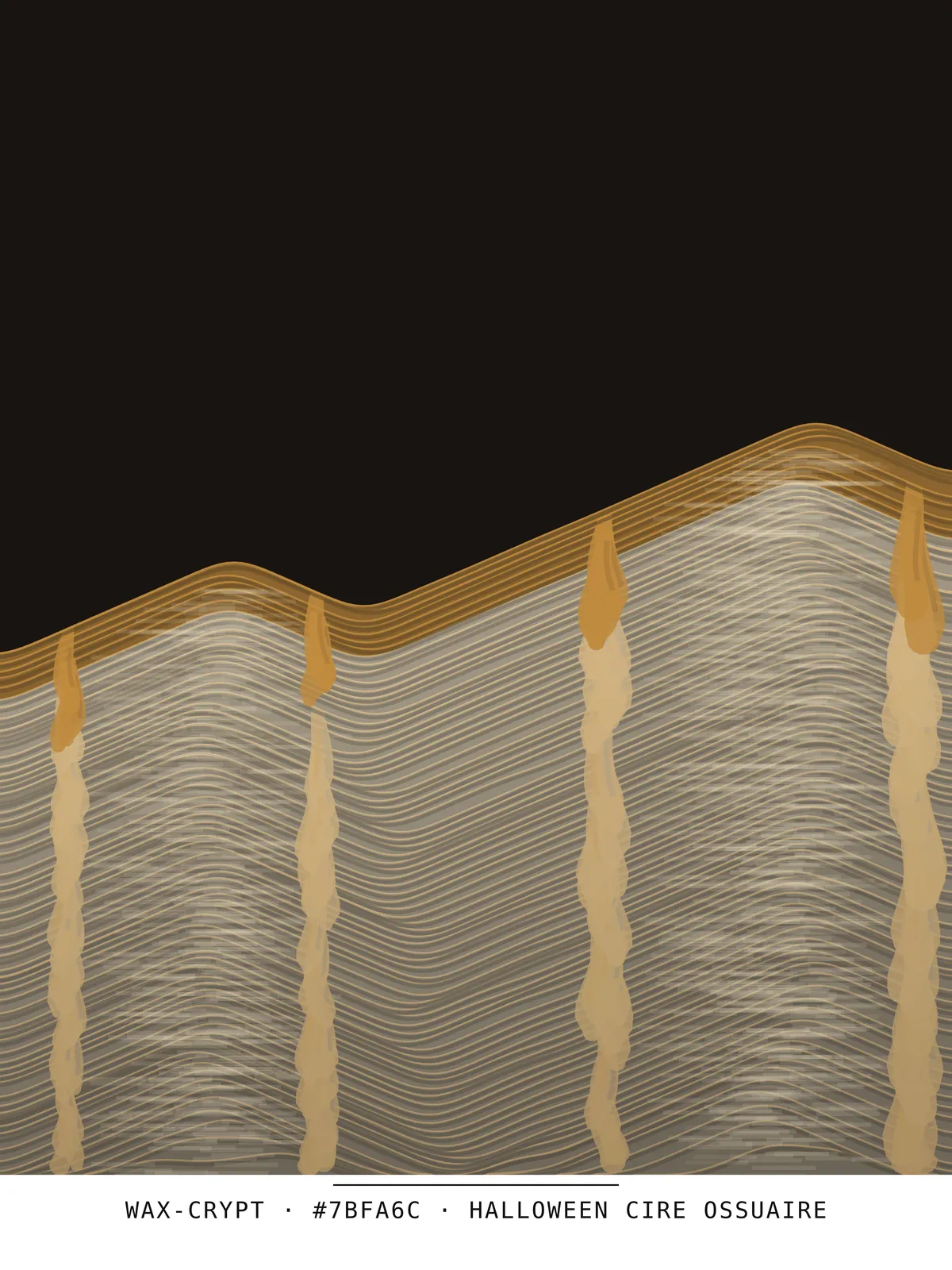
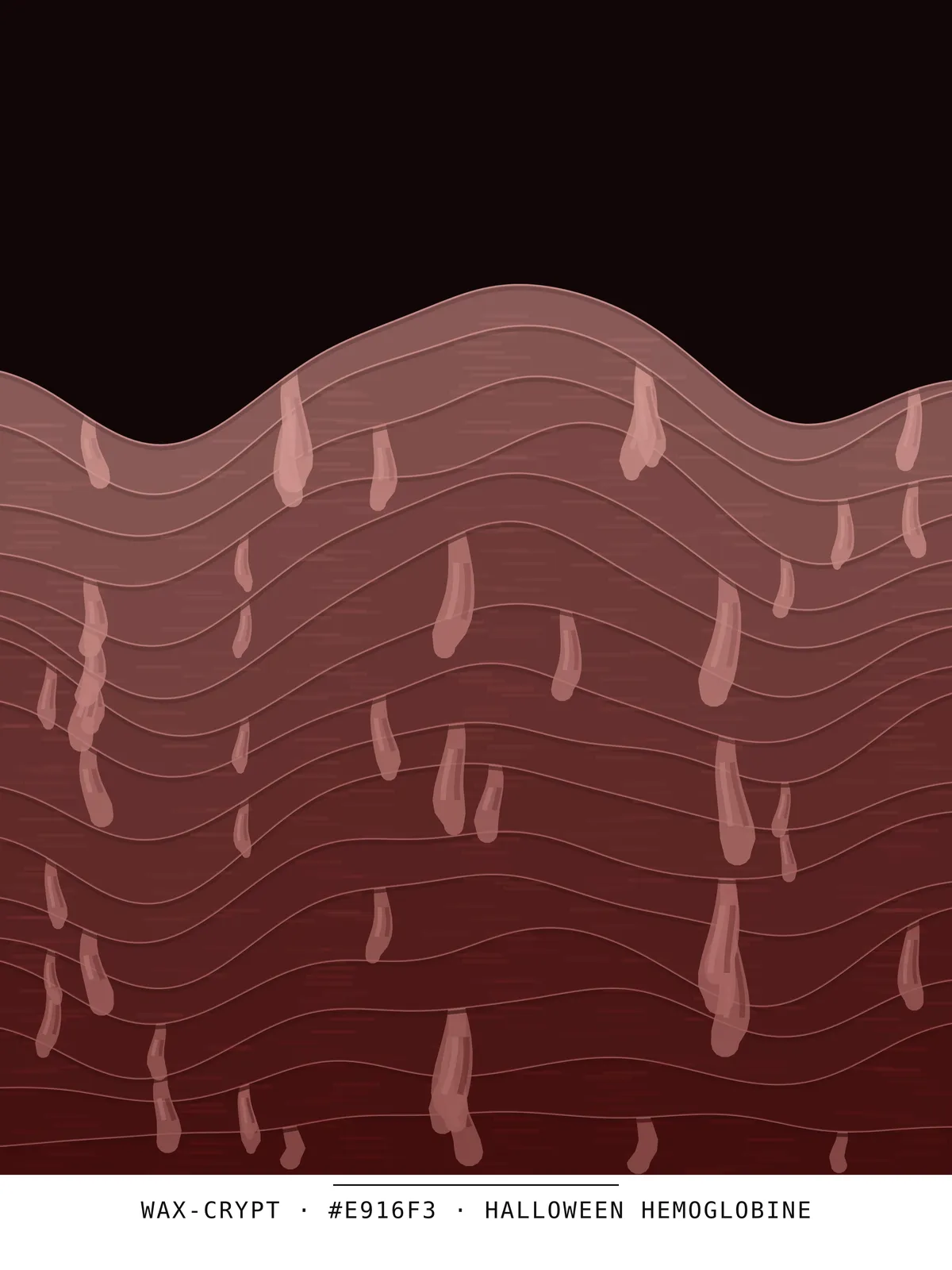
- Vigil Wax
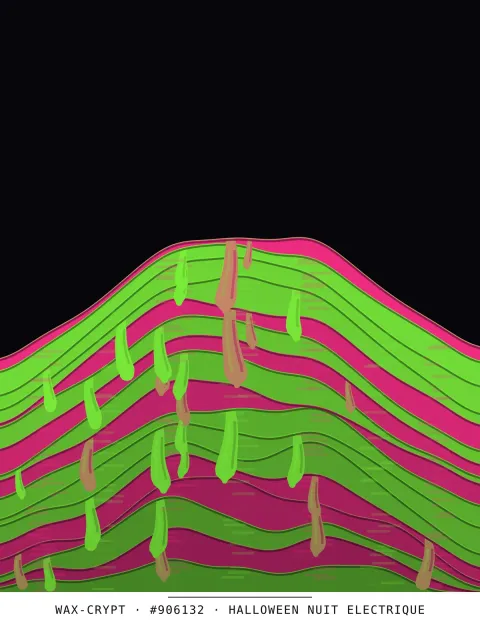
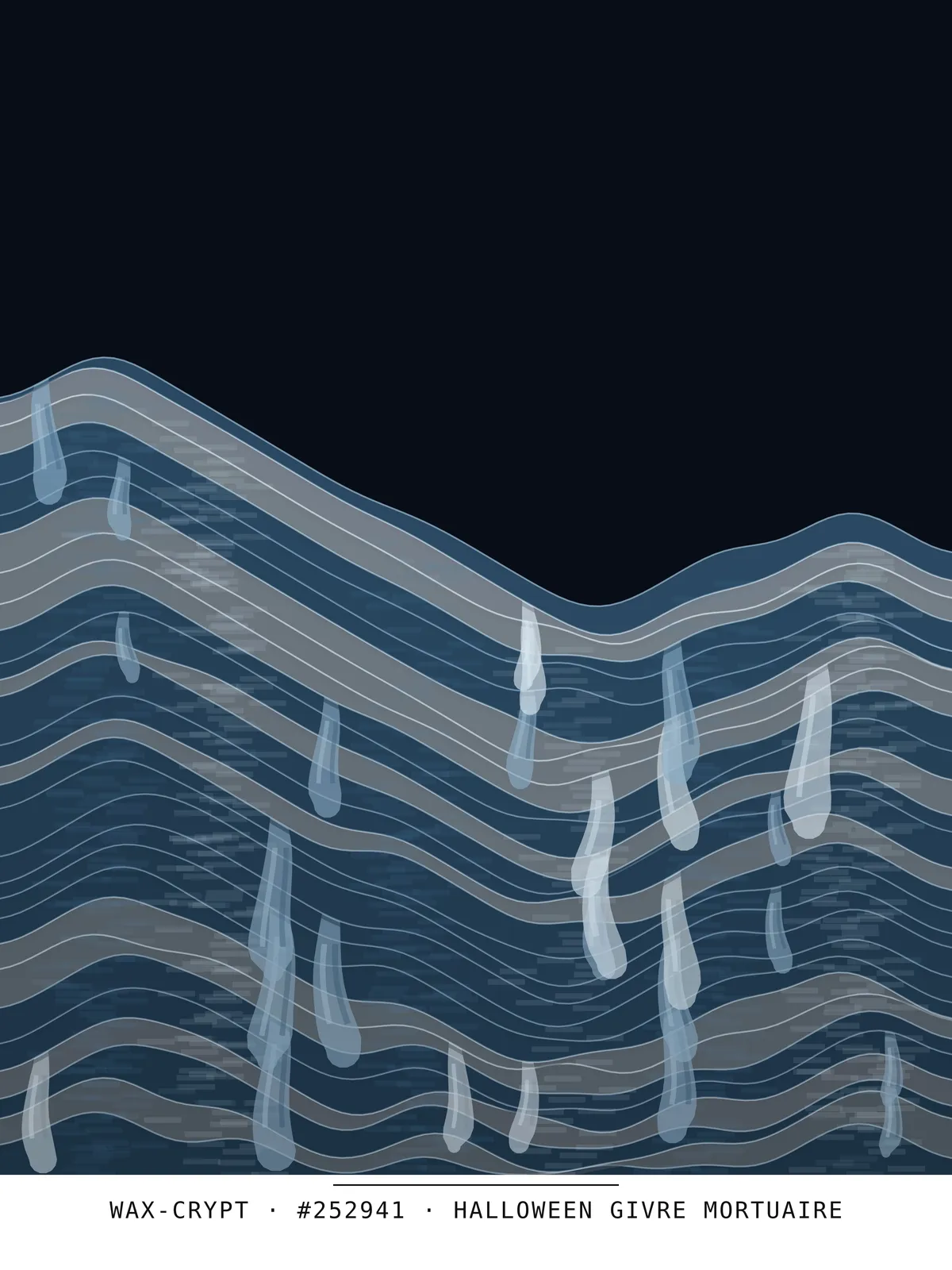
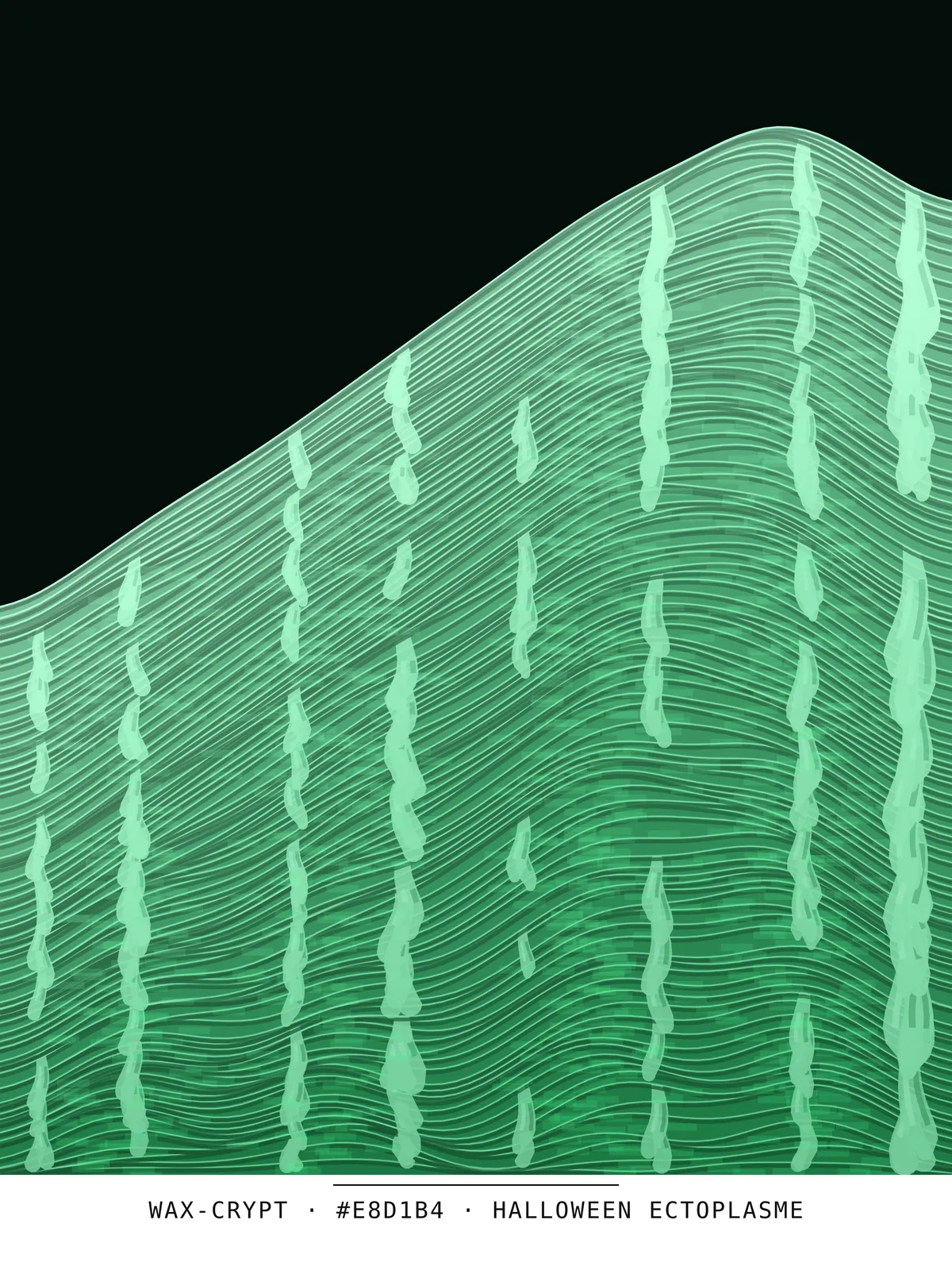
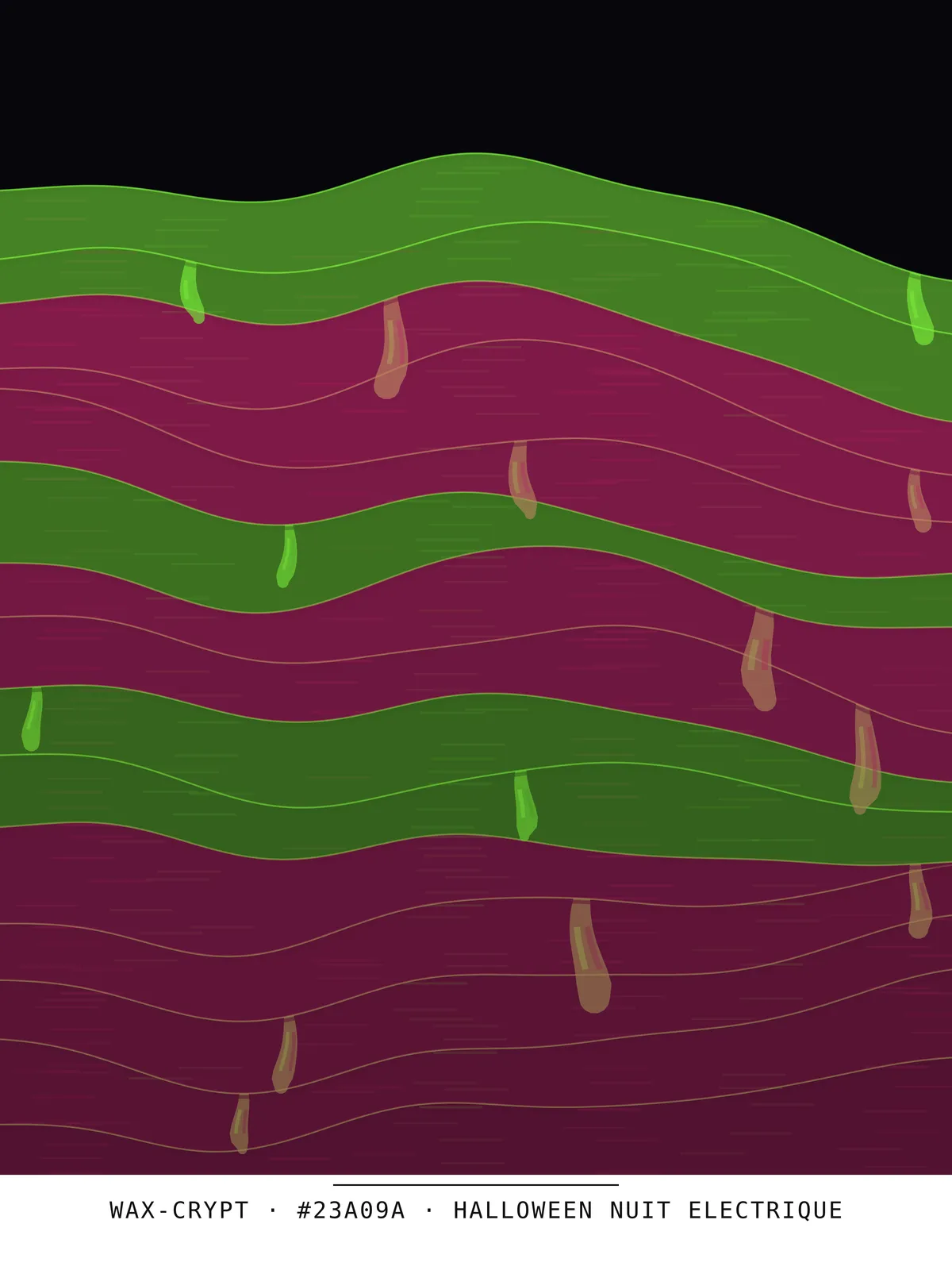
- Wicks let drops fall on a one-dimensional profile: the matter piles up, and every thirty drops the fresh layer is painted as a stratum. Those stacked strata, their edges catching the light and the runnels on their face, make the wax of a candlestick.
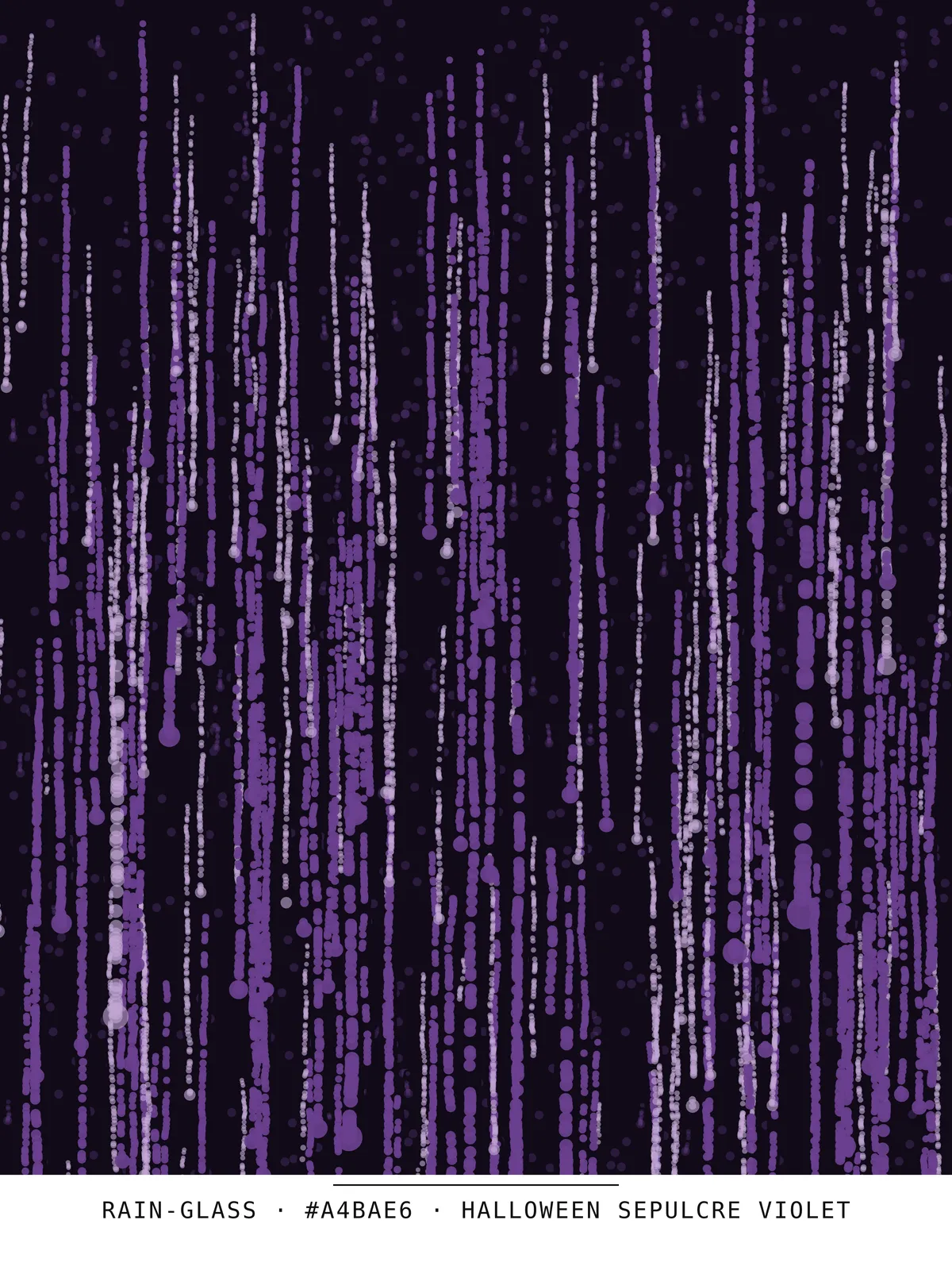
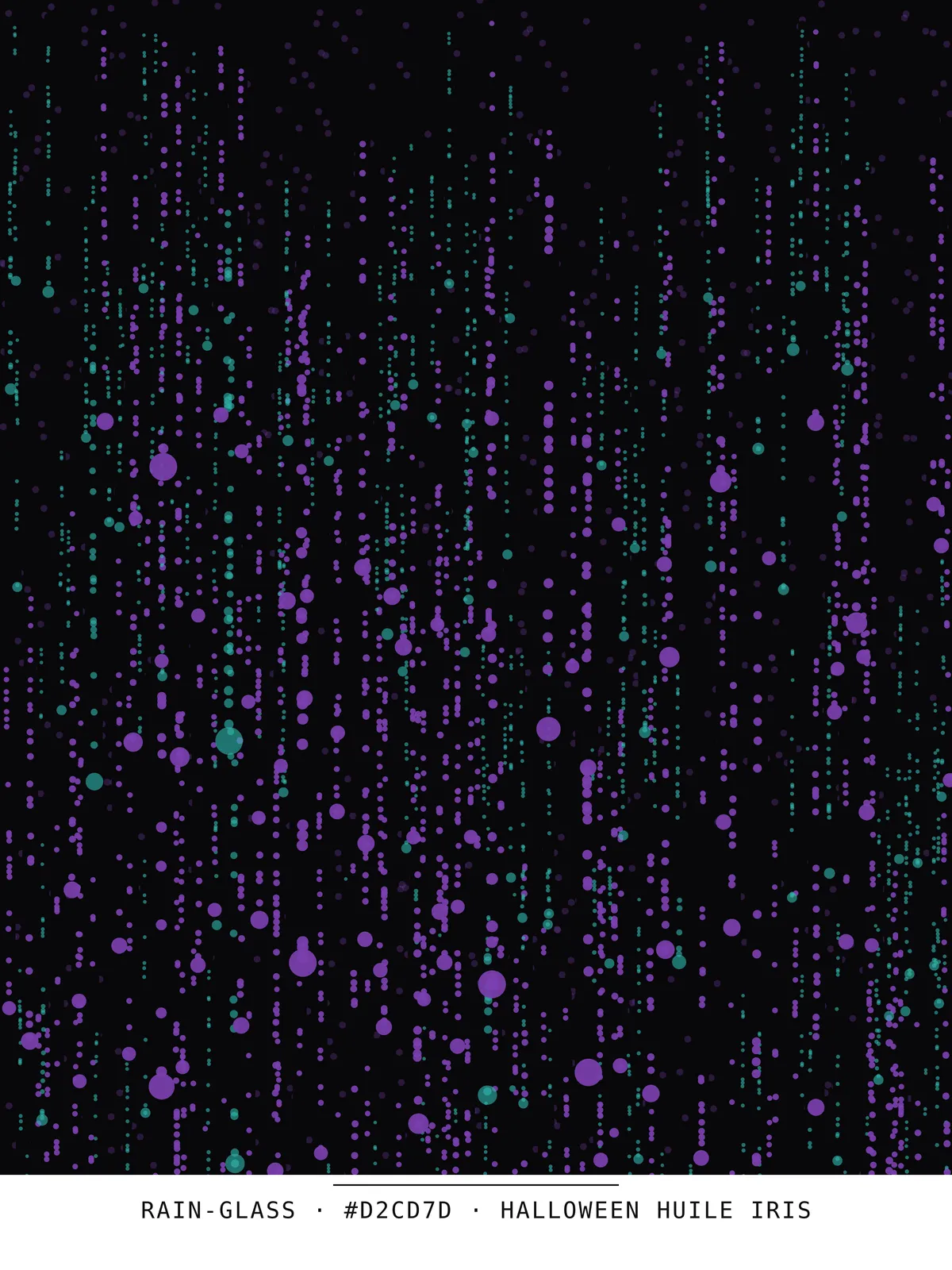
- Rain on Glass
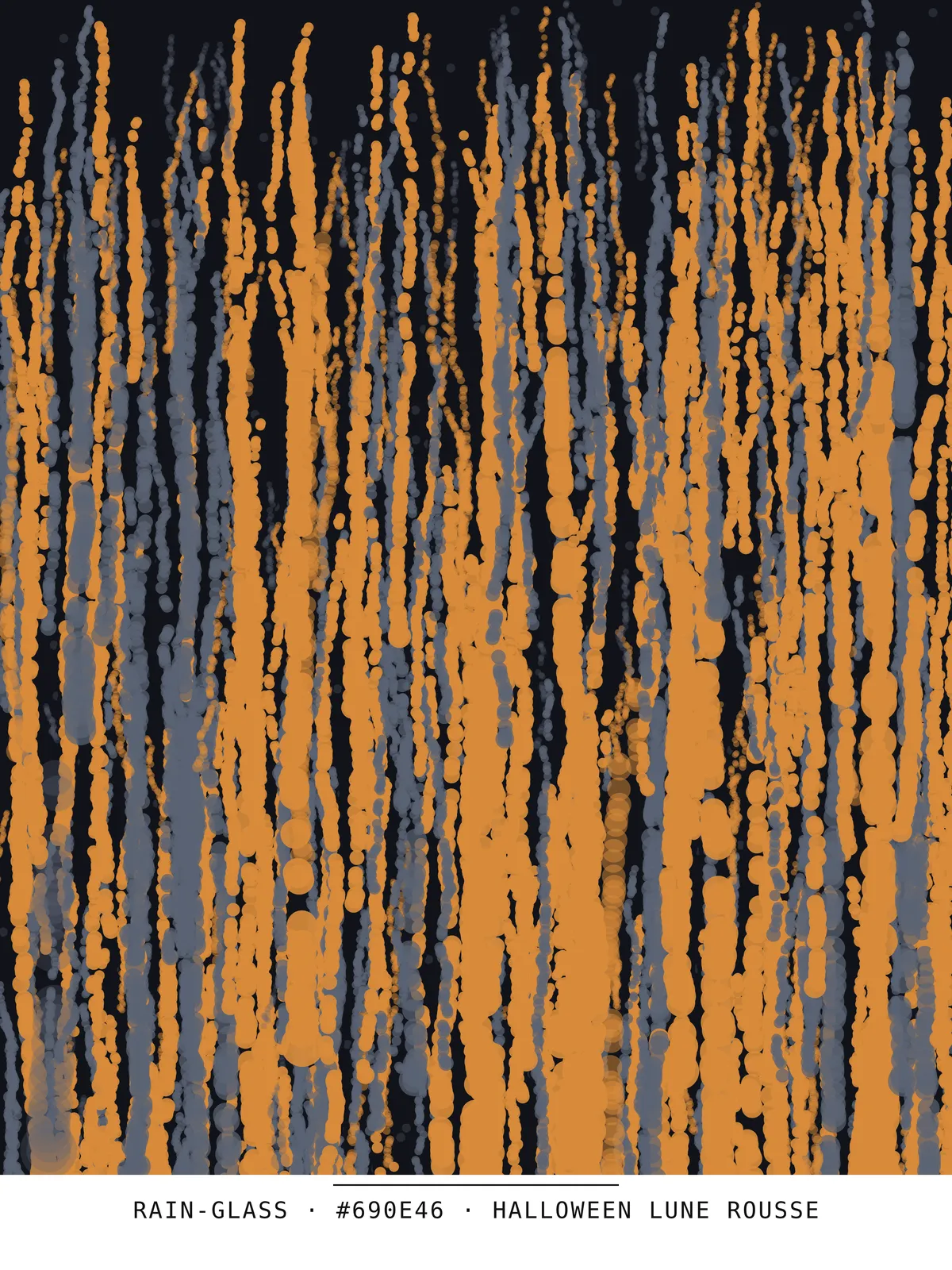
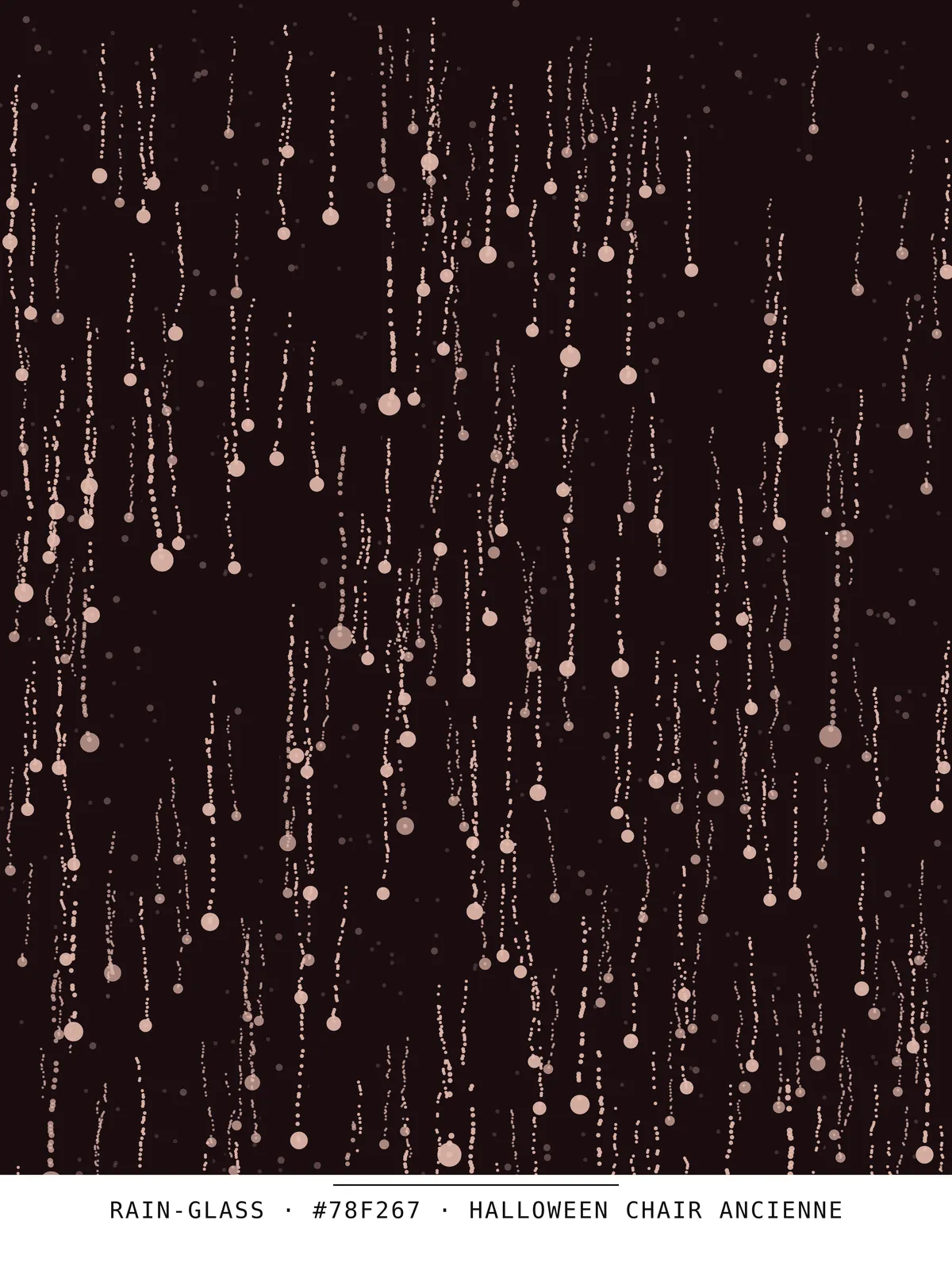
- A mist, then drops spread over several depth planes, without blur: a distant drop is simply smaller and paler. A drop condenses up to the critical mass, slides down, and swallows any drop it touches. Its trail wipes the mist.
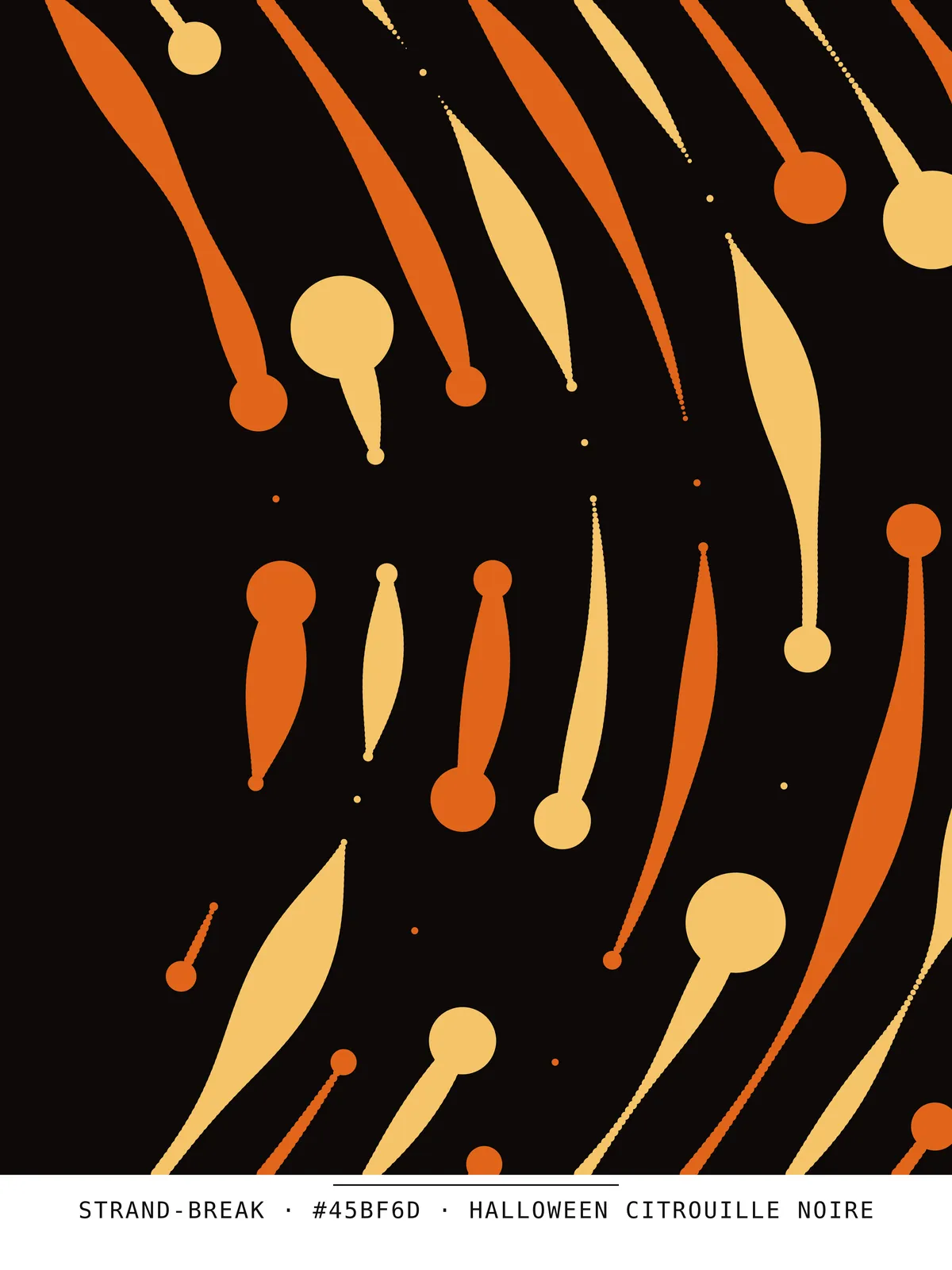
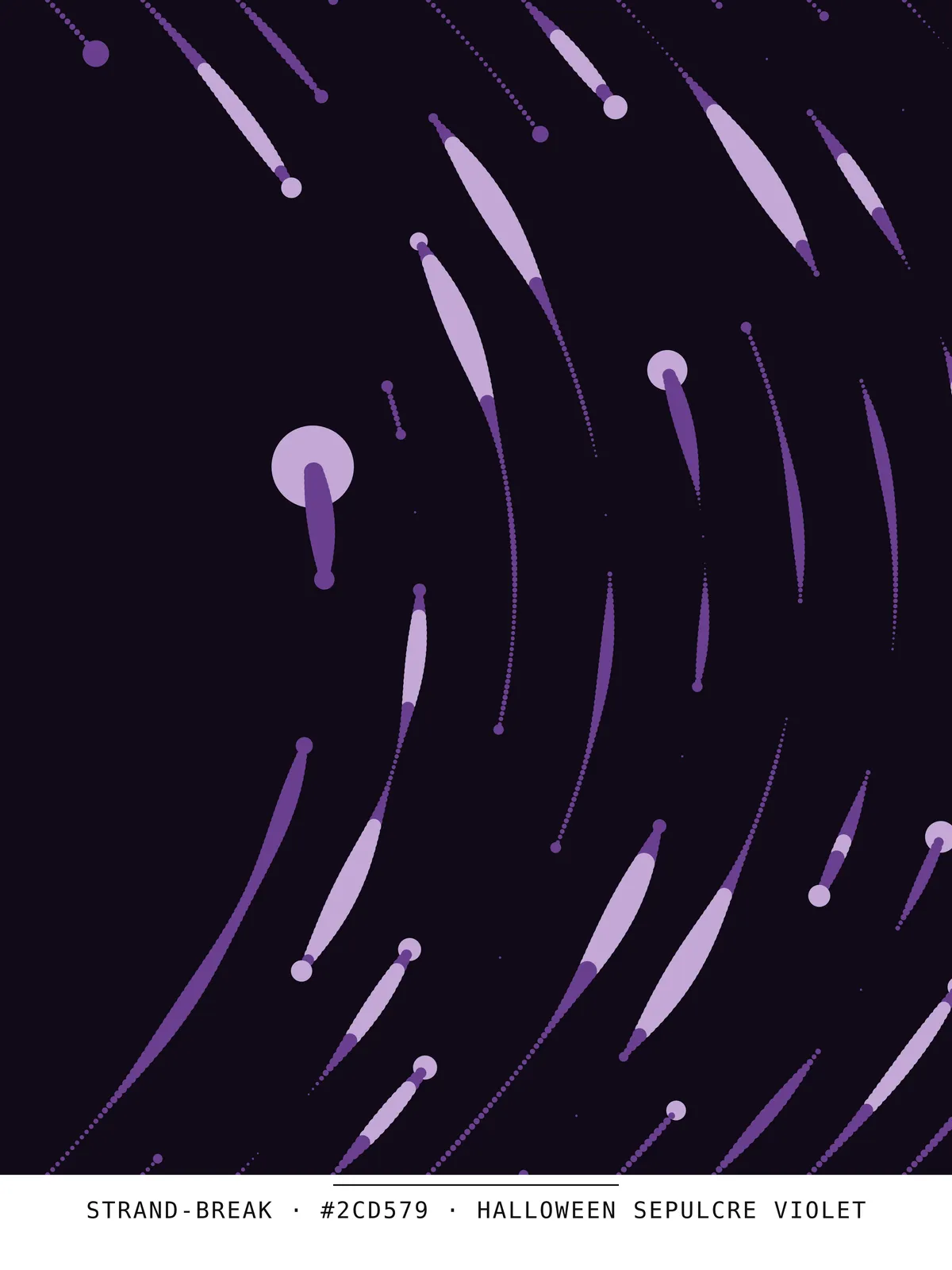
- Broken Strands
- Filaments stretched between the top and the bottom of the frame. A disturbance mode grows if its wavelength exceeds the filament's circumference, and fades otherwise: this is the Rayleigh-Plateau instability, and it is what makes the string of beads. A filament thick enough never breaks.
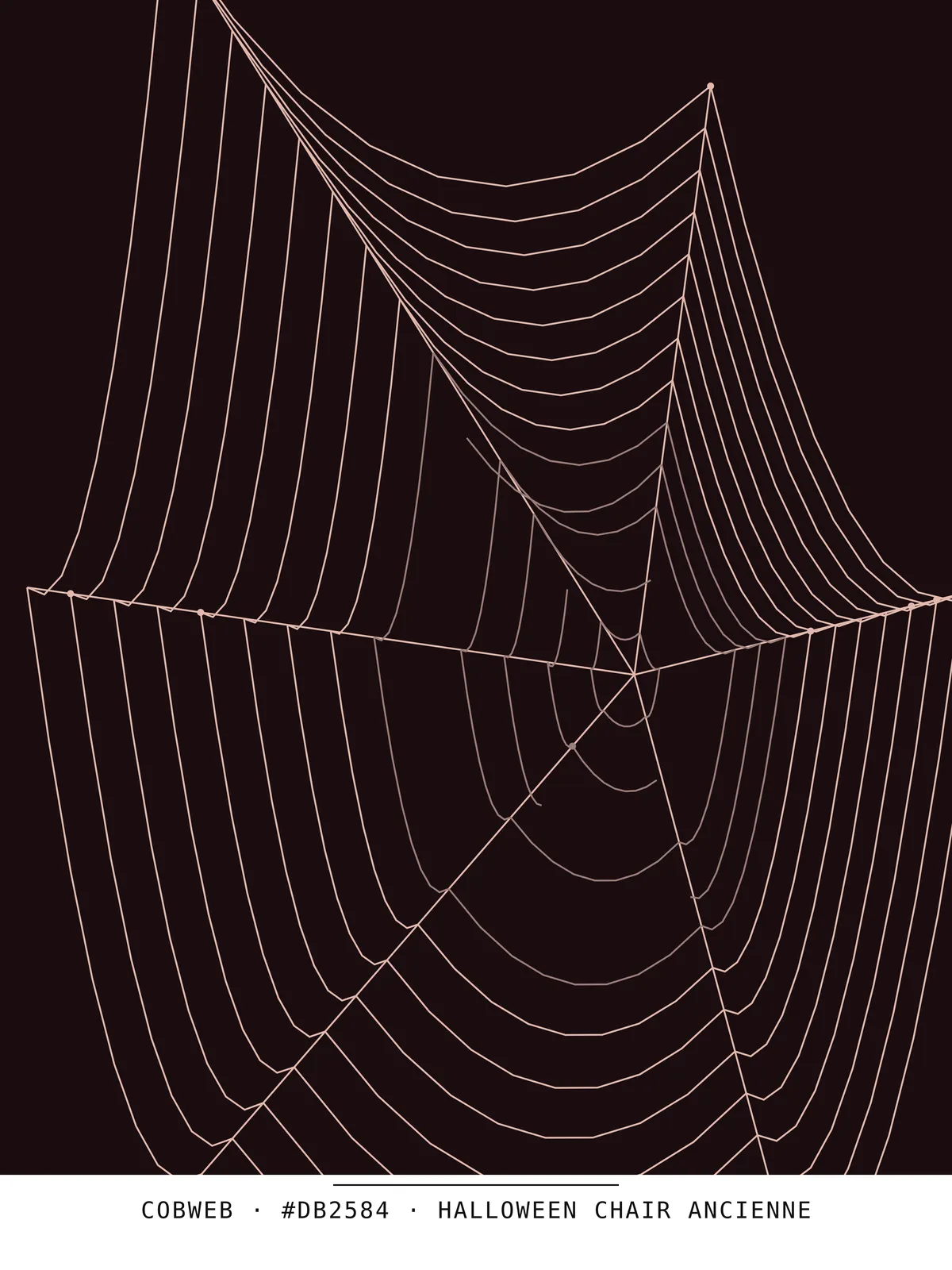
- Cobweb
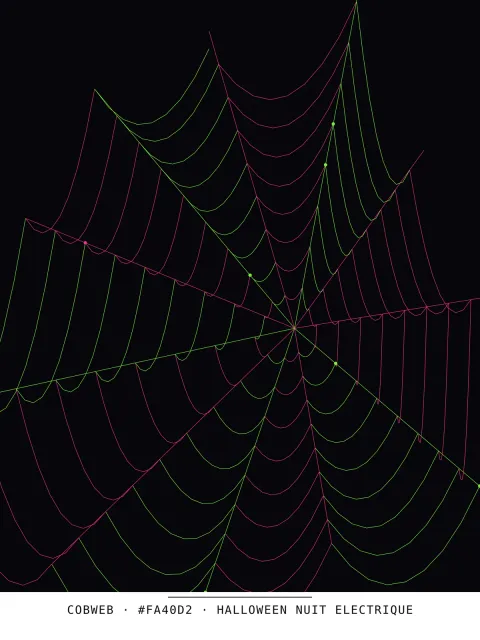
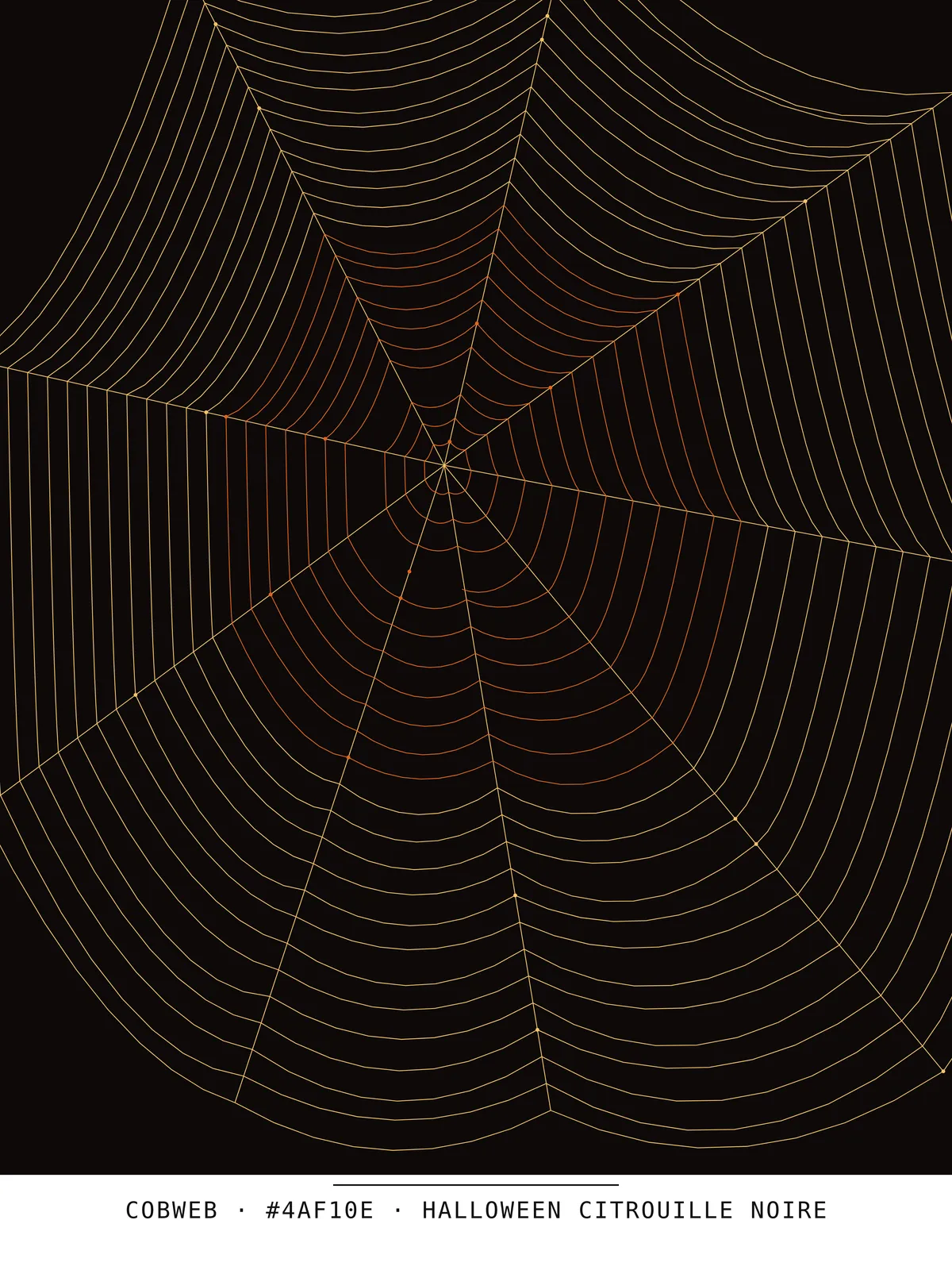
- An off-centre hub, an irregular rim of anchors and a spoke stretched to each. The capture spiral sags in a catenary, like a flexible thread hanging under its own weight between two spokes. Tears carry away arcs of strands.
- Cracked Glass
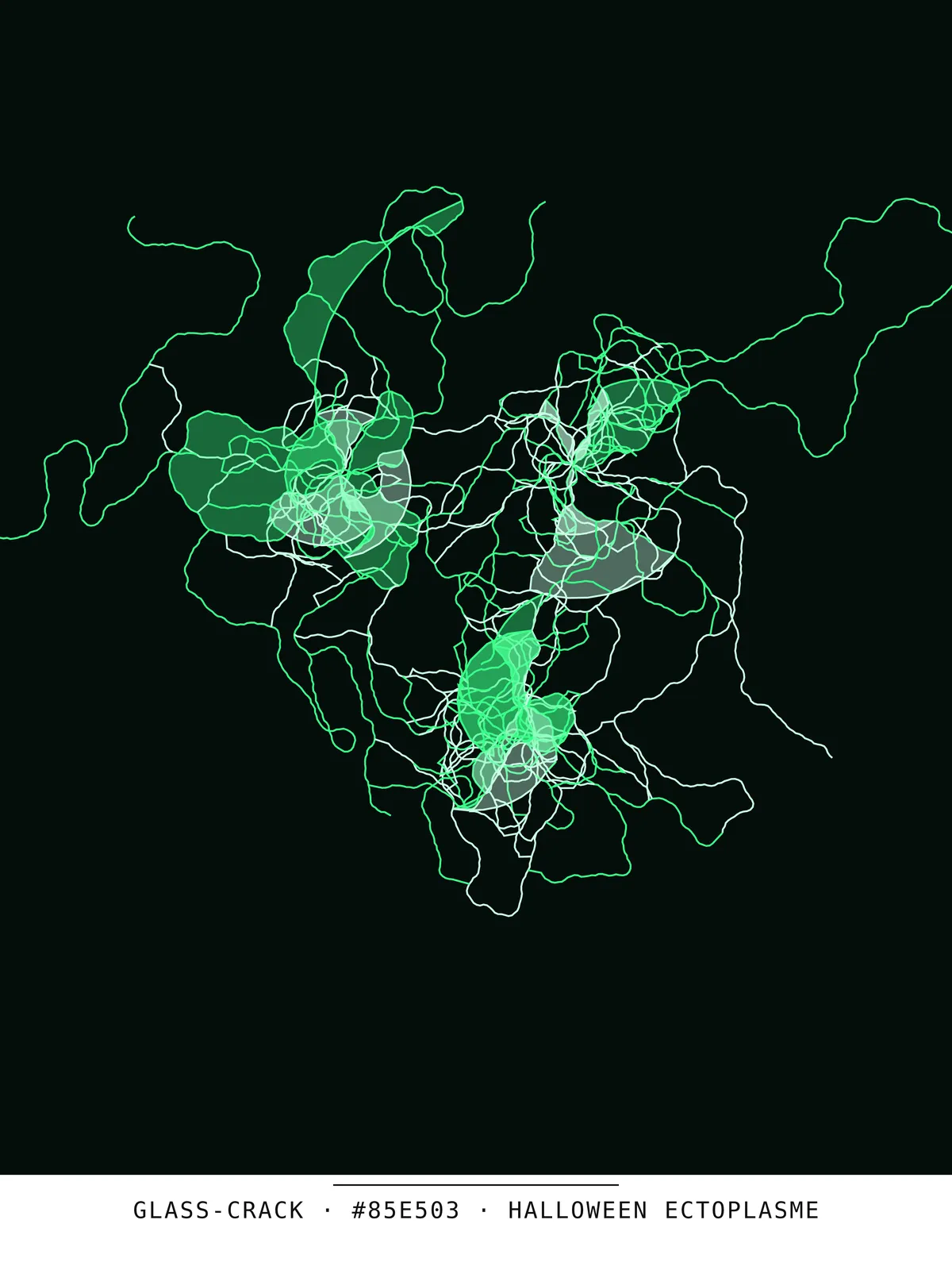
- One or more impact points, from which cracks advance step by step, with a drifting angle. What sets this glass apart: a crack that reaches an existing crack stops dead there, without crossing it. This T-junction cuts the glass into closed shards.
What chance decides
For each artwork, the program draws these settings at random, between bounds set in advance.
- Number of sources Seepage from 3 to 14
- Number of drops Rain on Glass from 200 to 900
- Number of impacts Cracked Glass from 1 to 3
The algorithms in this family
- Seepage
- Vigil Wax
- Rain on Glass
- Broken Strands
- Cobweb
- Cracked Glass