Agents and growth
Each one only knows its surroundings. The shape comes from their number.
The rule
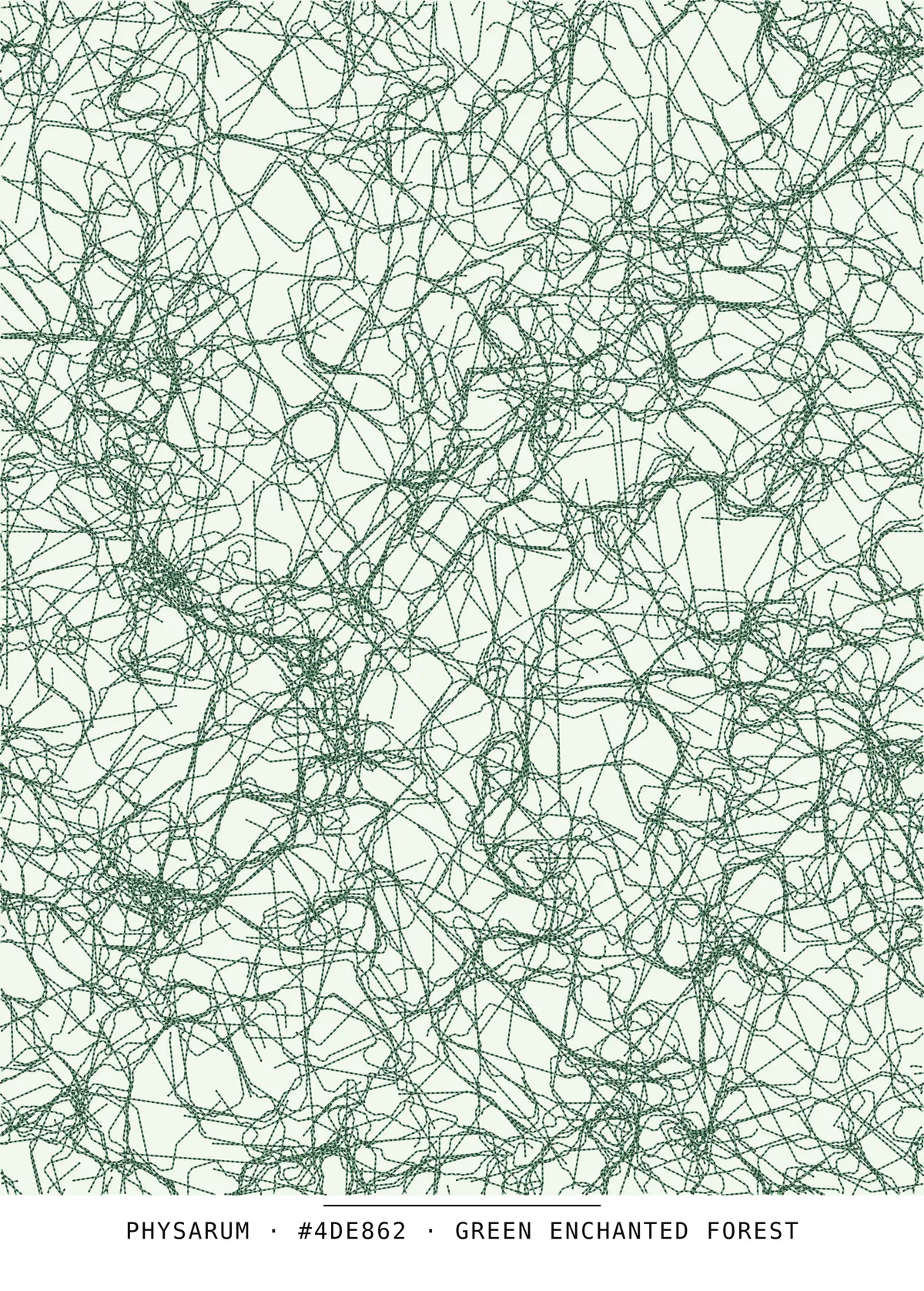
An agent does not see the canvas: it only knows what is right in front of it. In the physarum network, it reads the trail left by the others at three places, to the left, ahead and to the right. It turns toward the stronger side, takes a step, then lays down its own trail. At every step, everyone's trail fades a little.
heading ← heading ± turn angle, then x ← x + step · cos(heading), y ← y + step · sin(heading), then trail ← trail · decay
Nobody draws the network. The agents follow each other because they sense the others' trail, and that trail fades fast, except where many pass. Busy paths grow stronger, the others vanish: the shape comes from the number of agents and the angle of their sensors.
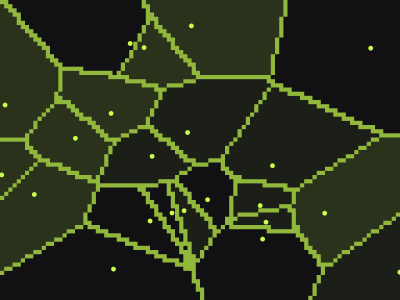
The same idea of a local rule applies to the Voronoi tessellation: every cell of the canvas takes the nearest seed, and that is all. Move or add a seed, and every boundary is redrawn.
Your turn
The first sketch drops agents on a grid that wraps around: what leaves on the right comes back on the left. Changing their number starts over, the sensor angle can be tuned along the way. “Play” takes one step per frame, “Ten steps” jumps ten at once. In the second, a click or a tap places a seed, or use the two position sliders and “Add”. “Remove” takes off the last seed, “Clear” takes them all off.
The drawing above is a teaching sketch, not the artwork: it shows the rule, it does not replay the colours, the size of the dots or the grain of the print.
What changes from one algorithm to the next
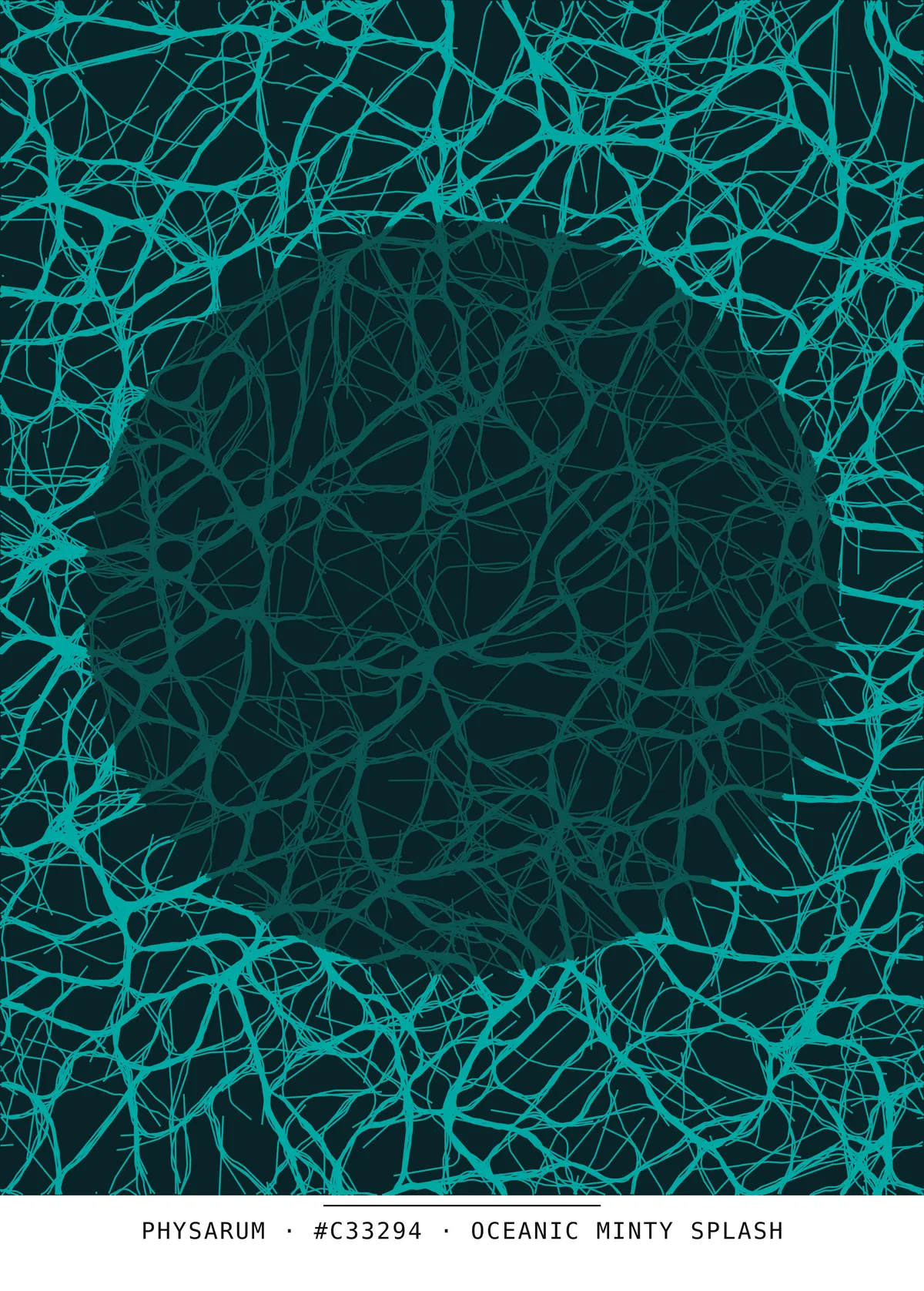
- Physarum
- Agents “sense, turn, move” and lay a pheromone that fades at every step, on a grid that wraps around. There is no chance in the loop: the draw only places the agents at the start. The video replays the network growing.
- Prey & Predators
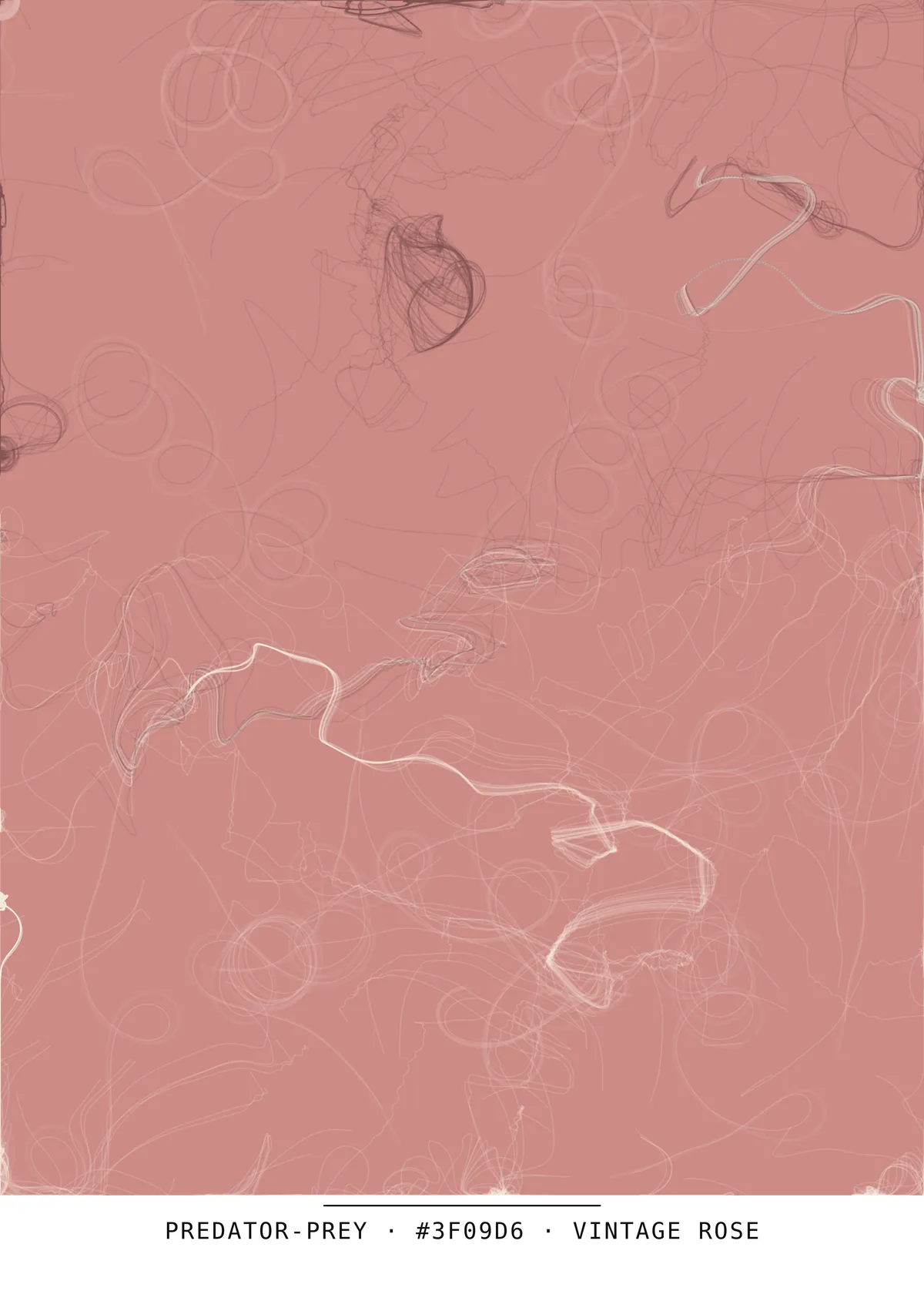
- Two populations that interact: prey flee the nearest predator while drifting in a noise field, predators hunt the nearest prey. Each step draws a segment. The knots and pursuit spirals could not exist in a plain flow field, where the particles are independent.
- Crystal Growth
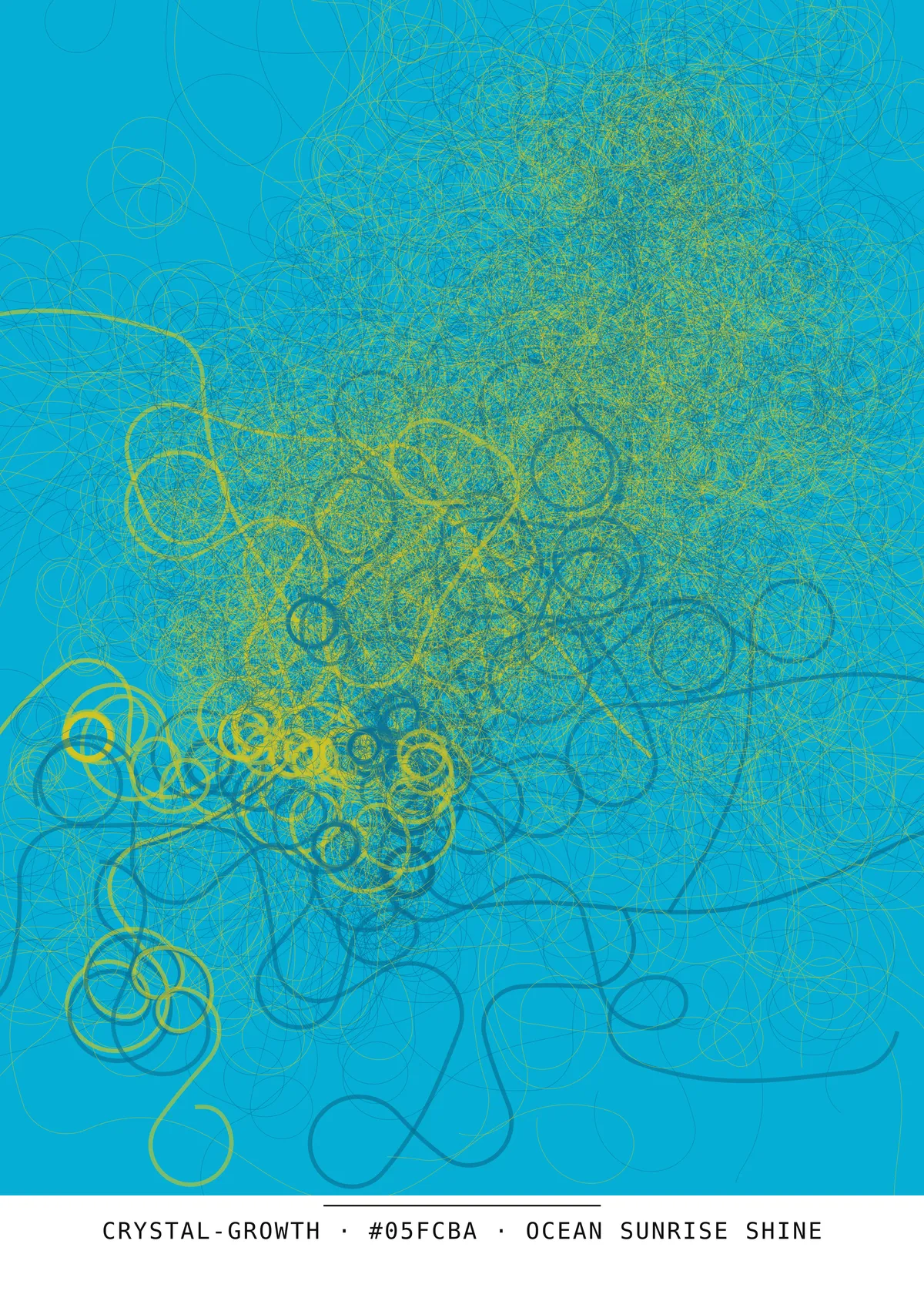
- Seeds placed on a circle, a branching dendritic growth, and crystalline angles nudged toward multiples of π/6. The original name, a story of sound and phonetics, was a fiction: there is no sound anywhere in the pipeline.
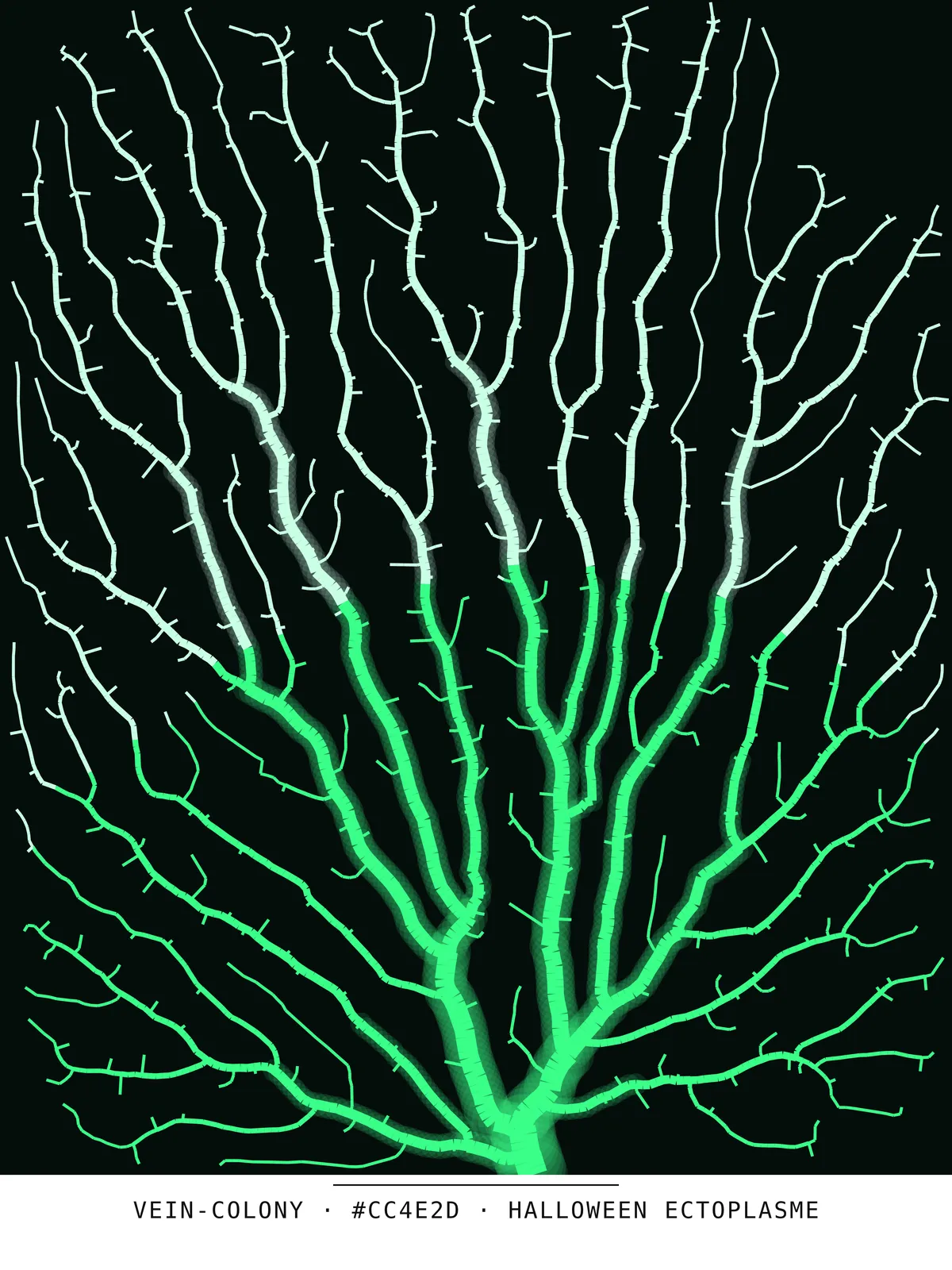
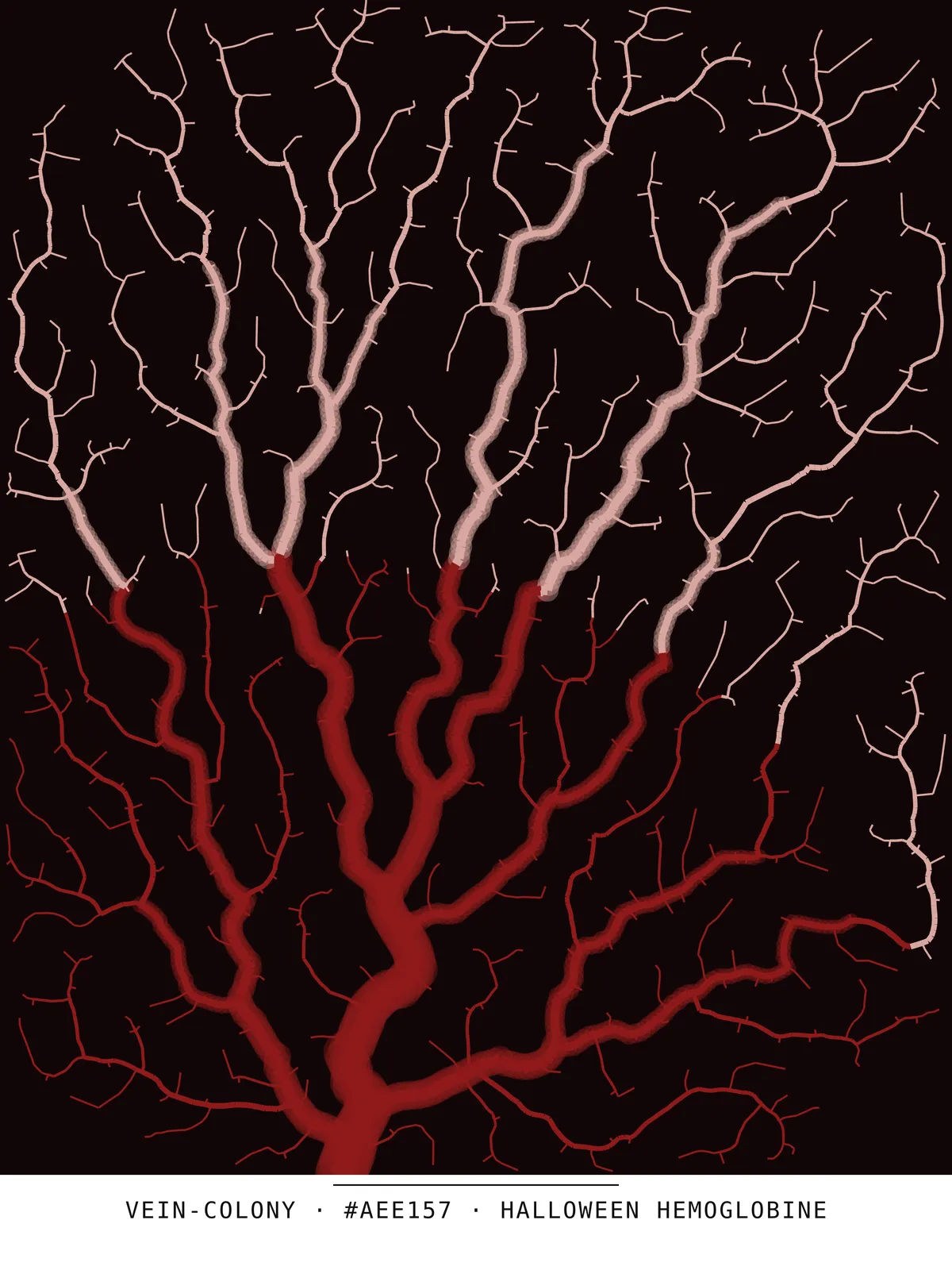
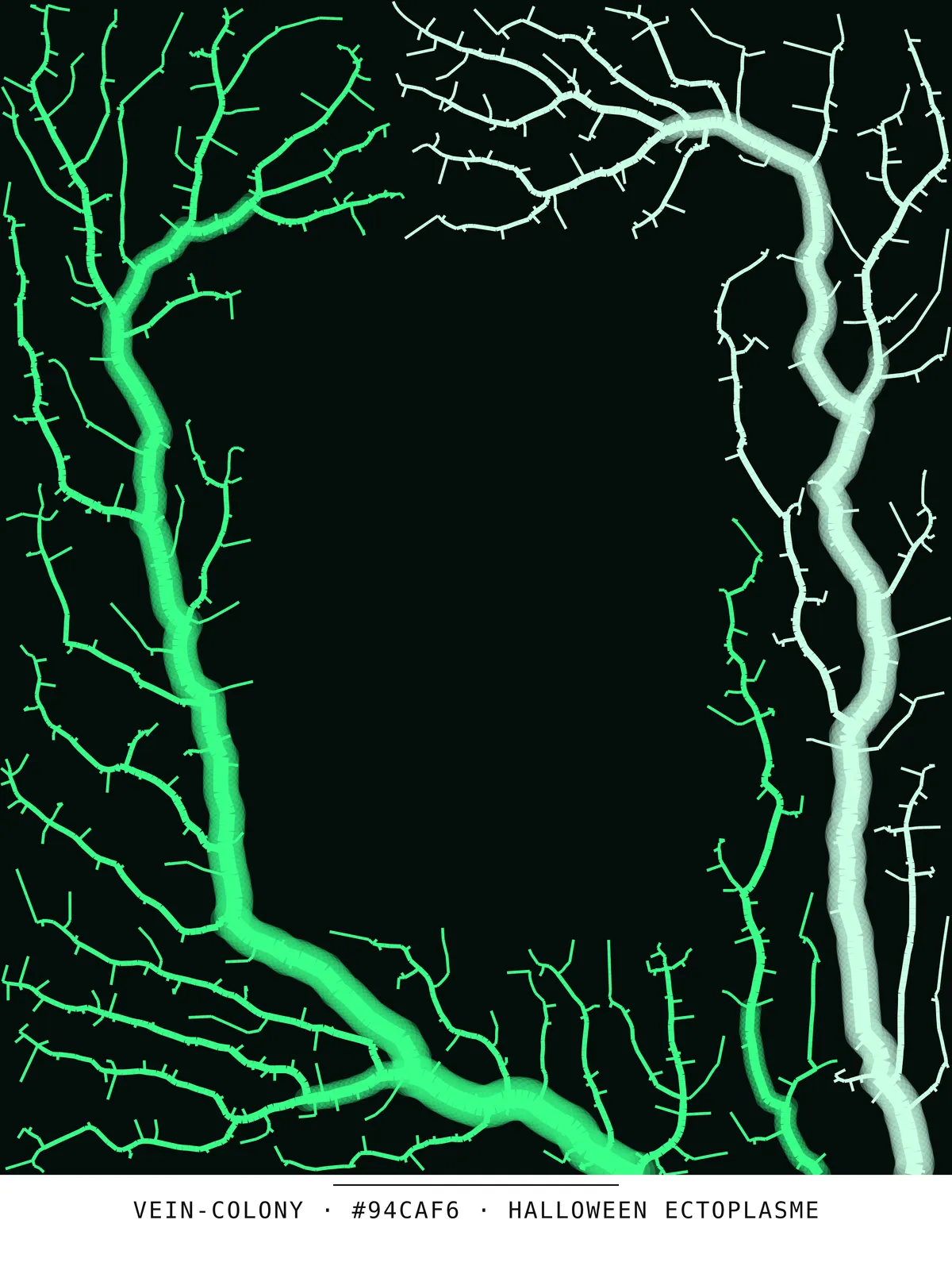
- Vein Network
- Space colonization, after Runions and colleagues. Each point to reach votes for the nearest node within its influence radius, each node that got votes moves toward the mean of its voters, and reached points disappear. The colony stops when nobody votes any more. Thickness flows back from the leaves to the root: a branch is as thick as the sum of what it carries.
- Voronoi
- Seeds scattered at random, and each cell takes the colour of the nearest seed: a stained-glass or mosaic effect. The distance is Euclidean or Manhattan. The render can also keep only the edges, or triangulate the seeds (Delaunay).
What chance decides
For each artwork, the program draws these settings at random, between bounds set in advance.
- Number of agents Physarum from 200 to 900
- Sensor angle (°) Physarum from 15 to 60
- Number of seeds Voronoi from 8 to 200
The algorithms in this family
- Physarum
- Prey & Predators
- Crystal Growth
- Vein Network
- Voronoi