Glass and light
Glass and light brings together scenes where light passes through a transparent material and the shapes can be read where they overlap.
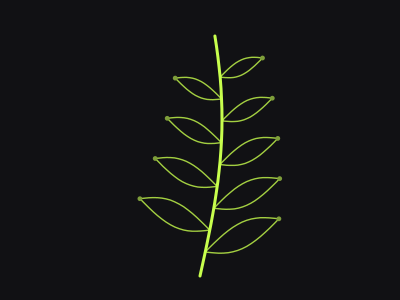
The rule
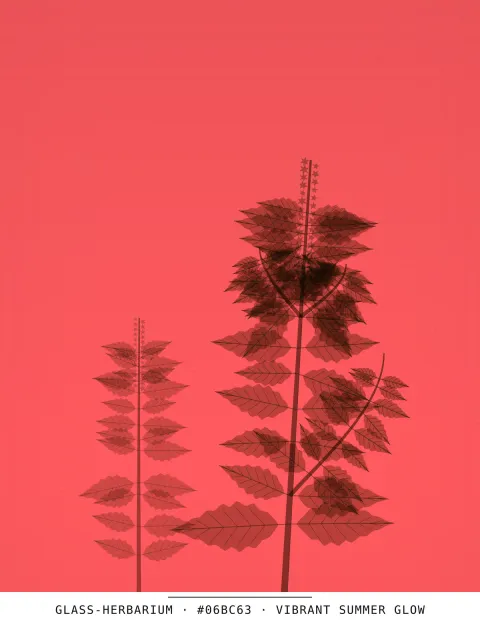
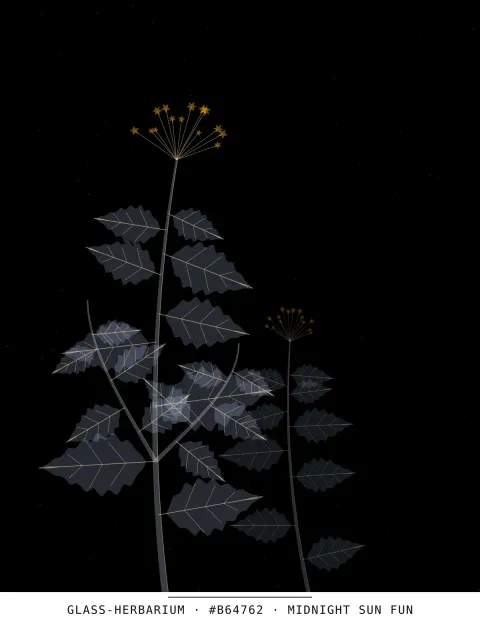
Glass lets light through, and what we see depends on everything the light has crossed. Here each shape is a translucent veil: where two veils overlap, their colours add up and the area looks denser. A plant read through transparency is a stack of these veils, each leaf laid over the others.
The plant follows a simple rule. Leaves sit along the stem, and the gap between two leaves gets shorter toward the top, always in the same proportion, written ρ:
next gap = gap × ρ
In a spiral, the stem turns by a fixed angle from one leaf to the next, 137.5°. Leaves can also be alternate or face to face. What is left to chance is the number of nodes and ρ for the herbarium, and the number of trunks for the light shafts.
What changes from one algorithm to the next
Three scenes where light passes through a material before it reaches the eye.
- Prism Bloom
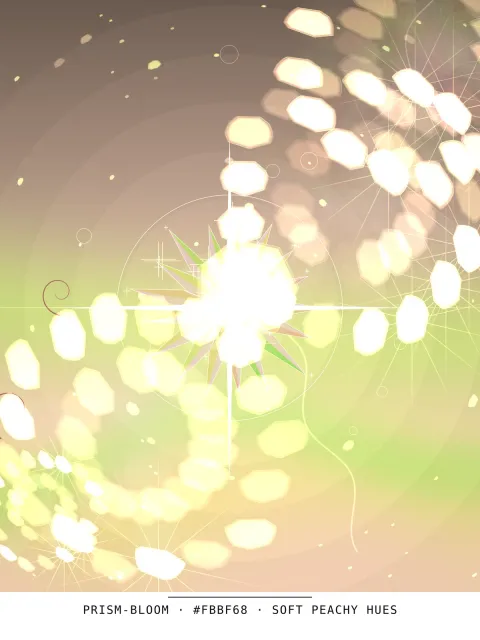
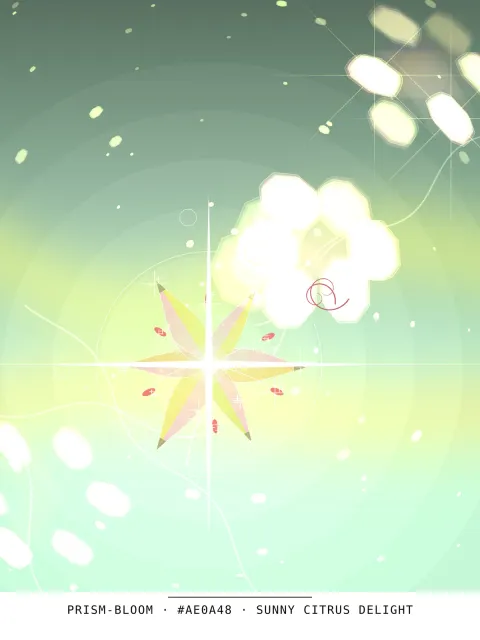
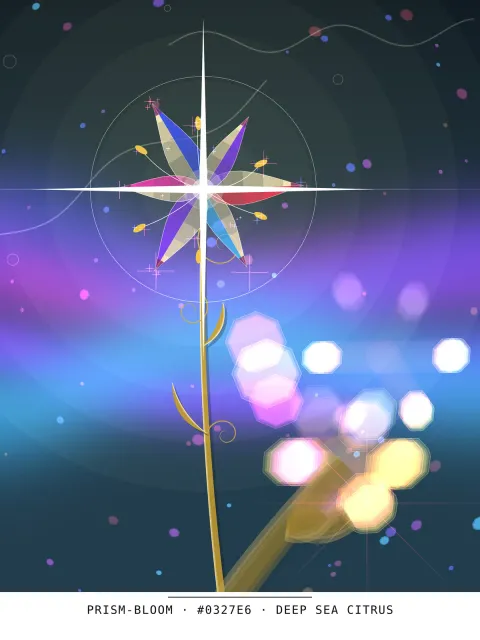
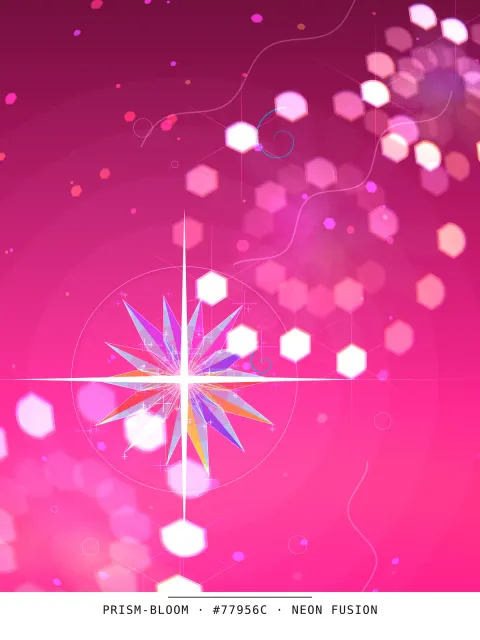
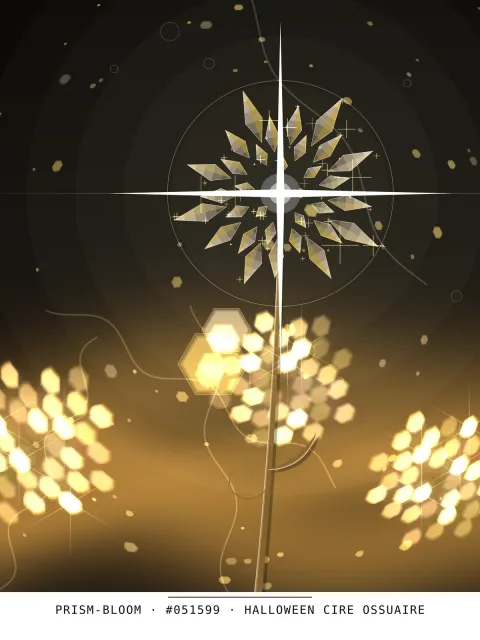
- A scene seen from very close, as through a lens. One crystal rosette is sharp, and other rosettes sit at different depths and are blurred. Each blur is a disc, the circle of confusion, whose size grows with the distance from the sharp plane and whose shape follows the aperture blades. The brightest tips carry diffraction spikes: with an even number of blades, one blade gives one spike; with an odd number, it gives two. Five blades make 10 spikes, six blades make 6.
- Glass Herbarium
- One to three plants, standing, read through transparency. Each leaf is a veil; where two leaves overlap, the veils add up. Leaves sit on the stem in three possible ways (alternate, face to face, in a spiral at 137.5°). The gaps get shorter toward the top, always in the same proportion.
- Light Shafts
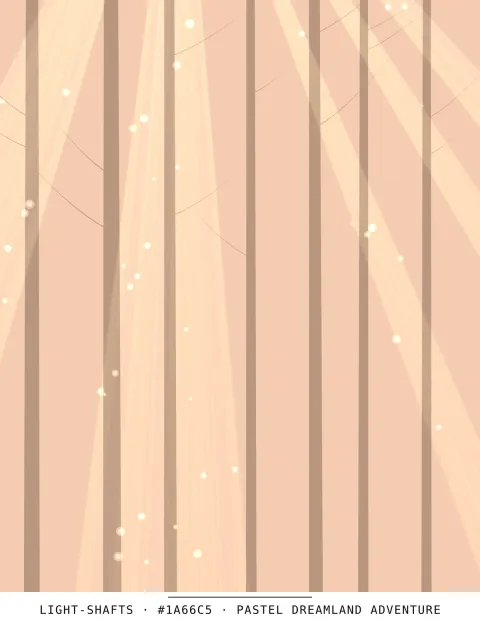
- An edge of woodland in the early morning. The light comes from a sun placed above the frame and only passes through the gaps in the foliage. Each ray is made of stacked triangles, more of them near the sun: mist dims the light with distance. The trunks in the background are painted before the light, those in the foreground after it.
What chance decides
For each artwork, the program draws these settings at random, between bounds set in advance.
- Number of nodes Glass Herbarium from 8 to 14
- Ratio between two gaps Glass Herbarium from 0.78 to 0.92
- Number of trunks Light Shafts from 4 to 9
The algorithms in this family
- Prism Bloom
- Glass Herbarium
- Light Shafts